



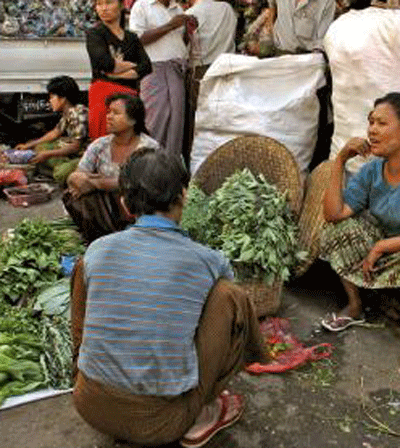
 NAYPYIDAW: Resource-rich Myanmar is seen as a hot new business frontier as reforms tempt investors, but with currency distortions and a banking system in tatters, analysts warn the economy could be slow to bloom.
International economic experts meeting in the capital Naypyidaw last week agreed there was almost a contagious faith in the country's potential as it opens up after years of isolation.
Aside from its abundant natural resources, including oil and minerals, Myanmar has huge scope to develop its tourism industry after years of boycotts against the former ruling junta.
The country was once known as the "rice bowl of Asia" because of its agricultural riches.
But economic mismanagement during nearly 50 years of direct military rule left the country deeply impoverished.
Today, as a new government pushes through political reforms at a rate that has stunned observers, many hope it can take advantage of its opportunities and a strategic location between China and India.
"In many ways it is well-positioned to provide enormous investment opportunities," Nobel Prize-winning economist Joseph Stiglitz, of New York's Columbia University, said at the meeting of experts.
"The fact is that there has been so little investment in the past means but potential returns very high."
The government, which remains dominated by former generals, took power last year and has since been hailed for reforms such as the release of hundreds of political prisoners.
Western countries are now considering lifting economic sanctions, fuelling the huge growth in interest by outside business.
Myanmar's government said in January that it planned to offer eight-year tax exemptions to foreign investors as Western companies rushed to build ties with the one-time international pariah.
The International Monetary Fund has pointed to Myanmar's "high growth potential", estimating real GDP growth in the 2011-2012 fiscal year could hit 5.5 percent.
But it said currency reform is a priority in the country, which currently has an informal exchange rate almost 100 times better than the official one.
It's a view shared by Stiglitz, who stresses the need for "not only the unification of the foreign exchange but bringing down the foreign exchange rate, which is adversely affecting the competitiveness of their economy".
Myanmar's banking system is almost non-existent following a major crisis in 2003.
A recent report by the British risk analysis group Maplecroft said Myanmar has the world's worst legal system for doing business, retaining a position it has held for the past five years despite recent reforms.



















Comments
Comments are closed for this article.