


With the Eid-ul-Fitr holidays approaching over the next ten days or so, the domestic cotton market is showing a steady condition in ready trade. Now only about 70,000 bales (155 Kgs) from the outgoing crop (August 2017/July 2018) are left unsold with the ginners. Though the ready cotton prices remain steady, sales are reported to be on the slow side.
The outgoing crop (2017/2018) cotton prices are said to be ranging from Rs 6000 to Rs 7500 per maund (37.32 Kgs) in both Sindh and Punjab on an ex-gin basis. However, most of the leftover stocks of cotton are said to be of lower grades.
Generally speaking, yarn prices are said to be alright ahead of the impending holidays during the second half of next week when mills are expected to close to about three or four days.
Arrivals of the new cotton crop (August 2018/July 2019) are being reported on a very small scale in both Sindh and Punjab. Sindh seed cotton (Kapas/Phutti) prices are presently being reported to range from Rs 3900 to Rs 4050 per maund 40 Kgs for the new crop (August 2018/July 2019). Traders are estimating that seed cotton from the new arrivals which may reach before the Eid-ul-Fitr would be nearly enough to press about 2500 bales of cotton (155 Kgs).
Irrigation water for the new crop cotton (August 2018/July 2019) is presently being deemed to be short of the requirements. However, in Punjab water is being drawn from the tubewells which is alleviating some of the difficulties.
Traders said in Karachi that new crop cotton (August 2018/July 2019) sold variously in Sindh from Rs 8000 to Rs 8100 per maund (37.32 Kgs) where as in the Punjab lint sold at Rs 8200 per maund.
Upto now, only about seven ginning factories are pressing the new crop from which five are in Sindh and two in the Punjab. Some traders have informed that the quality of new crop arrivals is quite good.
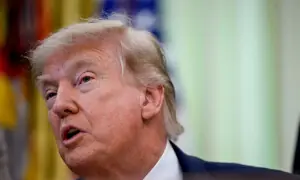
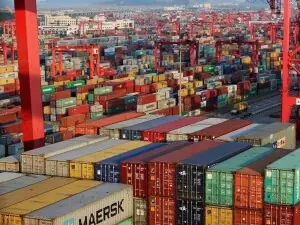
On the global economic and financial front, the main topic concerns the on-again, off-again trade policy of President Donald Trump which has antagonized friends and foe alike. President Trump's policy to impose import tariffs on goods and materials form several sources includes the European Union, Canada, Mexico, China and other countries including India and Latin America which has not only turned global trade topsy-turvy but has practically even harmed the foreign policy of the United States.
This type of unilateral trade approach has not only hurt and antagonized America's long-standing trade partners, but it has the potential of shaking up the present time tested global trading mechanism. While America has all the right to protect its trade interest but it cannot be done to the total exclusion of the trading rights of other countries.
In this connection Canada's foreign Minister Chrystia Freeland is reported to have asked in the context of Trump's repeated remarks over the past several weeks and months if Canada and the NATO allies of America really represent a national security threat to you (America)? She continued to say that "we are hurt, and we are insulted".
In the context of the possible trade wars accentuating, we have already seen China slamming the United States for its sudden flip-flops in trade policy. Hardly a fortnight has elapsed that the White House had announced a truce pertaining to the trade tensions with China when American Treasury Secretary Steven Munchin had said that the proposals to impose tariffs on Chinese goods had been put in abeyance.
President Trump's uncertain sparring with the leaders of friendly countries like President Emmanuel Macron of France, Prime Minister Theresa May of Britain or Chancellor Angela Merkel of Germany has been hurtful to these western allies.
Even the Organisation for Economic Cooperation and Development (OECD) warned late last month (May 2018) that impending trade wars are threatening the global growth outlook. According to the OECD, to impose tariffs on steel and aluminum are creating added difficulties on global economic growth.
Such splits and drags in the Western economic cohesion will definitely weaken the global economic growth substantially. Recently, even Larry Kudlow, the top economic advisor to President Donald Trump is reported to have acknowledged that trade disputes within the Western allies could unravel the sharp upturn in American economy.













Comments
Comments are closed for this article.