


The Monetary Policy Committee (MPC) of the State Bank has decided to raise the policy rate by 50 basis points (bps) to 6.50 percent per annum for the next two months and for all the right reasons. According to the MPS, the balance of risks to the sustainability of the healthy-growth-low-inflation nexus had shifted since the last meeting of the MPC. The balance of payment picture, despite an increase in exports and some deceleration in imports, has deteriorated further due to a sharp increase in international oil prices and limited financial inflows. The revised estimate of fiscal deficit stands considerably higher at 5.5 percent of GDP as compared to the initial target of 4.1 percent for FY18, reflecting a significantly higher level of fiscal expansion. According to the MPS, "[T]hese twin deficits that depict the elevated aggregate demand in the country, are adversely affecting the near-term macroeconomic stability."
While CPI inflation remains moderate, averaging 3.8 percent during the first 10 months of FY18, average of YoY Non-Food Non-Energy (NFNE) core inflation during the last two months has risen to 6.4 percent, "which reflects the building up of inflationary pressures in the economy." Change in the outlook for international oil prices with its impact on upward adjustments in domestic prices, a strong demand, and the lagged pass-through of exchange rate adjustments would largely determine the inflation path in the remaining period of FY18 and for FY19. However, the average inflation for FY19 was estimated by the SBP to be marginally above the annual target of 6.0 percent. On the supply side, the GDP growth for FY18 was estimated to be 5.8 percent and the government has set the real GDP growth target at 6.2 percent for FY19. SBP is of the view that this target was ambitious and would critically depend on managing the growing pressures on the external account.
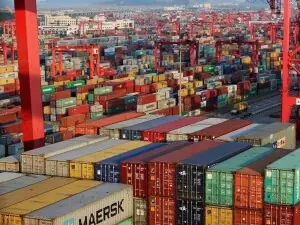
On the external front, Current Account deficit widened to dollar 14.0 billion during the first 10 months of FY18 which was 1.5 times the deficit during the corresponding period of last year. In the absence of sufficient financial inflows, a sizable portion of this deficit was managed by using SBP resources. Consequently, foreign exchange reserves held by the State Bank dropped by dollar 5.8 billion to dollar 10.3 billion as of 18th May, 2018 and the PKR depreciated by 9.3 percent against the US dollar till 24th May, 2018. The near-term sustainability of higher current account deficit depends on further mobilisation of financial flows while the need for deep-rooted structural reforms to improve the country's competitiveness can hardly be overemphasized for medium- and long-term sustainability of balance of payments.
Although the government and the business community, in general, may not like the monetary policy tightening, under the circumstances, a reasonable increase in the policy rate was the best option. No central bank can afford to keep the policy rate unchanged when inflationary pressures build up, budget deficit deteriorates, external sector comes under a great deal of pressure and overall macroeconomic stability is rendered under threat. Unfortunately, whatever the claims of the government, all these factors have almost combined to give a negative view of the economy. Although inflation is still under control, the recent rise in core inflation, a significant change in the international oil prices, demand pressures emanating from expansionary fiscal policy, and a sharp depreciation of the Pak rupee would certainly exacerbate inflationary pressures in the coming months that would need to be contained through monetary measures. The outgoing PML-N government has targeted the inflation rate at 6 percent for FY19 but the State Bank believes that it could be higher than that. Moreover, during FY18, budget deficit was projected to be higher by 1.4 percentage points than the target but the year 2018-19 was going to be even more problematic due to the government's lack of will to mobilise higher level of revenues and cut expenditures on account of upcoming elections. Such an expansionary fiscal policy would stoke demand pressures and raise core inflation. In fact, the government seems to be callous about fiscal outcomes these days and monetary policy of the country may have to carry the burden of a loose fiscal policy during FY19 to contain the inflationary pressures in the economy. Inflationary pressures would have eased somewhat if the country could have achieved the growth target of 6.2 percent for FY19. The MPC of the SBP believes that this target was ambitious due to the vulnerability of the external sector. The shortage of irrigation water and energy supplies may also depress the growth rate and fuel inflationary pressures.
The most compelling reason for tightening the monetary policy was of course rapidly worsening position of the external sector. It was very sad to note that C/A deficit had risen sharply despite recovery in exports and some increase in home remittances and the SBP had to witness a sharp reduction of dollar 5.8 billion in its FX reserves. If the authorities had not contracted foreign loans to finance the external sector deficit, foreign exchange reserves of the country would have declined even further. The question whether the recent depreciation of the rupee is sufficient to ease the pressure on the current account has no easy answer. Obviously, if the SBP had not raised the policy rate, the holding of foreign currencies would have been more lucrative and pressure on the balance of payments would have intensified further. The policy of the authorities to finance the external sector deficit through contracting foreign loans from commercial sources is a very poor option and needs to be revisited soon. The SBP has proposed the need for deep-rooted structural reforms to improve the country's competitiveness but has not indicated the areas where reforms are required to be undertaken for the sustainability of balance of payments. Overall, however, we are very happy that this time the SBP has exercised its autonomy and depicted almost a true picture of the economy to arrive at the right conclusion.



















Comments
Comments are closed for this article.