


Chikungunya is rarely fatal, while the death rate of the disease-affected people is less than one per cent. Chikungunya is transmitted to humans by infected mosquitoes. This virus is in Pakistan but with low level activity. Symptoms are generally self-limiting and last for two or three days.
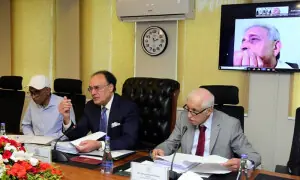
There is a strong connection between the disease and poverty. The citizens must stop mosquitoes from biting by their complete elimination. Old citizens and newborns are at the higher risk." Dr Bushra Jamil, Professor and Section Head, Adult Infectious Diseases, AKUH, Service Line Chief, Internal Medicine, Endocrinology and Infectious-Diseases, AKUH, made these notions at a public awareness seminar entitled "The Recent Outbreak of Chikungunya in Pakistan", held at the seminar room of Dr Panjwani Center for Molecular Medicine and Drug Research (PCMD), International Center for Chemical and Biological Sciences (ICCBS), University of Karachi on Friday.
Dr Panjwani Center for Molecular Medicine and Drug Research and Virtual Education Project Pakistan (VEPP) jointly organized the seminar. Professor Bushra Jamil said that Chikungunya affected around 60 countries in world so far. She said the disease occurs in Africa, Asia and the Indian subcontinent, while in 2005 and 2006 India faced significant outbreak of Chikungunya. In 2007, dozens of Chikungunya cases were also reported in Pakistan, she said.
Talking about signs and symptoms, she said that symptoms are generally self-limiting and last for two or three days, which appear between four and seven days after the patient has been bitten by the infected mosquito. These symptoms include high fever, joint pain (in lower back, ankle, knees, wrists or phalanges), joint swelling, rash, headache, muscle pain, nausea and fatigue, she maintained.
There are some health complications linked with this disease, which includes eye problems (retinitis), heart attack, hepatitis, nephritis (kidney problems), skin issues and bleeding, she said, adding that socio economic burden is also associated with this kind of disease which affects the productivity of the patients even after elimination of the virus.
There is no specific antiviral drug treatment for chikungunya; however vaccines are not used as preventive measure as they are not available at the commercial scale, she said and added that prevention and control of disease relies seriously on reducing the number of natural and artificial water-filled container habitats that support breeding of the mosquitoes.

















Comments
Comments are closed for this article.