


Privatisation: SLIC tells govt due diligence needed before any decision
SLIC demands due diligence for any privatization, while the government advances a new Insurance Bill, 2026, to modernize Pakistan's insurance sector, promoting competition, digital transformation, and policyholder protection.
- SLIC's demand for due diligence before corporatization or privatization.
- Key features of the new Insurance Bill, 2026, modernizing Pakistan's sector.
- Government's push for insurance sector reforms and private participation.
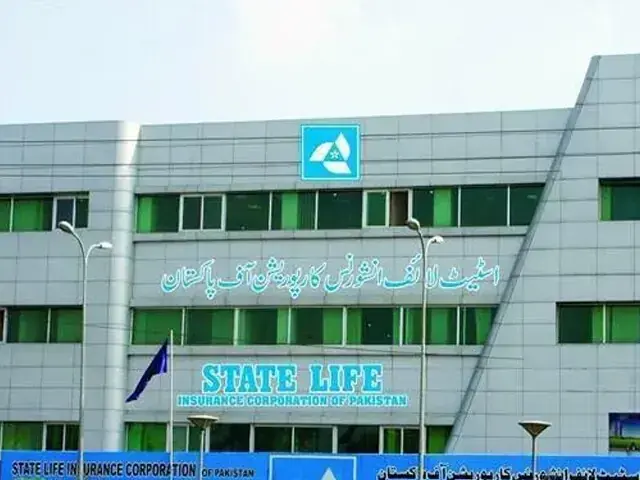

ISLAMABAD: The State Life Insurance Corporation (SLIC) has informed the federal government that any decision regarding its corporatisation or privatisation would require detailed legal, financial, and strategic due diligence, and must be undertaken through the prescribed legislative process.
SLIC conveyed its position at a time when the government is actively considering privatising a significant portion of the country’s insurance sector to enhance private sector participation in line with global practices.
READ ALSO: 13 encroached properties: Senate panel slams SLIC for failing to pursue legal cases
Earlier, the National Assembly Standing Committee adopted the report of its Sub-Committee on the Life Insurance Nationalization (Amend-ment) Bill, 2026. The bill was subsequently taken up for clause-by-clause consideration and recommended, with certain amendments, for passage by the National Assembly.
Insurance Bill, 2026
The Insurance Bill, 2026 has been introduced to replace the Insurance Ordinance, 2000 with a modern and comprehensive legal framework aligned with international best practices, technological advancements, and evolving regulatory requirements.
The proposed legislation aims to strengthen policyholder protection, promote competition and innovation, facilitate digital transformation, and modernise Pakistan’s insurance sector.
The Apex Committee of the Special Investment Facilitation Council (SIFC), in its meeting held on February 2, 2024, endorsed key policy reforms for the insurance sector, including enhancing competition, facilitating international insurers, strengthening enforcement mechanisms, and aligning the sector with global standards.
Following these policy directions, the Ministry of Commerce held consultations with key stakeholders, including the Securities and Exchange Commission of Pakistan (SECP), Finance Division, Insurance Association of Pakistan, and state-owned enterprises. Based on these consultations, proposals for amendments to the Insurance Ordinance, 2000 were developed.
The matter was subsequently referred to the Ministry of Law and Justice, which advised that in-principle approval from the Federal Cabinet was required prior to formal drafting of the bill under the Rules of Business, 1973. Accordin-gly, the Prime Minister approved placing the proposal before the Cabinet on September 21, 2025. The Cabinet Committee for Disposal of Legislative Cases (CCLC), in its meeting on December 30, 2025, observed that introducing around 220 amendments to the existing law would complicate the legislative process and instead directed preparation of a fresh, comprehensive law. Consequently, the Commerce Division prepared the draft Insurance Act, 2026 in consultation with the Ministry of Law and Justice.
The draft was vetted by the Law Ministry on March 4, 2026, and subsequently approved by the CCLC on March 10, 2026. The decision was later ratified by the Federal Cabinet on March 31, 2026, and the bill has now been presented before Parliament.
Key features of the proposed legislation include:
(i) Removal of mandatory insurance of public property with state-owned insurers: The bill abolishes provisions requiring public sector insurance to be placed with designated state-owned entities, thereby opening the market to competition and improving efficiency, transparency, and service quality.
(ii) (ii) Promotion of competition: The legislation facilitates broader participation of domestic and foreign insurers and reinsurers, including allowing foreign companies to operate branch offices in Pakistan subject to licensing requirements.
(iii) Digital insurance framework: For the first time, the law introduces concepts such as digital insurance, digital-only insurers, and insurance self-network platforms, enabling fully digital operations and technology-driven business models.
(iv) Microinsurance framework: Dedicated provisions aim to expand access to low-cost insurance products for low-income and underserved segments, improving financial inclusion.
(v) Index-based (parametric) insurance: The bill recognises insurance products based on predefined parameters, particularly useful for agriculture and disaster-risk coverage.
(vi) Facilitation for takaful and re-takaful: A comprehensive legal framework has been introduced to support Shariah-compliant insurance and Islamic insurance growth.
(vii) Modernisation of intermediaries: The regulatory framework has been expanded to include new categories such as corporate agents, third-party administrators, and digital platforms.
(viii) Strengthened policyholder protection: The bill enhances safeguards through improved market conduct regulations, dispute resolution mechanisms, and a strengthened role for the Insurance Ombudsman.
(ix) Alignment with global standards: Updated definitions, prudential requirements, and governance frameworks bring Pakistan’s insurance sector in line with international practices.
(x) Technology integration: The law promotes the use of electronic means in insurance operations, regulation, and service delivery.
(xi) Expanded business classification: The scope of insurance business has been modernised to include areas such as agriculture insurance, annuities, treaty business, and investment-linked products.
(xii) Enhanced regulatory powers of SECP: The regulator is granted greater flexibility to define business classes, intermediaries, and prudential standards through regulations.
Meanwhile, representatives of the Employees’ Union opposed the corporatisation or privatisation of SLIC. However, the management maintained that the union’s views are subjective and do not constitute a binding legal position.
Copyright Business Recorder, 2026

























Comments