



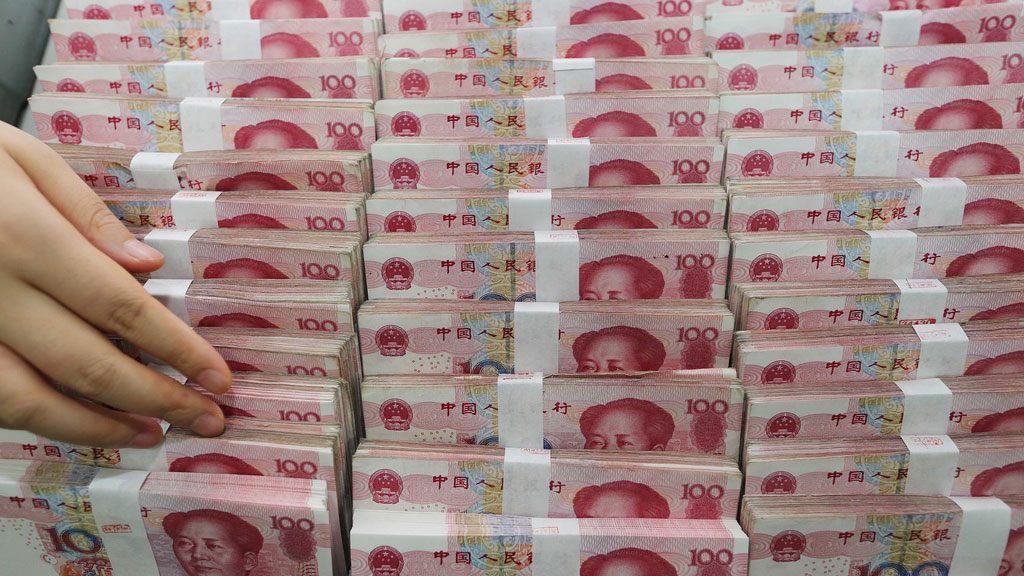
 BEIJING: China's foreign exchange reserves fell more than expected in September to a 14-month low as the yuan currency weakened further against the dollar amid mounting trade tension with the United States.
Reserves fell $22.69 billion in September to $3.087 trillion, the biggest drop since February, compared with a decline of $8.23 billion in August, central bank data showed on Sunday.
Economists polled by Reuters had expected reserves to drop by $5 billion to $3.105 trillion.
The yuan fell for the sixth straight month in September as the dollar remained buoyant, suggesting Beijing may be in no rush to intervene because a weaker currency would support its exporters amid the escalating Sino-US trade war.
The United States and China imposed fresh tariffs on each other's goods last month.
Foreign exchange rate fluctuations and asset price changes contributed to the decline in reserves, China's foreign exchange regulator said in a statement.
"Although we face relatively large external uncertainties, the Chinese economy has the ability to accommodate and fend off external risks," the statement said.
The scale of China's foreign exchange reserve was expected to maintain stable despite fluctuations, it said.
A continuous fall in reserves would test Chinese authorities' resolve to defend the currency.
China's central bank shrugged off an interest rate hike by the US Federal Reserve last month, piling even more pressure on the yuan. The yuan fell about 0.56 percent against the dollar in September.
When raising rates for a third time this year on Sept. 26, the Fed forecast another rate hike in December, three more next year and one in 2020.
Despite the yuan's steady depreciation in recent months, there have been few signs so far of a spike in capital outflows like those seen a few years ago after a surprise devaluation by the PBOC. Beijing has put tight capital controls in place to prevent capital flights.
The value of China's gold reserves fell to $70.327 billion at the end of September, from $71.228 billion at the end of August.

























Comments
Comments are closed for this article.