


Asia's factory activity feels fading glimmer of AI boom
- Strong chip and AI demand had masked soft spots in Asian and global economies.
Asian factory activity slowed in October, especially in chip exporters, hinting at a potential AI boom slowdown. Middle East conflict and rising prices are impacting regional economies.
- Slowdown in manufacturing across major Asian chip exporters.
- Impact of Middle East conflict on fuel and food prices.
- IMF's moderated economic growth outlook for Asia.
- Signs of the AI boom potentially losing momentum.
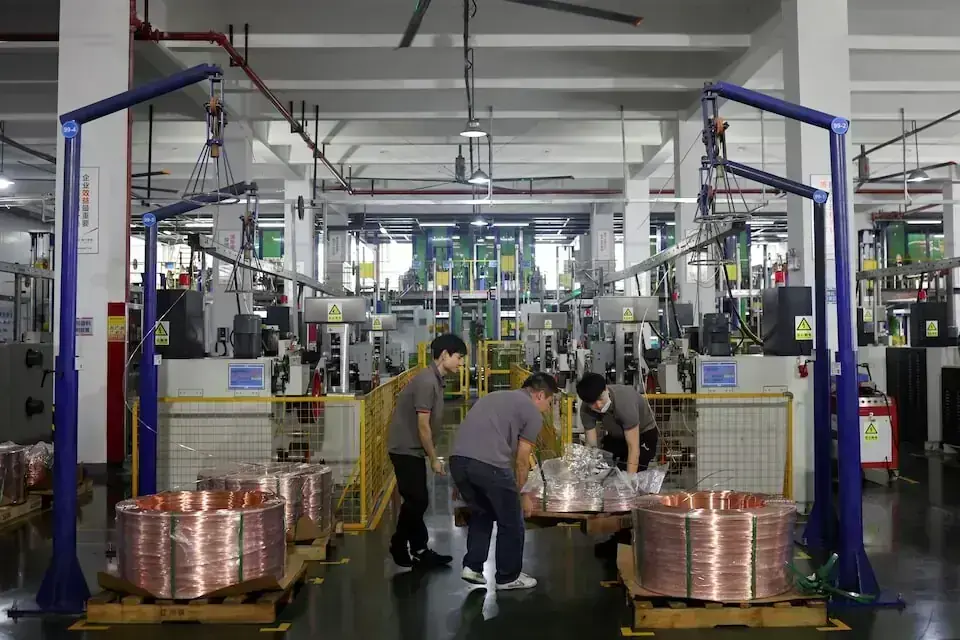
TOKYO: Factory activity across Asia continued to expand in October but growth slowed in major chip exporters, private surveys showed on Monday, suggesting the AI boom may be losing momentum as markets start to question the sector’s profitability.
The data points to growing strains on export-led economies as prolonged conflict in the Middle East keeps fuel and food prices elevated, hitting consumption and business confidence even as demand for chips and AI-related goods remains resilient.
Manufacturing activity slowed in China, Japan, South Korea and Taiwan, the surveys showed on Monday, indicating the drag from the US-Israeli war on Iran may be offsetting the benefits from robust global demand for chips and AI-related goods.
“Strong chip and AI demand had masked soft spots in Asian and global economies. But that’s becoming hard to sustain with the Middle East war dragging on for so long, pushing up fuel and food prices,” said Toru Nishihama, chief emerging market economist at Dai-ichi Life Research Institute in Tokyo.
“High inflation is hurting Asian consumption. Intensifying price competition from China is also weighing on rival exporters like Japan and South Korea,” he said.
The RatingDog China General Manufacturing Purchasing Managers’ Index (PMI), compiled by S&P Global, stood at 52.0 in October, exceeding the 50-mark that separates growth from contraction but falling from 52.1 in September.
The reading followed official data released on Saturday showing China’s factory activity shrank in October, marking the third contraction in four months.
“The PMIs suggest that China’s economy activity lost momentum in October following September’s pick-up. Manufacturing softened a touch, but foreign demand still looks resilient,” said Nguyen Hoang Nam, China economist at Capital Economics.
“More worrying was the sharp reversal in construction activity and expectations, suggesting that firms have become less confident that fiscal support will provide a substantial boost over the rest of the year.”
Japan’s PMI eased to 53.3 in October from 54.1 in September, a survey by S&P Global showed, marking the slowest expansion in seven months as output and new orders lost momentum. South Korea’s factory activity grew in October at the slowest pace in eight months on weaker output and demand, with the PMI falling to 51.3 from 53.9 in September.
Taiwan’s PMI stood at 54.9 in October, down from 56.7 in September.
Other countries showed factory activity expanded in October at a faster pace than the previous month, including Vietnam, Indonesia and Malaysia.
Asia has outperformed many other regions as manufacturers benefitted from brisk demand for chips and AI-related goods.
But the International Monetary Fund has projected Asia’s economic growth to moderate next year, and warned of heightening risks from the Iran war-induced energy shock and a potential correction in the AI boom.
The IMF said it now expects Asia’s economy to grow 4.8% in 2026 and 4.4% in 2027, higher than projections made in April but still slowing from a 5.0% expansion in 2025.
























Comments