



KARACHI: The Pakistan Stock Exchange (PSX) snapped its five-week losing streak during the week ended October 30, with the benchmark KSE-100 Index gaining 4,034.37 points, or 2.5 percent week-on-week, to close at 166,409.25 points.
Renewed optimism over progress in regional peace talks improved investor risk appetite and triggered broad-based buying across major sectors, reversing the market’s prolonged decline. The rebound followed five consecutive weeks of losses and was accompanied by a substantial expansion in market participation.
Average daily trading volume across the bourse increased by 53 percent to 599.68 million shares from 392.75 million shares in the preceding week. Average daily traded value also rose by approximately 19 percent to Rs. 23.03 billion, equivalent to USD83.19 million, from Rs. 19.29 billion, or USD69.69 million, previously.
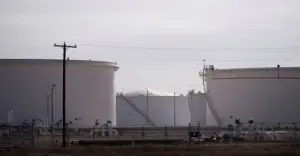
International oil prices remained volatile during the period. Brent crude closed the week above USD117 per barrel, compared with the previous week’s average of approximately USD111.40 per barrel. The increase in the reported Brent price level came alongside a recovery in equities, while domestic petroleum prices recorded modest upward adjustments.
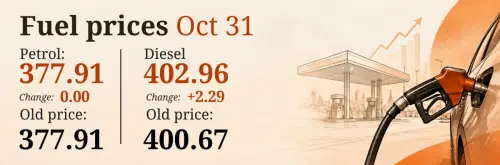
Motor Spirit (MS), commonly known as petrol, rose by Rs. 0.18 per litre to Rs. 267.13 per litre. High-Speed Diesel (HSD) increased by Rs. 7.01 per litre to Rs. 293.12 per litre. The adjustments lifted both retail fuel prices, with the increase in HSD notably larger than the change in petrol prices.
The broader monetary and economic outlook was shaped by a policy rate increase by the State Bank of Pakistan (SBP). The central bank raised its policy rate by 50 basis points to 12.0 percent, citing the need to respond to elevated energy prices linked to geopolitical tensions and rising domestic inflation risks. The policy move represented monetary tightening during a week in which the equity market rebounded on improved sentiment surrounding peace talks.
Despite the rate increase, the SBP maintained its Fiscal Year 2027 GDP growth target within a range of 3.5 to 4.5 percent. It also projected that workers’ remittances would reach USD45.00 billion, during FY27. The projections outlined the central bank’s growth and remittance expectations while the policy rate was raised to address inflationary risks.
The SBP also set out an objective to increase foreign exchange reserves from the current level of USD21.50 billion, to USD25.00 billion by June 2027. The target is intended to improve import cover to four months.
In external debt management, Pakistan was considering raising USD500.00 million, through its second Panda bond issuance during the second half of FY27.
The policy rate increase was followed by an upward adjustment in yields in the domestic sovereign debt market. In the latest Treasury bill (T-bill) auction, cut-off yields rose by as much as 61 basis points across all maturity tenors. The federal government raised Rs.1.913 trillion, against an auction target of Rs. 1.650 trillion.
Trading activity across listed sectors was led by Investment Banks, which captured an 18 percent share of total market volume. The Refinery sector followed with a 16 percent share, while Technology and Communication accounted for 12 percent. Power Generation and Distribution represented 8 percent of market volume, Property and Real Estate companies contributed 4 percent, and all other sectors collectively accounted for the remaining 41 percent.
The sectoral volume distribution showed that Investment Banks and refineries together represented 34 percent of total traded volume. Technology and Communication accounted for a further 12 percent, while Power Generation and Distribution and Property and Real Estate contributed 8 percent and 4 percent, respectively. The remaining sectors made up 41 percent of activity.
Individual stock performance within the KSE-100 also reflected the recovery, with Ghani Global Holdings Limited (GHNI) leading the reported gainers. GHNI surged 18.6 percent week-on-week to close at Rs. 1,151.44 per share. Cnergyico PK Limited (CNERGY) advanced 10.0 percent to Rs. 13.64, while Tariq Glass Industries Limited (TGL) also rose 10.0 percent, settling at Rs. 170.44 per share.
On the declining side, PKGS led the reported losses, falling 8.2 percent week-on-week to close at Rs. 624.70 per share. International Industries Limited (INIL) declined 5.7 percent to Rs. 144.33, while ICI Pakistan Limited (LCI) lost 5.5 percent to Rs. 179.99.
Total PSX market capitalisation expanded by 2.1 percent in rupee terms during the week to Rs. 18.389 trillion, or Rs. 18,388.89 billion, equivalent to USD66.45 billion. In the preceding week, market capitalisation stood at Rs. 18.014 trillion, or USD65.08 billion.
Trading activity expanded across both the readyboard spot market and the derivatives segment. Average daily turnover in the readyboard market increased by 52.7 percent week-on-week to 599.68 million shares from 392.75 million shares previously. In value terms, readyboard average daily trade value rose 19.3 percent to Rs. 23.03 billion, equivalent to USD83.19 million, from Rs. 19.29 billion, or USD69.69 million.
The increase in readyboard share turnover was substantially greater than the rise in trade value. Average daily share volume expanded by 206.93 million shares, while the reported trade value increased by Rs. 3.74 billion, or USD13.50 million. The volume and value figures showed a broad expansion in spot-market activity during the benchmark’s recovery.
The Business Recorder benchmark indices also advanced during the week. BRIndex100 opened at 17,802.15 points, reached an intra-week high of 18,415.90 points and touched a low of 17,664.19 points before closing at 18,262.41 points. Its total weekly turnover amounted to 2.070 billion shares.
BRIndex30 opened the week at 63,026.94 points, climbed to an intra-week high of 65,911.08 points and fell to a low of 62,437.70 points before ending at 65,029.33 points. The index recorded 1.366 billion shares.
Analysts said the week’s market recovery coincided with stronger participation in both readyboard and futures trading, an increase in market capitalisation and gains across most sectors. The market’s near-term direction is therefore likely to be influenced by developments in peace talks, energy prices and the economic implications of tighter monetary policy.
Copyright Business Recorder, 2026
















Comments