


PM Shehbaz calls for more legal migration pathways for Pakistanis to Europe
- European Commissioner confident Pakistan’s efforts to expand legal migration and mutually beneficial labour mobility
Pakistan's PM urged Europe to expand legal migration for skilled workers, citing mutual benefits and anti-smuggling efforts. An EU Commissioner praised Pakistan's significant reduction in illegal migration.
- Pakistan's call for expanded legal migration to Europe.
- Pakistan's 64% reduction in illegal migration to Europe.
- Pakistan-EU cooperation on migration and border management.
Prime Minister Shehbaz Sharif on Tuesday called for expanding legal migration opportunities for Pakistani skilled workers and professionals in Europe, saying such pathways could help meet European labour-market needs while protecting prospective migrants from smuggling networks.
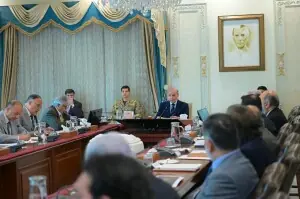
The prime minister made these remarks during a meeting with European Union Commissioner for Internal Affairs and Migration Magnus Brunner, who called on him in Islamabad during his first visit to Pakistan, the PM Office said.
Highlighting Pakistan’s efforts to combat irregular migration, migrant smuggling and human trafficking through legislative reforms, stronger institutions, effective enforcement and international cooperation, Shehbaz emphasized: “Efforts to address irregular migration should be complemented by practical opportunities for safe, orderly, and regular migration.”
The prime minister reaffirmed Pakistan’s commitment to strengthening its partnership with the European Union and cooperation across all pillars of the Pakistan-EU Strategic Engagement Plan 2019. Migration and mobility are among the plan’s eight pillars.
Commissioner Brunner appreciated the measures taken by Pakistan and the cooperation extended by its government.
He expressed confidence that these efforts would help expand legal migration pathways and promote mutually beneficial labour mobility between Pakistan and the European Union.
Earlier, during a meeting with Interior Minister Mohsin Naqvi in Islamabad, European Commissioner Brunner praised Pakistan’s measures to combat illegal migration.
Brunner said Pakistan’s effective measures have resulted in a commendable 64% reduction in illegal migration to Europe.
He also commended the Federal Investigation Agency (FIA) for demonstrating professional capabilities despite limited resources. He said reducing illegal migration will open up pathways for legal migration.
Naqvi said Pakistan has adopted a zero-tolerance policy against illegal migration. “Following a 64% reduction in illegal migration, our next target is to eliminate it completely,” he said.
The minister stressed the need for Pakistan and the European Union to work together to completely eliminate illegal migration.
During the meeting, the two sides discussed promoting legal migration between Pakistan and the European Union and expanding opportunities for skilled workers.
Both sides agreed to enhance cooperation in border security and promote legal immigration. They also agreed to further strengthen collaboration in migration, institutional cooperation and border management.
Around 7,900 people died or disappeared on migration routes in 2025, taking the total dead and missing since 2014 beyond 80,000, the United Nations’ migration agency said in a statement on April 21.
The UN’s International Organization for Migration said people were being forced into dangerous, irregular journeys when safe pathways were out of reach, and urged countries to find the political will to save more lives on migration routes.
The deaths or disappearance of around “7,900 people were documented on global migration routes worldwide in 2025”, the IOM said.
The IOM’s Missing Migrants Project “has documented more than 80,000 deaths and disappearances during migration since 2014,” the agency said.
“While these figures represent only the lowest boundary of the true number of affected people, they nonetheless underscore the need for urgent action to end migrant deaths and address the complex needs of families left behind,” said the IOM.






















Comments