


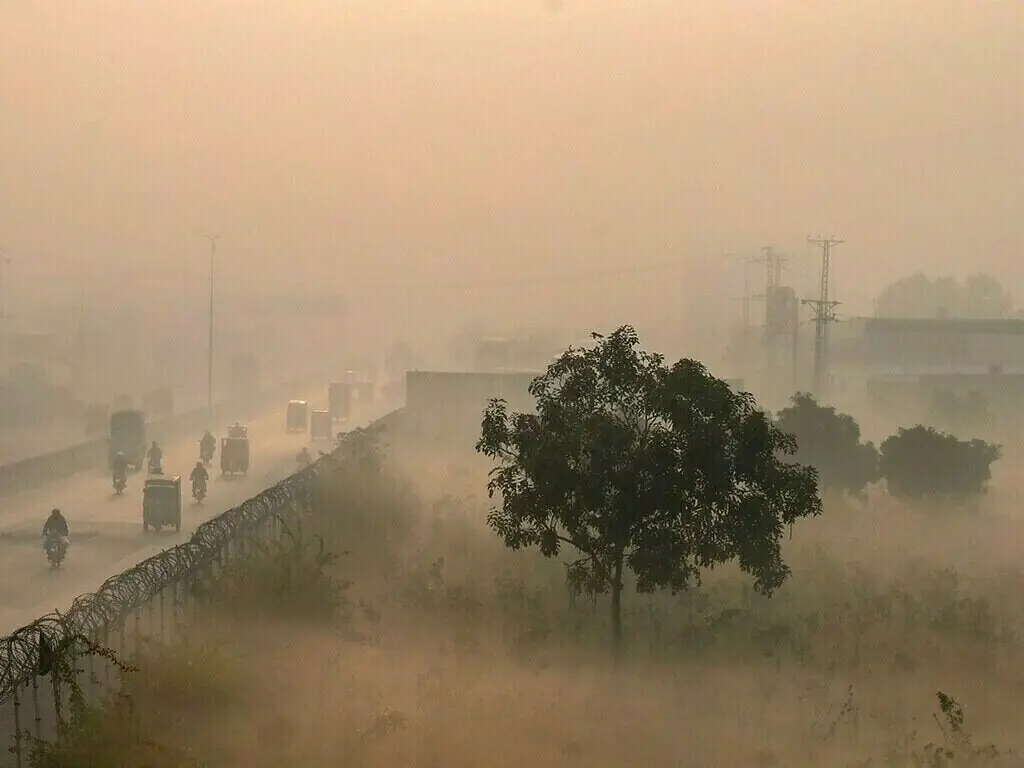
EDITORIAL: Lahore appears determined to collect every variety of environmental emergency, with the latest warning arriving even before its annual winter smog crisis has properly begun. A new assessment by the European Union’s Copernicus Atmosphere Monitoring Service has placed the city among those experiencing “extremely poor” ground-level ozone conditions, alongside New Delhi, Dhaka and Chongqing. For a city already struggling with dangerous particulate pollution, prolonged heat and increasingly erratic weather, the findings point to a growing public health emergency that demands action well before another seasonal crisis overwhelms the authorities.
Ground-level ozone presents a particularly difficult challenge because it forms when pollutants released by vehicles, industry and other sources react in sunlight. Higher temperatures favour its formation, creating a dangerous relationship between rising heat and deteriorating air quality. Unlike the thick smog that periodically engulfs Lahore, ozone pollution can reach harmful concentrations without producing an equally visible warning. Exposure can aggravate respiratory illnesses, impair lung function and damage crops, extending its consequences well beyond the immediate burden on hospitals.
The scale of the wider problem should concentrate official attention. The assessment found that 34 percent of the world’s population experienced extremely poor ozone conditions between January and mid-September, with Asia particularly badly affected. More than half the continent’s population was exposed to the highest pollution category. These findings are especially troubling as climate change creates conditions favourable to ozone formation, while extreme heat and wildfires increasingly compound the effects of emissions from transport and industry.
For Lahore, the warning exposes the inadequacy of treating air pollution primarily as a winter emergency. Seasonal restrictions, temporary closures and hurried administrative measures have become familiar responses whenever smog reaches intolerable levels. The emergence of another serious pollution threat under warmer conditions requires a more comprehensive approach. Reliable year-round monitoring of ozone and its precursor pollutants, stricter enforcement of vehicle and industrial emission standards, and sustained action against uncontrolled burning should become permanent features of environmental management.
The government must also recognise that this problem extends far beyond Lahore’s municipal boundaries. Pollutants travel across provincial and international borders, while the wider region shares many of the conditions responsible for deteriorating air quality. Pakistan, India and Bangladesh have a clear common interest in exchanging atmospheric data, improving early-warning systems and coordinating measures to reduce emissions. Political disagreements cannot alter the movement of polluted air across the region, and the health consequences will continue to be shared regardless of diplomatic relations.
Ideally, that cooperation should begin with practical arrangements between meteorological agencies, environmental regulators and scientific institutions. Comparable monitoring standards, timely exchange of pollution forecasts and joint research into regional pollution patterns would improve each country’s ability to anticipate dangerous episodes. Pakistan should pursue these arrangements while strengthening its own monitoring infrastructure and ensuring that provincial authorities have the resources and expertise required to act on the information they receive.
The immediate priority is to move from emergency reaction to prevention. Lahore needs a credible programme with measurable emissions reductions, reliable public warnings and clear institutional responsibility. The authorities have already had ample experience of the economic disruption, illness and public distress caused by polluted air. Another warning should prompt a serious reassessment of the policies that have allowed the problem to persist.
Lahore’s pollution calendar is evidently expanding. The government would do well to ensure that its capacity to respond expands considerably faster.
Copyright Business Recorder, 2026















Comments