


Oil jumps as Middle East supply concerns persist amid shipping attacks
- Brent crude futures were up $4.55, or 4.54%, at $104.75 a barrel
Oil prices surged due to escalating Middle East supply threats, including increased attacks on shipping and US production cuts from a hurricane, despite efforts to release strategic reserves.
- Escalating Middle East supply threats and shipping attacks.
- US offshore oil production cuts from hurricane.
- Strategic oil reserve releases and market reaction.
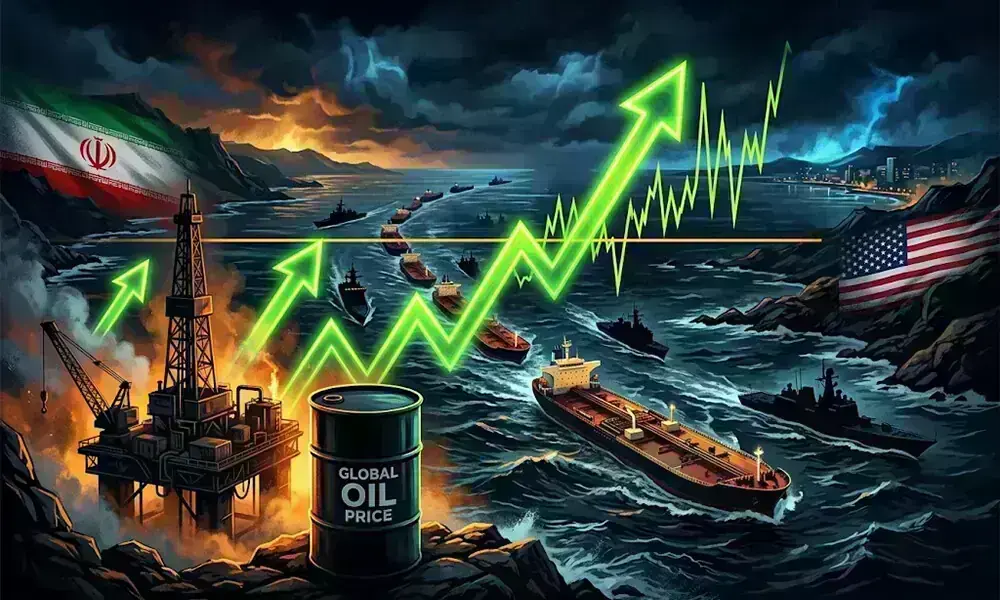
LONDON: Oil prices jumped on Thursday on persistent worries about supply from the Middle East amid an increase in attacks on shipping in the Gulf and the Strait of Hormuz, while the US cut output as a hurricane menaced offshore production.
Brent crude futures were up $4.55, or 4.54%, at $104.75 a barrel by 1205 GMT — the highest in over a week. US West Texas Intermediate (WTI) crude gained $4, or 4.53%, to $92.28, its highest since October 2. Both contracts rose over $5 a barrel earlier in the session.
“Renewed tensions in the Middle East, with vessel strikes occurring well beyond the Strait of Hormuz, have revived concerns about the sustainability of higher transit volumes through the chokepoint,” said UBS analyst Giovanni Staunovo.
Meanwhile, Syria was considering providing military assistance to key ally Saudi Arabia for its escalating conflict with the Houthis in Yemen, a US official and a Syrian military official briefed on the matter said. Options being considered include defensive aid or deployment of forces in an offensive capacity to help Yemeni troops, the sources said.
Supply disruptions persist
Prices settled lower on Wednesday after the International Energy Agency agreed to accelerate the release of oil stocks and to prioritize diesel supplies as governments seek to tackle record fuel prices and supply disruptions caused by the Iran war.
Oil slips on rise in Middle East crude exports and G7 stocks release
“Further details surrounding the G7’s proposed 100 million-barrel SPR release have disappointed the market, as the barrels appear to be drawn from the previously announced 400 million-barrel release that has yet to be fully marketed,” Staunovo added.
Additionally, threats to oil shipping in the Gulf and the Strait of Hormuz, which carried shipments equal to about 20% of global oil and fuel before the war, have increased in October as the Iran conflict enters its eighth month, boosting prices.
Attacks on tankers sailing through the strait last week hit their highest level since the war began, as Gulf producers increased exports.
“The frequency of Iranian attacks on ships is now at the highest point since the war began, and likely to intensify further,” said Saul Kavonic, MST Marquee head of energy.
“Constrained product flows, extreme logistics costs and high likelihood of Iranian escalation are keeping prices elevated.”
Oil prices are also gaining on supply curtailments as a hurricane moves toward offshore production areas in the US, the world’s biggest oil producer, causing companies to shut their platforms.
Shell and Chevron said on Wednesday they were curtailing offshore operations in the Gulf as Hurricane Isaias approached.
Overall, US Gulf of Mexico oil and gas producers had shut in about 25.08% of current oil production and 16.37% of current natural gas production as of Wednesday because of the storm, according to the Marine Minerals Administration.
Inventory data from the US, also the world’s biggest oil consumer, were supportive for prices as crude stockpiles fell by a higher-than-expected amount, while diesel inventories declined slightly.

























Comments