


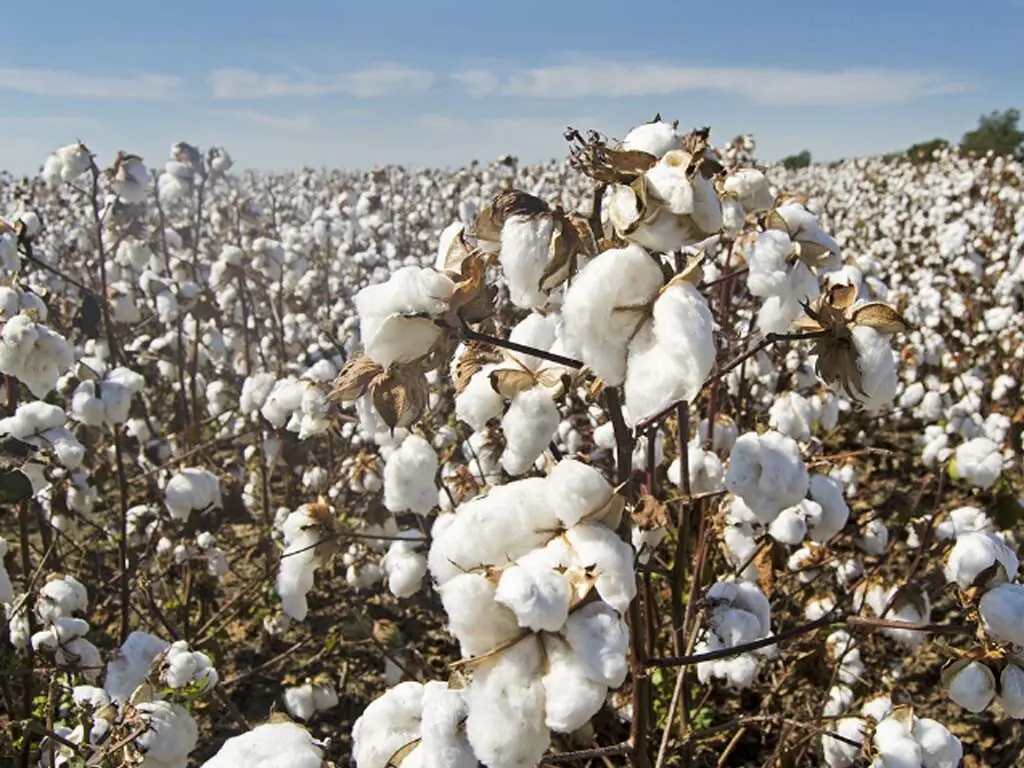

LAHORE: Cotton arrivals in Pakistan increased by 5.39 percent year-on-year to 3.208 million bales by September 30, 2026, according to the latest data released by the Pakistan Cotton Ginners Association (PCGA). However, officials have warned that pest attacks, contamination and weather risks could erode some of the early gains as the crop enters its critical final stage.
The country received 3,208,402 bales during the period under review, compared with 3,044,409 bales in the corresponding period last year, an increase of 163,993 bales.
Punjab recorded arrivals of 1,214,951 bales, up 6.91 percent from 1,136,439 bales a year earlier. Sindh received 1,993,451 bales against 1,907,970 bales, an increase of 4.48 percent, while Balochistan registered 152,763 bales compared with 112,990 bales last year, a rise of 35.31 percent. A total of 459 ginning factories are currently operational across the country.
Speaking to Business Recorder, Sajid Mahmood, Head of the Technology Transfer Department at the Central Cotton Research Institute (CCRI), Multan, said the performance of major cotton-producing districts had contributed to the overall improvement in arrivals.
In Sindh, Sanghar recorded the highest arrivals at 984,312 bales, followed by Ghotki with 202,900 bales and Naushahro Feroze with 170,000 bales. In Punjab, Bahawalnagar led with 276,700 bales, followed by Bahawalpur with 196,596 bales and Dera Ghazi Khan with 193,210 bales.
According to Mahmood, textile mills purchased 2,726,868 bales, while exporters and traders bought 96,800 bales, bringing total sales to 2,823,668 bales. Unsold stocks at ginneries stood at 187,940 bales, while total unsold stocks were recorded at 384,934 bales, compared with 539,931 bales during the same period last year.
Mahmood said the next few weeks would largely determine the final production volume and quality. Despite the encouraging start to the season, he said, the final output would depend on several factors, including pest pressure, particularly pink bollworm, timely picking, weather, rainfall and lint quality. He cautioned that even minor negligence at this stage could erode some of the gains made earlier.
He said pink bollworm had emerged as one of the major threats to the crop in both Punjab and Sindh, with infestations reported from various areas. Recent field monitoring by the Pest Warning Department of Punjab had also detected the pest at certain locations.
Stressing the need for continuous field surveillance, Mahmood said that observing visible damage to plants alone was not sufficient. Timely detection of larvae inside cotton bolls and an assessment of their impact were equally important. Referring to the farmer advisory issued by CCRI Multan, he said need-based pesticide application, monitoring at intervals of about seven days and timely picking were particularly important at this stage.
He added that the Sindh crop was progressing rapidly towards maturity and arrivals there were expected to decline during October and November, whereas picking was still continuing in Punjab.
Consequently, a significant portion of the final national output would depend on the performance of the Punjab crop in the coming weeks. The final production picture, he said, would become clearer towards the end of the season, based on total production, per-acre yield and lint quality.
CONTAMINATION A GROWING CONCERN
Mahmood also identified contamination as a growing concern, saying complaints were higher this season than in previous years. He said that while increasing production was important, the presence of soil, plastic, cloth and other foreign materials in lint during picking could undermine quality and reduce the benefits of higher output.
Clean and timely picking, he stressed, should not be viewed merely as a farm-level issue, as it directly affects quality across the cotton value chain, export competitiveness and the price received by farmers.
Commenting on international market trends, Mahmood said declining prices in New York cotton futures and the availability of imported cotton were influencing domestic market conditions. Although textile mills were purchasing locally produced cotton, they were also considering imported cotton as an alternative.
In this situation, he said, farmers needed to consider not only the prevailing price of seed cotton but also the combined impact of price, production and quality on their overall income during the remaining weeks of the season.
He said the major test now was the crop’s performance in its final stage. If cotton in the major producing areas of Punjab remained protected from severe pest attacks, excessive rainfall and further deterioration in quality, and if picking continued in a timely and clean manner, the season could conclude on a relatively positive note. However, weaknesses in pest management, picking practices or quality control could result in the loss of some of the gains achieved so far.
Mahmood estimated that around 1.3 million acres had been planted with cotton in Sindh this season. Based on field observations and the prevailing crop situation, he said that if the weather remained favourable and the average yield reached 2.25 bales per acre, Sindh could produce around 2.925 million bales.
In Punjab, the officially reported cotton area is approximately 2.6 million acres. Assuming an average yield of one bale per acre, the province could produce around 2.6 million bales.
Adding a cautious estimate of roughly 0.2 million bales for Balochistan, the combined potential production of the three provinces comes to around 5.725 million bales, or approximately 5.7 million bales.
Mahmood clarified that this was a current field-based estimate rather than a final production forecast, as weather conditions in October and the final performance of the crop could cause significant variation in the eventual figure.
Copyright Business Recorder, 2026





















Comments