


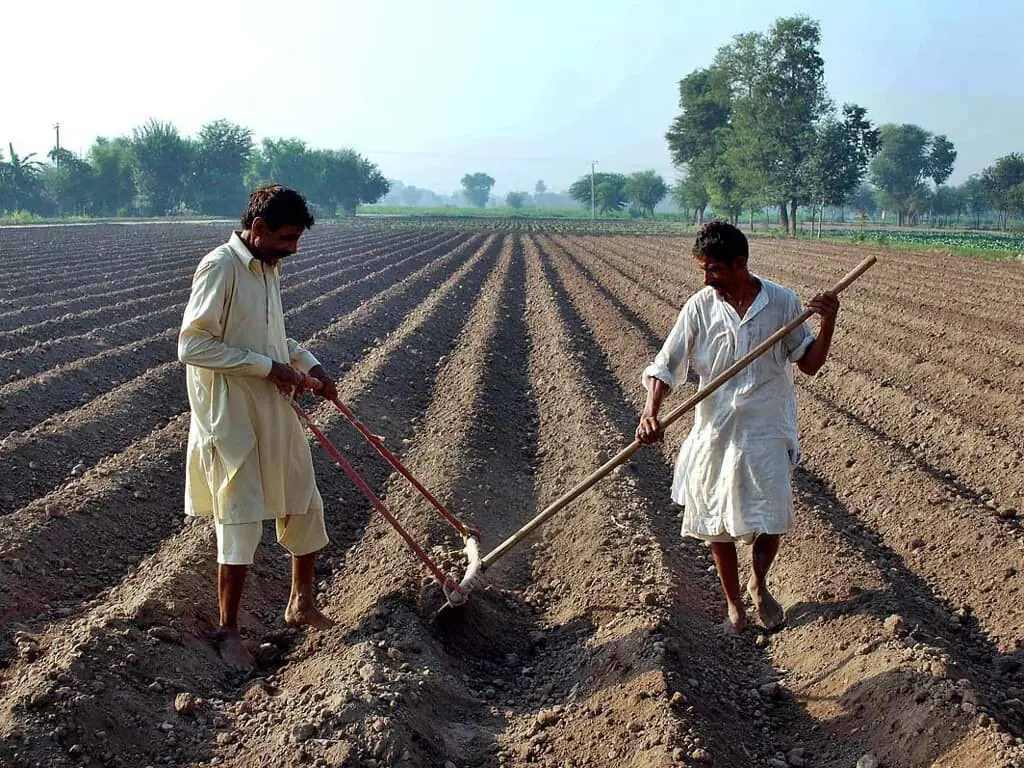
HYDERABAD: The Hari Welfare Association (HWA) to launch the report ‘State of Peasants’ Rights in Sindh 2025’ and to review progress in implementing peasants’ protection laws in Sindh.
They regretted that the Sindh Tenancy Act (STA) of 1950 (which governs landlord–tenant relations), the Sindh Bonded Labour System (Abolition) Act of 2015, and the Sindh Women Agriculture Workers Act of 2019 have not been in force since their promulgation.
On the occasion, Akram Khaskheli, executive director of HWA, noted that in March 2026, the Sindh Cabinet notified rules under the Sindh Women Agricultural Workers Act (SWAWA) 2019. However, no unions have yet been registered under it, and grassroots awareness and mobilization are absent, leaving women vulnerable.
He added that the Government of Sindh had not withdrawn its petition in the Supreme Court of Pakistan against the High Court of Sindh’s 2019 pro-peasant-rights judgment, even as the government claims to be pro-peasants and pro-workers’ rights.
Women Activist Rabia Rehman, Iqbal Ahmed Detho, Prof. M Ismail Kumbhar, Pushpa Kumari Counsil member of HRCP, Adv Sattar Sarki, Ex MPA Farheen Mughal, Sarwan Baloch from Welthungerhilfe, Peasants leader Shanti, Manzoor Laghari, peasants and rural workers continue to live and work in extremely difficult conditions.
They emphasized that meaningful land reforms are essential for improving the socio-economic conditions of peasants and rural workers and promoting sustainable rural development.
They urged the Sindh government to effectively activate and strengthen District Vigilance Committees to identify and eliminate bonded labour in the agriculture and brick-kiln sectors.
They further called upon the provincial government to introduce comprehensive crop and livestock insurance schemes to protect farmers and rural workers from economic losses caused by climate-related disasters and other unforeseen risks.
The State of Peasants’ Rights in Sindh, compiled by HWA, highlighted that in 2025, bonded labour remained deeply entrenched across Sindh, with 1,311 laborers released from brick kilns and the agricultural sector. These rescues were carried out through police raids, court orders, and emergency interventions, underscoring the scale of exploitation in rural labour systems.
The brick kiln sector accounted for 743 releases, including 262 men, 220 women, and 261 children. The near equal proportions of men and children highlighted the family based nature of kiln bondage, in which entire households were confined under debt arrangements.
Districts such as Umerkot, Sanghar, Matiari, and Badin emerged as hotspots, with repeated discoveries of illegal confinement and forced labour.
In the agricultural sector, 568 labourers were freed, including 206 men, 171 women, and 191 children.
Children also accounted for nearly one third of those rescued, underscoring the persistence of child labour in feudal tenancy systems. Major operations took place in Umerkot, Sanghar, Mirpurkhas, and Shaheed Benazirabad, where private jails and landlord violence were repeatedly uncovered.
Combined, the figures show 468 men, 391 women, and 452 children among those released. The high proportion of children, more than one third of all victims, demonstrates that bonded labour in Sindh functioned as an intergenerational system, trapping entire families in cycles of debt and coercion.
Copyright Business Recorder, 2026






















Comments