


Punjab Assembly passes several bills, including Anti-Terrorism Bill 2026
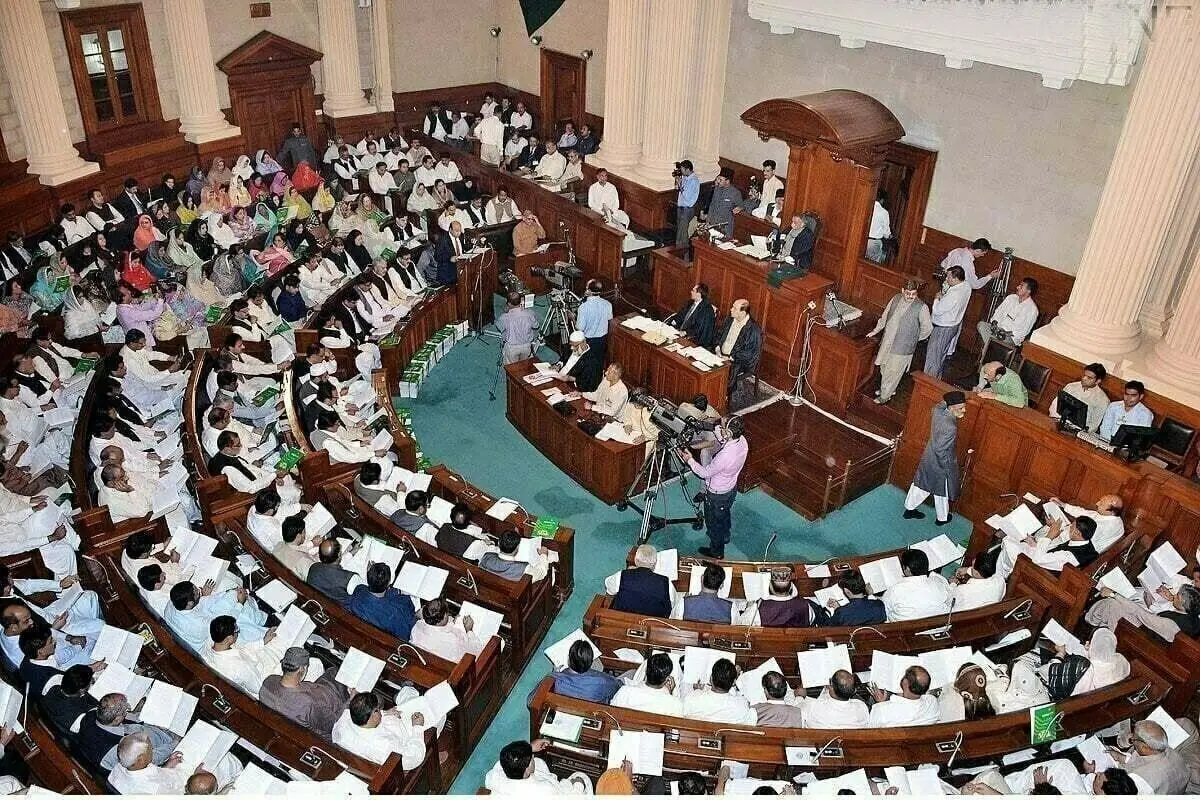
LAHORE: The Punjab Assembly on Monday approved the Anti-Terrorism (Amendment) Bill 2026, the Food Safety (Amendment) Bill 2026, and several other bills, rejecting all amendments proposed by the opposition amid strong objections that the anti-terror legislation could undermine fundamental rights and the right to a fair trial.
The Anti-Terrorism (Amendment) Bill 2026 triggered a heated exchange between the treasury and opposition benches, with opposition members questioning the constitutionality and transparency of the proposed provisions.
Leader of the Opposition Moin Riaz Qureshi objected to the bill, alleging that the government sought to strengthen itself through the legislation. Opposition member Ahmar Rashid Bhatti termed the proposed law a “black law”, arguing that keeping the identities of judges, prosecutors, defence lawyers and witnesses confidential would adversely affect fair trial guarantees and fundamental rights.
Speaker Malik Muhammad Ahmad Khan, however, ruled that the bill could constitutionally and legally be introduced in the provincial legislature and that its inclusion in the agenda was valid. He said the opposition could raise its objections by proposing amendments to the bill.
Later, the House rejected all opposition amendments and passed the Punjab Anti-Terrorism (Amendment) Bill 2026. It also approved the Punjab Judicial Academy (Amendment) Bill 2026 and several other bills, including the Food Safety (Amendment) Bill 2026.
During the session, questions relating to the Housing, Urban Development and Public Health Engineering Department also came under intense scrutiny, with treasury and opposition members raising concerns over the department’s performance.
Member Aashifa Riaz Fatyana advised Parliamentary Secretary Sultan Tariq Bajwa to come to the House fully prepared, saying that proper and complete answers were not being provided to members’ questions.
The speaker also expressed dissatisfaction with the parliamentary secretary’s responses, observing that the department’s information appeared insufficient. He said a four-line response could not be considered a complete answer and directed the department to provide detailed information.
Member Arshad Malik claimed that 42 out of 44 filtration plants were non-functional and pointed out that 20 of 27 filtration plants in his constituency were closed. Parliamentary Secretary Sultan Tariq Bajwa, however, disputed the claim and said that according to the department’s report, 43 filtration plants were operational and only one was closed.
The opposition pointed out the lack of quorum twice during the proceedings, but the government managed to complete the required quorum on both occasions.
The session was adjourned until 2pm on Tuesday after completion of the agenda.
Copyright Business Recorder, 2026




















Comments