


Colonial mindset
Pakistan's independence remains unfinished, as it inherited colonial state structures and mindsets, fostering a culture of control, discretion, and external validation rather than true self-governance.
- Frantz Fanon's insights on colonialism's impact on imagination.
- Pakistan's continued reliance on foreign validation and expertise.
- How colonial state structures perpetuate corruption and discretion.
- Dismantling inherited habits of hierarchy and intellectual dependency.
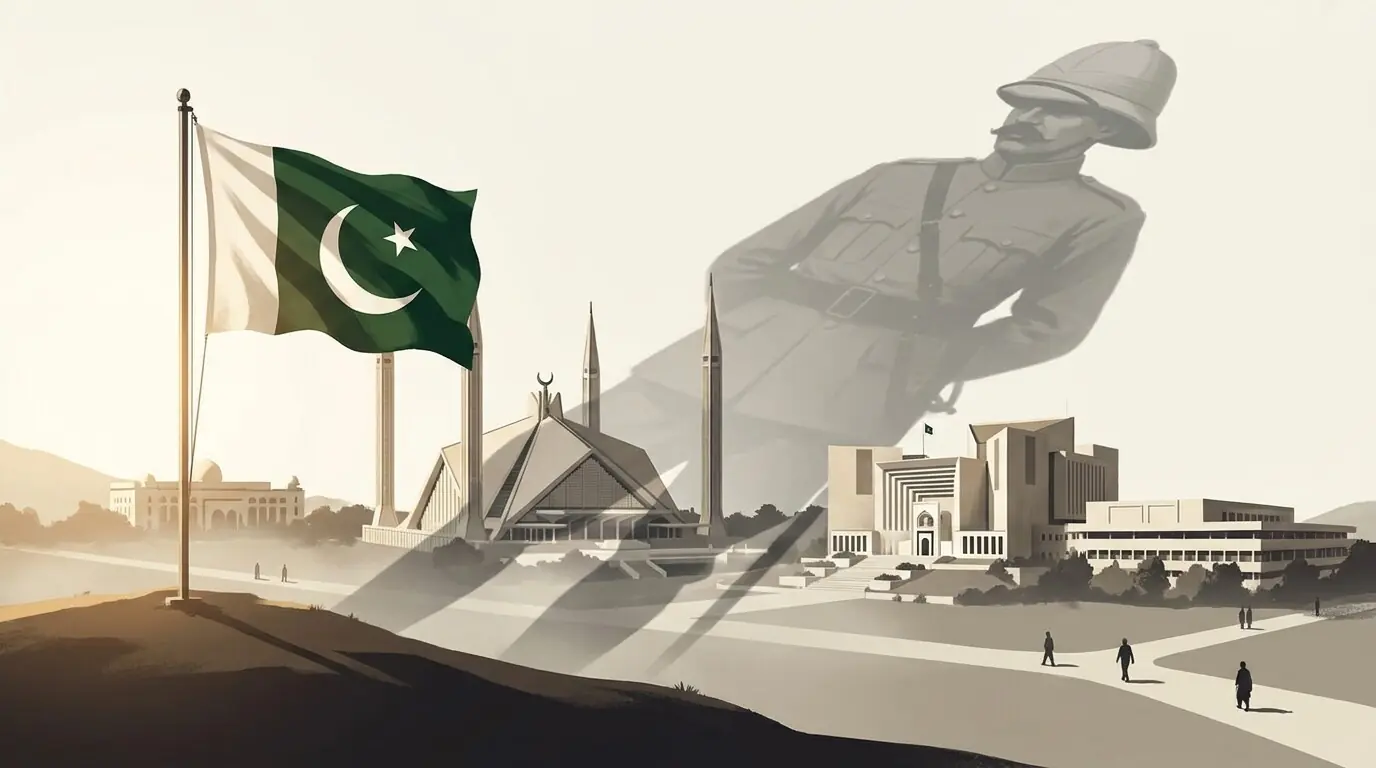
Pakistan has been independent for nearly eight decades. The Union Jack came down, the British went home, and we acquired our own flag, parliament, bureaucracy, courts and constitution. But independence leaves a harder question: did the colonial state really disappear, or did we simply learn to operate it ourselves?
Frantz Fanon, the psychiatrist and anti-colonial thinker whose work has had a major influence on the study of colonialism and de-colonialism, understood colonialism as more than the occupation of territory or extraction of wealth. It also colonised the imagination. The colonizers became the benchmark of civilization, knowledge and competence; the colonized were taught, subtly and repeatedly, to doubt their own.
That is the essence of what might be called colonial narcissism. The colonizer did not merely exercise superiority; he needed to believe in it. More dangerously, some of the colonized eventually began to believe in it too. Fanon saw how educated colonial subjects could start seeking recognition through the language, manners and institutions of the ruling power. They began looking at themselves through somebody else’s eyes.
Pakistan still occasionally looks into that mirror. English fluency can be confused with intelligence. A foreign qualification may carry authority disproportionate to the knowledge behind it. An argument Pakistani professionals have made for years can suddenly become compelling when repeated by a consultant from Washington or London. The problem is not English, foreign education or foreign expertise; it is the outsourcing of judgment.
But the deeper colonial inheritance lies in the relationship between the state and the citizen. The British did not build the administrative machinery of India primarily to serve Indians. They built it to govern them. A colonial state therefore values control, hierarchy and administrative convenience. The subject seeks permission; authority flows downward; accountability rarely travels upward.
Much of that instinct survives. Businesses need permissions to invest their own money. Entrepreneurs navigate licences, NOCs, regulators, ministries, tax authorities and utilities. Files travel from desk to desk while responsibility remains elusive and discretion remains valuable. The NOC has become almost a philosophy of government.
We complain endlessly about corruption without asking a more basic question: why have we designed a state in which citizens need so much official permission? Every unnecessary approval creates another gatekeeper, and every gatekeeper creates an opportunity for delay, influence or rent-seeking. Reduce discretion and a surprising amount of corruption becomes impossible.
Fanon’s sharpest warning concerned what came after colonialism. Political independence could simply replace a foreign elite with a domestic one. The new ruling class might inherit the old institutions, occupy the old privileges and continue governing from above while speaking the language of national sovereignty.
Pakistan should find that warning uncomfortable. We can be fiercely defensive of sovereignty while remaining strangely dependent on foreign validation. A policy acquires respectability when an international institution endorses it. A reform becomes serious when a foreign consultant presents it. Governments celebrate favourable assessments from abroad as though external approval were itself an economic outcome.
The ordinary Pakistani has a simpler test: has my life improved? That matters more than another communiqué, another consultant’s presentation, another photograph of an agreement being signed, or another declaration that Pakistan has “enormous potential.” We have had enormous potential for seventy-nine years. At some point potential has to become performance.
None of this means colonialism can remain our permanent excuse. Britain left in 1947. It did not create today’s circular debt, loss-making state enterprises, regulatory confusion, tax privileges or repeated policy reversals. We did that ourselves. Colonial history may explain where some institutions came from; it cannot excuse what Pakistani elites have chosen to do with them for almost eight decades.
Indeed, the uncomfortable possibility is that dysfunctional institutions survive because they are not dysfunctional for everyone. A discretionary state benefits whoever controls discretion. A complicated tax system benefits those powerful enough to secure exceptions. Protection benefits incumbents. Bureaucratic complexity rewards access. What looks irrational to the citizen can be perfectly rational to those who profit from the arrangement.
Pakistan’s unfinished decolonisation is therefore not about rejecting the West or retreating from the world. Pakistan should absorb foreign technology, attract international capital, learn from successful countries and use the best expertise available. But there is a fundamental difference between learning from the world and seeking permission from it.
Successful countries borrow knowledge without outsourcing judgment. Pakistan must do the same. It must also rethink a state that too often treats citizens as subjects: replacing permissions with transparent rules, discretion with competition, administrative control with accountability, and protection of insiders with genuine openness to entry and enterprise.
Political liberation is easy to date. Psychological and institutional liberation is not. There is no midnight ceremony at which a society suddenly stops thinking like a colony. It happens when officials understand that public authority is a responsibility rather than a privilege; when citizens no longer need connections to exercise ordinary economic rights; and when an idea is judged by whether it works, not by where it came from.
The British left long ago. We cannot keep summoning them whenever we need someone to blame. The harder task is dismantling the habits of hierarchy, privilege, discretion and intellectual dependency that survived them.
Perhaps that is Pakistan’s unfinished independence. The first independence removed the colonial ruler. The second must remove the colonial relationship between ruler and the ruled. This time, there is nobody else to do it for us.
Copyright Business Recorder, 2026
The writer served as the Deputy Chairman of the Planning Commission and is now Director, Socioeconomic Insights and Analytics (SIA) X: @nadeemhaque; YouTube: @SiaLytics and Substack: Aid, Policy and Growth

PUBLIC SECTOR EXPERIENCE: He has served as Member Energy of the Planning Commission of Pakistan & has also been an advisor at: Ministry of Finance Ministry of Petroleum Ministry of Water & Power
PRIVATE SECTOR EXPERIENCE: He has held senior management positions with various energy sector entities and has worked with the World Bank, USAID and DFID since 1988. Mr. Shahid Sattar joined All Pakistan Textile Mills Association in 2017 and holds the office of Executive Director and Secretary General of APTMA.
He has many international publications and has been regularly writing articles in Pakistani newspapers on the industry and economic issues which can be viewed in Articles & Blogs Section of this website.



















Comments