


Panel discussion at IES, KU: ‘Sindh’s coastal communities are least protected and least connected populations’
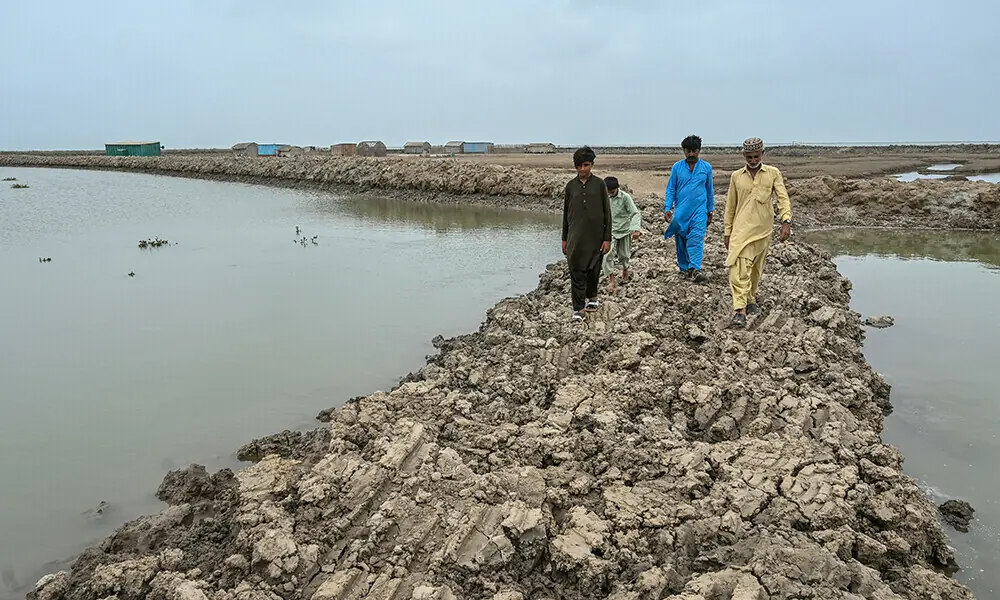

KARACHI: Sindh’s coastal communities live on the front line of climate change and other natural disasters, and remain among the least protected and least connected populations. These people face combination disasters like cyclones, sea erosion, seawater rise, mangrove degradation, migration nightmares, and declining livelihoods.
This was stated in a panel discussion organized by Green Media Initiatives in collaboration with the Institute of Environmental Studies (IES), University of Karachi, Digital Democracy Initiative (DDI), Digital Democracy South Asia, CIVICs and Accountability Lab at IES.
The experts in the panel said “for many coastal families, the natural disasters and climate change are not a distant scientific concept. It is the gradual disappearance of agricultural land, the erosion of villages, the loss of fishing grounds, the destruction of homes and, increasingly, the difficult decision to migrate.” These issues needed to be addressed with the government and civil society groups, including NGOs, they said.
Shabina Faraz, the Founder of Green Media Initiative (GMI), while referring to GMI’s fresh Digital Disaster Mapping Survey of 10 villages in Keti Bandar, said that 1,361 people in this coastal area responded in the survey that socio-economic conditions and climate vulnerabilities of coastal communities are a matter of great concern. Shabina said that sea intrusion was identified by 74.8 percent of people as the most significant environmental threat affecting their villages.
When households were asked which hazard had the greatest impact on their income, 74.4 percent identified it as cyclones. She further informed that nearly 99 percent coastal people, including women, reported that they had been experiencing recurring disasters while the majority rated their impacts as high or very high. The GMI founder said that about 93 percent respondents reported that disasters particularly cyclones disrupt their livelihoods and income-generating activities.
Afia Salam, a prominent environment expert, senior journalist of Pakistan, a former environment expert at IUCN, said there is gap between academia and civil society pertaining to tackling natural disasters and other environment issues as the academia is not being included in decision making. She said there is a dire need to fill this gap.
Dr Farrukh Nawaz, Director, IES at KU, welcomed the participants and praised the GMI and other collaborators for arranging the event. He said that digital mapping is very necessary to take measures for protecting coastal communities from natural disasters. He said Pakistan is most vulnerable to climate change and there is also future risks of cyclones, floods, sea intrusions. The government, academia and civil society will have to join forces to tackle these disasters jointly, he said.
Dr Asma Ibrahim, a noted archaeologist said that natural disasters and manmade encroachments are affecting historical archaeological sites across the country. Giving an example, she said that an important site at Bhanbhor is under encroachment but the government is not helping to remove this encroachment.
Kashif Ali Sheikh, Executive Director at Transparency International Pakistan, said the people of Pakistan, particularly those living in coastal areas are most vulnerable to the climate change. He said there is no clue to clear resource allocations. He called for setting clear and visible resource allocation for coastal communities so that they could be helped at the time of disasters.
Imdad Hussain Siddiqui, Director Climate and Disaster Justice Unit, Provincial Ombudsman Sindh, said that tackling climate disasters is not the work of the government alone, but the people, companies, corporate and other social sectors also need to make their contribution in averting and mitigating these disasters.
Bilquees Gul, Dean, Faculty of Science, KU; Dr Alamgir, Assistant Professor; and others also spoke on the occasion.










Comments