


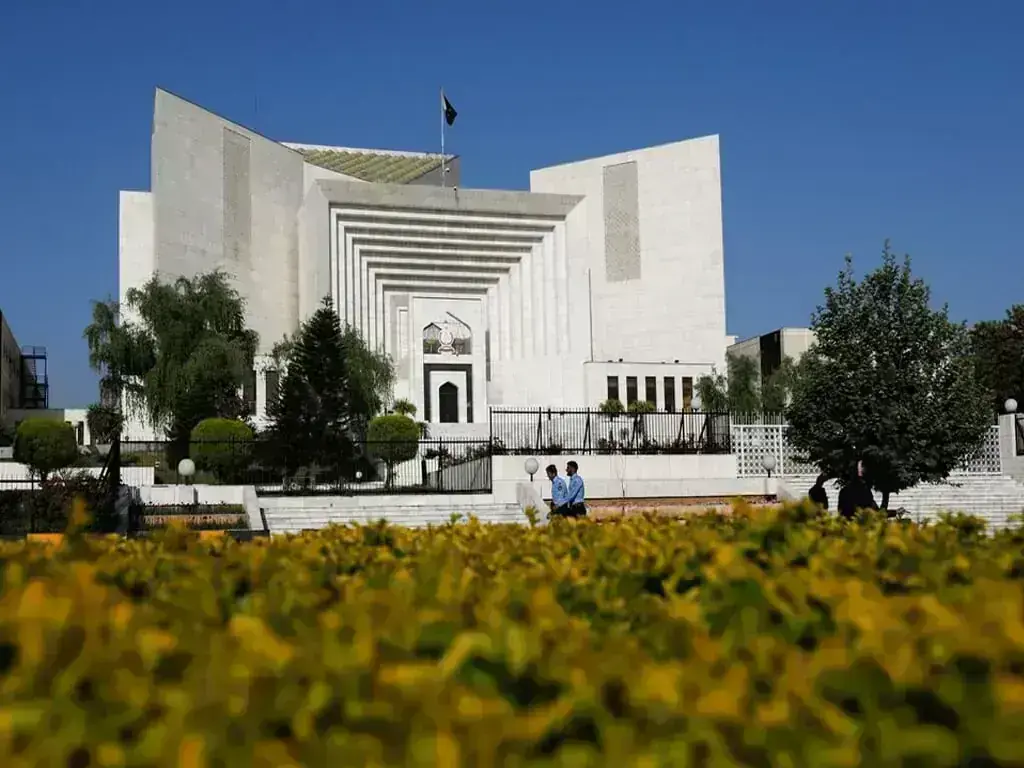

ISLAMABAD: The Supreme Court held that proceedings cannot be permitted to remain pending for an extended period without reaching any conclusion.
A two-judge bench of the Supreme Court upheld the Lahore High Court’s judgment. The LHC, maintaining the Appellate Court order, had remanded the suit to the Trial Court to provide the respondent a fair opportunity to produce his evidence.
A five-page judgment, authored by Chief Justice of Pakistan Yahya Afridi, emphasized that where a matter is remanded to the lower court, then it should not treat the proceedings as a fresh case, but should proceed with them in accordance with the terms and scope of the remand order and conclude them within a reasonable time, without granting unnecessary adjournments.
The judgment, taking note of inordinate delay [of eight years]in the conclusion of proceedings by the Trial Court, expressed serious concern. It said the remand was ordered approximately eight years ago, and there is nothing on record to show that the proceedings were ever stayed or otherwise restrained by any competent Court.
The judgment also said that despite the proceedings having remained pending before the Trial Court throughout this period, the dispute has not been finally adjudicated. The prolonged delay has thus, in practical terms, had an effect akin to keeping the proceedings in abeyance, without any judicial order directing that they be so kept. Such prolonged pendency, extending over approximately eight years without any apparent judicial restraint accounting for it, is plainly excessive.
Inordinate delay in the conclusion of proceedings is, in itself, a matter of serious concern. However, it assumes particular significance where no stay order has been granted by a competent Court. A stay order constitutes a judicial restraint upon the progress of proceedings and can operate only by virtue of an order passed by a Court competent to grant such relief.
The mere pendency of proceedings before a higher Court concerning the matter does not, in the absence of an express stay order, justify withholding or delaying proceedings before the Trial Court seized of the matter. Where proceedings nevertheless remain pending for years without any such judicial restraint, the resultant delay may, in practical terms, have the effect of keeping the proceedings in abeyance, without there having been any judicial determination by the higher Court that they should be so kept.
Justice Yahya wrote that jurisdiction of the High Court under section 115 of the Code of Civil Procedure, 1908, is supervisory and limited. It is not intended to substitute the High Court’s own view for that of the subordinate Court merely because another view may be possible. Interference is warranted only where the subordinate Court has exercised a jurisdiction not vested in it by law, failed to exercise a jurisdiction so vested, or, in the exercise of its jurisdiction, acted illegally or with material irregularity.
Similarly, the jurisdiction of the Supreme Court under Article 185(3) of the Constitution is, likewise, not an ordinary appellate jurisdiction. In a petition for leave to appeal, interference is warranted only where the impugned judgment or order suffers from a patent error of law or jurisdiction, is based on a misreading or non-reading of material evidence, proceeds upon an erroneous legal principle, or otherwise occasions a substantial miscarriage of justice. The present case discloses no such infirmity.
The Chief Justice directed the Trial Court to conclude the remanded proceedings within two months of the date of receipt of this order.
Copyright Business Recorder, 2026




















Comments