


Business degree in global trade
Pakistan's academia must shift from general business degrees to specialized global trade education to equip graduates for the volatile international market, boosting exports and addressing trade imbalances.
- Academia's lack of focus on global trade education.
- Pakistan's stagnant exports and ballooning imports.
- The need for specialized global trade degrees.
- Challenges for small and medium exporting enterprises.
- Strategies of successful export-oriented nations.
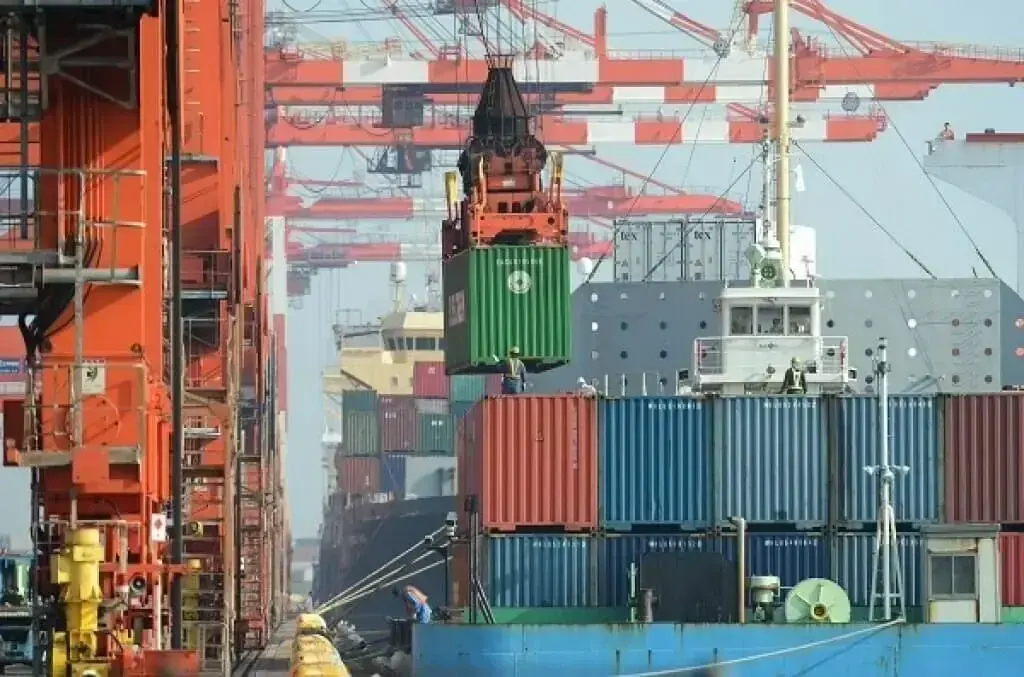

No country in the world produces every requirement on its own and that is why global trade is the medium for employment, foreign exchange, and economic prosperity.
The downside is that many countries, especially less developed, have rarely established a formidable foundation to take advantage of natural resources, human resources, and financial resources. One handicap is that academia has focused on degrees in business, accounting, or human resources.
The students are imparted general education, while emphasis is not accorded on dedicated subjects. It is high time business schools made a paradigm shift and structure a degree in global trade, especially enhancement of the export regime.
It goes without saying that Pakistani imports keep ballooning while exports are stagnant and hence there is always a squeeze on scarce foreign reserves. Manufacturers and service providers involved in global trade are contingent on sailing with the wind, and this is more so because of the unavailability of global trade experts.
The management hierarchies mostly rely on themselves or their Marketing or Procurement Managers and seldom have in their team any experienced and knowledgeable second and third tier personnel.
Academia is not in the position to cater to this demand and instead churns out business graduates who are more interested in working for financial institutions instead of manufacturing enterprises. Ergo, there are yawning gaps in the traditional mode of business education.
The universities have not taken a holistic approach in educating graduates on international trade because a global vision is missing.
Global trade education spreads over subjects such as legal and cross-border formalities, buyer compliances, research and development, marketplace intricacies, information technology, sourcing, business development, and opportunities and threats. The result is that graduates are not properly armed with the modern ammunition to forge ahead in the volatile global marketplace.
Although industry-academia linkages, on-job-training, and internships are passionately mentioned and discussed, the fact is that focused knowledge is set aside and importance is on filling the checklist box in order to complete the mandatory requirements of senior year students.
The prevalent gap lies in insufficient exposure to existing world problems. Graduates come out of academia with relatively strong theoretical knowledge but inadequate perceptions of how export ecosystem operates or how booming technology advancement is applied to confront trade challenges.
Hence prospects and facilitation through internships, modernization, and private sector collaboration will benefit them to transit more assuredly into the system.
The small and medium size exporting enterprises are reluctant to invest in people and therefore depend on the availability of existing pool of staff for their human resource needs.
A limited number of persons in the enterprise are engaged in every aspect of business, such as procuring, manufacturing, marketing, selling, government relations, financial management, etc. This is a major flaw in their vision of becoming large exporters.
Business leaders as well as policymakers routinely give sermons on exports and highlight their goals of achieving robust growth in exports, but they do not fortify their objectives by formulating doable strategies and policies on export promotion, international marketing, and practical guidance.
The lingering question is that when other countries can zoom up their exports through progressive policies, through remarkable facilitation, and through favourable financial modes, why is it that Pakistan has not been able to break the ceiling?
The lack of support has compelled enterprising entrepreneurs to go solo in achieving their own exports. Institutional efforts just do not work because vested interests, secrecy, and apathy are common features.
There are many examples of those who succeeded on their own in foreign markets, by not relying on trade associations, diplomats, or export promotional organizations. They venture alone, face hurdles, handicaps, and hindrances but are determined to create their own space but many fail to reach their full potential.
Pakistani exporters and even importers have always been at a critical juncture, depending on the world to open up rather than sliding through the narrow opening of the global portal. Importers are comfortable with sourcing from around the world instead of advocating import substitution. This mind-set is prevalent in private sector and in government.
The import regime is liberal while exporters tolerate inconsistent policies, suffocating regulatory restrictions, and financial restraints. Adding to these is the lack of competent and talented graduates.
Educational institutions can forge partnerships with their foreign counterparts and should utilize online motivational libraries, learn professional development programs, and teach globally relevant curricula. It must be made mandatory for students to visit exhibitions, conferences, and training programmes that are frequently organized here and, if possible, in foreign lands.
Enlightened policy changes, dynamic industry involvement, and committed academia participation, can result in a pragmatic shift from general business courses towards worthwhile, high-quality, and cutting edge teaching methodologies.
Pakistan’s academia must learn from universities of China, Korea, Vietnam and even Malaysia because these countries have instituted fundamental changes in their bilateral trade regimes. They have become powerhouses now and command overarching influence in world trade. Pakistani academia must study and adopt the game plans of these countries.
Moreover, private sector trade organizations routinely talk about export “potential” of this product or that commodity but then the ensuing result is that talk remains just talk.
Global trade expert Craig Maginness in his authoritative book Go Glocal: The Definitive Guide to Success in Entering International Markets writes that “The complexity of managing an international business can be likened to playing a game of chess on several boards at once.
Each country represents a different game board, and each move you make has consequences not just on that board but potentially affects the others.” If Pakistani business schools continue to treat international commerce as a mere elective, they will keep sending unprepared graduates onto the global stage. It is time for academia to finally give future trade leaders the skills to master all boards.
Copyright Business Recorder, 2026
The writer is an industrialist




















Comments