


China’s solar shift: What’s in it for Pakistan
China's new solar efficiency standards will phase out lower-efficiency panels, urging Pakistani buyers to prioritize long-term system quality and support over initial low prices.
- China's new mandatory solar efficiency standards.
- Impact on global solar panel manufacturing.
- Challenges for Pakistan's solar market regarding older stock.
- Prioritizing long-term reliability and support for solar investments.
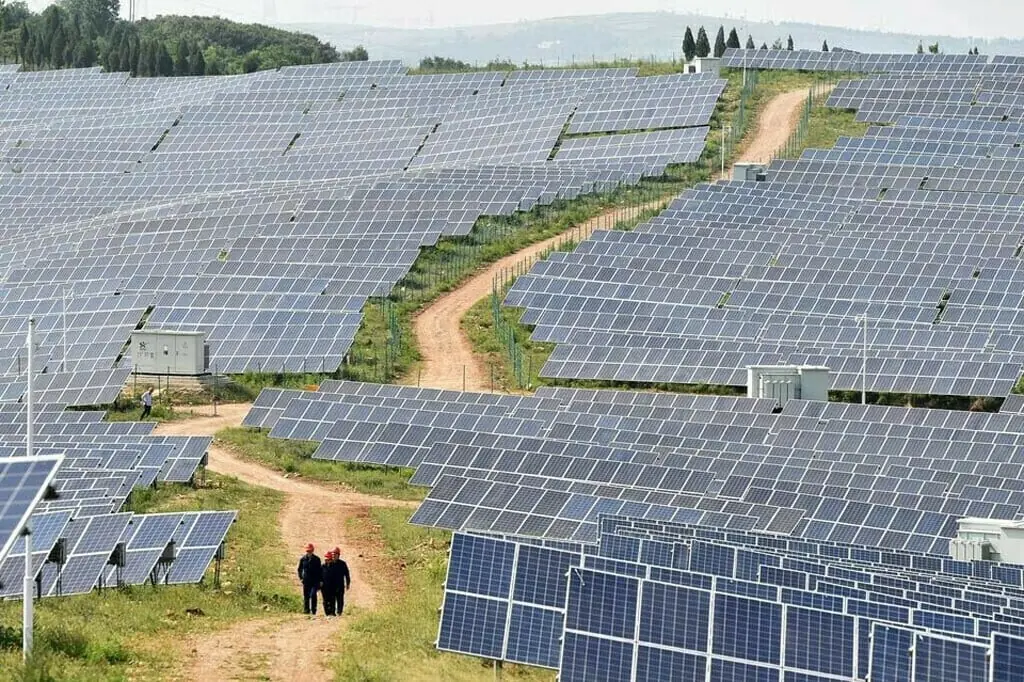
Pakistan’s solar boom was built on falling panel prices. But as the market matures, the focus is shifting from simply installing more panels to building better systems — with greater efficiency, durability and increasingly, storage. China’s new solar efficiency rules give Pakistani buyers another reason to look beyond price alone.
China has formally issued GB 47834-2026, a new mandatory national standard that sets minimum energy-efficiency requirements and efficiency grades for crystalline-silicon solar modules and inverters. Published on June 27, 2026, the standard will take effect from January 1, 2027. In simple terms, China is raising the minimum efficiency bar for solar equipment manufactured and sold in its market.
The implications become clearer when looking at commonly available 585W solar modules. The 585W label refers to a panel’s rated power output — up to 585 watts under standard test conditions — but says nothing by itself about how efficiently that panel converts sunlight into electricity.
Many 585W solar panels are currently 21 to 22.6 percent efficient, below China’s new minimum requirement of 23.2 percent. This means a significant part of the lower-efficiency segment could come under pressure as Chinese manufacturers shift toward products that meet the new standard.
The key point is that the new rule is about efficiency, not wattage. It does not mean that every 585W panel will be banned. A 585W panel can still meet the new standard if it is efficient enough.
Only those that fall below the required efficiency level will no longer qualify once the rule takes effect.
The commercial implication is straightforward. Under China’s Standardization Law, products that fail to meet mandatory standards cannot be produced, sold or imported in the Chinese market. As manufacturers adjust, lower-efficiency production lines are therefore likely to be phased out more quickly.
For Pakistan, the concern is that older, cheaper modules may continue to circulate even as Chinese manufacturers shift toward newer, more efficient products. This could create a gap between what is still available in the local market and what is actually being produced to the latest standards.
Older stock will not disappear overnight. As manufacturers move to newer standards, existing panels will still find their way into the market, often at lower prices. In a price-sensitive market like Pakistan, that can be hard to resist: a cheaper panel can easily look like the better deal.
But solar is a long-term investment. So, the real question is not just how cheap a panel is today, but whether it will still be reliable, easy to replace and properly supported years down the line.This is particularly important outside major urban centres.
Farmers, small businesses and households in rural and peri-urban Pakistan often invest in solar precisely because reliable electricity is essential to irrigation, commercial activity or basic household needs. An upfront saving can become far less meaningful if the buyer later struggles with product verification, warranty processing, compatible replacement modules or dependable after-sales channels.
This does not mean a 585W panel will suddenly stop working because China has changed its rules. Nor are all 585W panels the same. The bigger lesson for buyers is simple: price and wattage alone do not tell you whether a panel is a good long-term buy.
Pakistani buyers should also check whether a model is still being produced, how old the stock is, and whether replacements will still be available a few years from now.
China’s new rules point to a wider shift in the solar industry. Manufacturers are being pushed toward more efficient technology and better-quality products, while older, less-efficient models are gradually being left behind.
Pakistan should read this signal carefully.
China’s new rules point to a wider shift in the solar industry. Manufacturers are being pushed toward more efficient technology and better-quality products, while older, less-efficient models are gradually being left behind. At the same time, Pakistan’s solar market is moving beyond panels alone, with more households and businesses adding battery storage to get greater control over when they use the electricity they generate.
The next phase of the market, therefore, is not just about installing more solar, but about building better, more efficient and more complete systems. A cheaper panel may still look attractive today, but buyers increasingly need to ask whether it fits into a system that will remain reliable, supported and useful for years to come.





















Comments