


Neelum-Jhelum after commissioning: from national asset to liability (Part-II)
- First major operational blow came in 2022, when tailrace tunnel failed, plant was shut down
The Neelum-Jhelum hydropower project, once celebrated, has become a cautionary tale due to repeated tunnel failures, ignored warnings, and significant economic and strategic setbacks for Pakistan.
- Repeated tunnel failures and operational shutdowns.
- Significant financial and strategic losses for Pakistan.
- Unresolved commercial issues and ignored expert warnings.
- Calls for transparency, accountability, and future project audits.
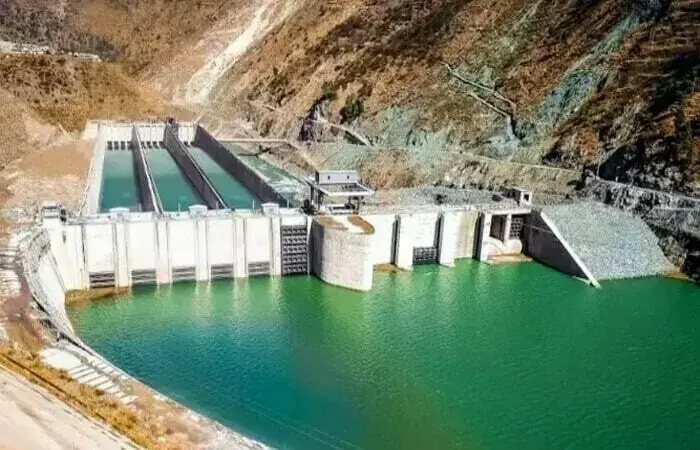

When Neelum-Jhelum reached full capacity in 2018, Pakistan briefly celebrated what looked like a major hydropower success. A 969 MW plant had entered the grid after decades of delay. It promised domestic, renewable electricity, lower fuel dependence and strategic value in the Neelum/Kishanganga basin.
But commissioning is not success. Success is sustained operation. On that standard, Neelum-Jhelum has turned from flagship to warning.
The project did generate power, and those units mattered. But the relevant test is not whether it ever generated electricity. The test is whether it delivered the promised output reliably, at a justifiable cost, without repeatedly returning to the national balance sheet for rescue. It has not.
The first major operational blow came in 2022, when the tailrace tunnel failed and the plant was shut down. This was not a routine defect. Reports pointed to leakage, pressure problems, weak rock, inadequate support and insufficient lining in vulnerable sections. In a tunnel-dependent hydropower project, such a failure goes to the core of the asset. It is like discovering that the highway bridge has a problem with gravity.
The financial damage followed immediately: lost generation, repair costs, tariff pressure and replacement power costs. Consumers had already paid once through the Neelum-Jhelum surcharge collected in electricity bills; after the shutdowns, they paid again through lost generation, repair costs and replacement power. The project that was supposed to ease the system became another burden on it.
After repairs, the plant returned to service and briefly achieved full capacity again. Then came the second blow. In 2024, pressure problems emerged in the headrace tunnel and generation was restricted before the plant was again shut down for inspection. A project that had just recovered from one tunnel failure was disabled by another tunnel-related problem. That sequence is not normal teething trouble. It points to deeper weaknesses in design, construction, geological treatment, operational monitoring or all of them together.
The most troubling issue is that expert warnings reportedly existed before the second shutdown. If concerns were raised and preventive measures were not implemented in time, then the failure cannot be dismissed as geology alone. It becomes a management failure. Mountains are difficult; ignored warnings are unforgivable.
This is the Neelum-Jhelum pattern in one line: warnings first, failure next, accountability last – if at all.
The commercial side is no better. Even after commissioning, tariff and cost-validation issues remained unresolved. A project of this scale cannot be considered complete merely because turbines turn. Its cost base, tariff treatment, insurance recovery, repair liability and performance obligations must be settled transparently. Pakistan built the asset but left too many financial questions floating downstream.
The wider system cost is severe. When Neelum-Jhelum is offline, Pakistan loses nearly 1,000 MW of hydropower capacity. That gap must be filled with more expensive generation, load management or additional financial stress. In a country already trapped by circular debt, high tariffs and imported fuel exposure, losing such hydropower capacity is not a technical inconvenience. It is an economic setback.
The strategic loss is equally painful. One of the project’s purposes was to strengthen Pakistan’s position on Neelum/Kishanganga waters. But delayed execution, prolonged outages and repeated tunnel failures weakened the practical value of that objective. Pakistan spent as if it was in a strategic race and operated as if reliability were optional.
There is also the local environmental question. Diverting Neelum water affected concerns around Muzaffarabad flows, ecology and urban water conditions. These issues should have been integrated into the project from the beginning, not treated as public-relations irritants. River diversions change local economies and environments. Pretending otherwise does not make the water flow differently.
The post-commissioning lesson is stark: Neelum-Jhelum was not just delayed and over-budget; it was under-governed. The state celebrated inauguration while failing to prove long-term technical stability. It confused completion with competence.
A serious response must start with disclosure. Pakistan needs a complete public technical chronology: feasibility changes, design approvals, geological assessments, tunnel support decisions, construction methodology, inspection reports, expert warnings, insurance claims and repair plans. Consumers and taxpayers have paid for this project many times. They deserve more than press statements.
Second, responsibility must be fixed across the full chain: design, supervision, construction, operation, monitoring and emergency response. The usual phrase – lessons have been learned – is useless unless names, decisions and consequences are attached to it. Lessons without accountability are condolences printed on government stationery.
Third, the real economic cost must be calculated honestly. That means construction cost, interest during construction, lost generation, repair cost, insurance recovery, tariff shortfall and replacement power cost. Only then will Pakistan know what Neelum-Jhelum has actually cost.
Fourth, future hydropower projects must be subjected to independent geological and design audits before irreversible commitments are made. Pakistan needs hydropower, but it does not need another tunnel of optimism dug through weak rock and weaker governance.
Neelum-Jhelum could have been a national asset. It still can be salvaged technically, but only if the state stops treating engineering failure as a public-relations problem. The tunnel will not be repaired by slogans. Nor will consumer confidence.
The project warned Pakistan before commissioning through design escalation, cost inflation and geological risk. It warned Pakistan after commissioning through tunnel collapses, shutdowns and repair bills. The tragedy is not that nobody saw the danger. The tragedy is that the danger was seen, diluted, deferred and then presented to the public as an unfortunate surprise.

PUBLIC SECTOR EXPERIENCE: He has served as Member Energy of the Planning Commission of Pakistan & has also been an advisor at: Ministry of Finance Ministry of Petroleum Ministry of Water & Power
PRIVATE SECTOR EXPERIENCE: He has held senior management positions with various energy sector entities and has worked with the World Bank, USAID and DFID since 1988. Mr. Shahid Sattar joined All Pakistan Textile Mills Association in 2017 and holds the office of Executive Director and Secretary General of APTMA.
He has many international publications and has been regularly writing articles in Pakistani newspapers on the industry and economic issues which can be viewed in Articles & Blogs Section of this website.




















Comments