


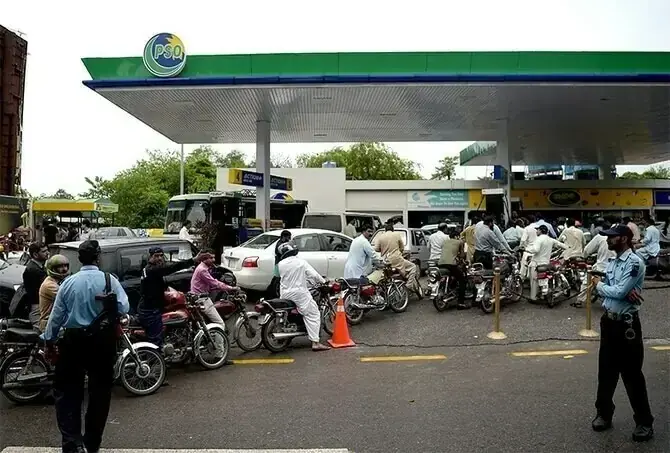

Pakistan’s growing reliance on petroleum levies is helping repair public finances—but it may also be quietly making inflation harder to defeat.
Every fortnight, Pakistan waits for one announcement that affects almost every household: the new price of petrol and diesel. The discussion usually lasts a day or two. Motorists complain, transporters revise fares upward, political parties trade accusations, and the country moves on.
The economy, however, does not.
Fuel is unlike most commodities. Its price does not stop at the filling station. It travels with every truck carrying wheat to the market, every tractor harvesting crops, every container leaving a factory, and every bus carrying workers to their jobs. Long before inflation appears in official statistics, it has already begun working its way through the economy.
That is why fuel pricing deserves to be viewed not merely as an energy issue but as an economic policy issue.
Pakistan has made undeniable progress in restoring macroeconomic stability. Foreign exchange reserves have improved, the exchange rate has become more orderly, and fiscal management is far stronger than it was only two years ago. The State Bank has also begun easing monetary policy by reducing interest rates to support investment and private-sector growth.
These are welcome developments.
Yet there is another side of the story.
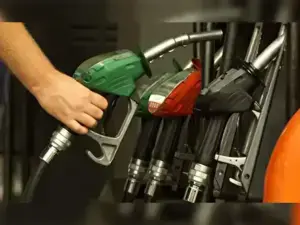
Successive increases in petroleum prices have pushed petrol above Rs335 per litre, while high-speed diesel has approached Rs388 per litre. At the same time, headline inflation remains above 11 per cent, with transport and food continuing to exert significant pressure on household budgets. These trends are closely connected, not coincidental.
Economics teaches a simple lesson: when the cost of moving goods rises, the cost of those goods eventually rises as well.
Pakistan’s economy is heavily dependent on road transport. Diesel powers freight vehicles, agricultural machinery and much of the country’s supply chain. Every increase in diesel prices raises the cost of cultivating crops, transporting raw materials, distributing manufactured goods and delivering food to markets. Businesses absorb part of those costs, but consumers ultimately pay the difference.
This is cost-push inflation in its purest form.
The policy challenge becomes even more complex because monetary and fiscal policies are now sending different signals.
Lower interest rates are intended to encourage businesses to borrow, invest and expand. Rising fuel prices, meanwhile, increase production and transportation costs. One policy encourages economic activity; the other makes that activity more expensive. The result is not necessarily policy inconsistency, but it does reduce the effectiveness of monetary easing.
The government’s position should also be understood.
Pakistan imports much of its petroleum and therefore cannot insulate itself from international oil prices or exchange-rate movements. Equally important is the IMF-supported reform programme that requires continued fiscal discipline. Petroleum levies have consequently become one of the federal government’s most dependable revenue sources. The current budget projects approximately Rs1.68 trillion in petroleum-levy collections during the fiscal year.
From a fiscal perspective, the attraction is obvious. Petroleum levies are relatively efficient to collect, difficult to evade and provide predictable revenue.
The question is whether they are becoming too important.
When governments rely heavily on fuel taxation, the burden does not remain confined to motorists. It spreads across agriculture, manufacturing, exports and household consumption. In effect, the economy begins taxing its own productivity.
Other countries facing similar pressures have adopted different strategies.
India has periodically moderated retail fuel-price increases to contain inflationary pressures, even when that shifted part of the burden to state-owned oil companies. Bangladesh has introduced a more transparent pricing mechanism linked to international markets. Sri Lanka, after its economic crisis, has shown that automatic pricing mechanisms must work in both directions—allowing prices to fall when global markets soften as readily as they rise when costs increase.
Pakistan’s circumstances are unique, and no foreign model can simply be imported. Nevertheless, these experiences highlight an important principle: credibility comes from transparency, consistency and predictability.
The real issue is therefore larger than fuel prices themselves.
Pakistan cannot indefinitely finance public expenditure by increasing the cost of transportation, production and distribution. Fiscal consolidation remains essential, but it should increasingly come from expanding the tax base, improving tax administration, reducing exemptions and strengthening compliance—not from placing additional pressure on one of the economy’s most inflation-sensitive sectors.
A transparent petroleum pricing framework would also improve public confidence. Citizens deserve to know how much of every litre reflects international crude prices, exchange rate movements, distribution costs and government levies. Transparency builds trust, and trust is an economic asset in its own right.
Pakistan has travelled a considerable distance towards macroeconomic stability. That achievement deserves recognition. But stability should not become the final destination. Its purpose is to create an environment where businesses invest with confidence, exports become more competitive and families experience a genuine improvement in their standard of living.
Economic policy is ultimately judged not by the size of government revenues, but by its impact on people’s lives.
If every increase in petroleum prices strengthens the Treasury while steadily weakening household purchasing power, then the country risks solving one economic problem by creating another.
Fiscal stability is indispensable. Price stability is equally important. Lasting prosperity demands both because, in the end, revenue collected at the pump should never become inflation served at the family table.
Copyright Business Recorder, 2026
The writer is a financial and economic analyst with international banking experience, including leadership roles in the financial sector in the Middle East















Comments