



Unbundling Gas Utilities could be repeating Wapda’s costly mistake if the policymakers do not comprehend and learn from the consequences of breakup of Wapda some three decades back - which did not work out to be in national and public interest. In fact, it worked the other way round - resulting in unmanageable circular debt and unaffordable tariffs for the consumers.
It is all about the governance system. The breakup the gas utilities won’t fix a broken governance system.
The government’s decision to revive the unbundling of Pakistan’s two integrated gas utilities — Sui Northern Gas Pipelines Limited (SNGPL) and Sui Southern Gas Company Limited (SSGCL) — marks one of the most consequential reforms proposed for the energy sector in recent years.
Supported by the World Bank, the plan promises competition, efficiency and private investment. Similar promises were made three decades ago when Wapda, under a similar World Bank plan, was dismantled into generation, transmission and distribution companies. The outcome was not a competitive electricity market but a fragmented sector plagued by governance failures, crippling circular debt and unaffordable tariffs. Pakistan must ensure it does not repeat history.
For policymakers, structural reforms often carry an irresistible appeal. Creating new companies, changing organisational charts and introducing new regulatory frameworks create the impression of decisive action. Yet experience repeatedly demonstrates that changing institutions without changing governance merely redistributes existing problems instead of solving them.
The proposed restructuring of SNGPL and SSGCL follows nearly the same blueprint that was adopted for Wapda during the 1990s. An integrated utility is to be dismantled into a transmission company and four provincial distribution companies, while competition and private investment are expected to improve efficiency.
On paper, the model appears logical. In practice, Pakistan has already tested this experiment.
Before its unbundling, Wapda was one of the country’s most respected public institutions. It planned generation, transmission and distribution as one integrated system. Operational decisions were coordinated, investments were centrally prioritized, and financial accountability rested within a single organisation. Like every public utility, it had shortcomings, but it remained financially sustainable and operationally coherent.
The Wapda restructuring and reform programme changed everything.
Generation companies, NTDC and multiple distribution companies were created with the promise that each would eventually become professionally managed and commercially viable before being privatised. Independent boards were to replace bureaucratic control. Market discipline was expected to replace political intervention.
Consumers were promised lower tariffs, improved service and greater efficiency. None of these promises materialised.
Corporatisation remained largely cosmetic. Political appointments continued to dominate management and boards.
Distribution companies became financially weak because tariffs, recoveries and operational decisions remained politically influenced. The much-awaited privatisation never meaningfully progressed. Instead of creating competition, Pakistan created administrative fragmentation.
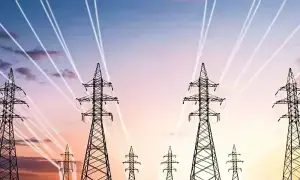
The consequences are painfully visible today. Circular debt has become one of Pakistan’s largest fiscal threats. Electricity tariffs have reached levels that undermine industrial competitiveness. Manufacturers increasingly regard energy costs as one of the biggest obstacles to exports and investment. Thousands of megawatts remain underutilised, while capacity payments continue to rise irrespective of actual electricity consumption.
This is not the outcome of an integrated utility. It is the consequence of fragmented institutions operating within weak governance structures.
Ironically, SSGCL and SNGPL remained among Pakistan’s strongest public-sector companies for decades despite operating in a challenging environment. Their shares were considered blue-chip investments because both companies demonstrated financial stability and professional management.
Their subsequent deterioration was not primarily caused by structural weaknesses. Rather, they became victims of the same circular debt originating in the electricity sector. When power producers failed to honour their obligations, the financial stress inevitably cascaded upstream into the gas supply chain.
The diagnosis, therefore, should not be confused with the symptoms. Pakistan’s gas sector undoubtedly requires reform. System losses must be reduced. Theft must be controlled. Tariff distortions require rationalisation.
Subsidies should become targeted and transparent. Regulatory oversight must become more credible and independent. Corporate governance deserves significant strengthening.
None of these objectives, however, necessarily requires dismantling integrated utilities.
Indeed, fragmentation may generate entirely new complexities. Provincial distribution companies will inherit vastly different operating conditions. Losses vary sharply between provinces. Transfer pricing between transmission and distribution companies could become contentious. Uniform national tariffs may become increasingly difficult to sustain.
Regulatory oversight will become considerably more demanding, requiring institutional capacity that Pakistan has historically struggled to build.
These concerns are hardly speculative. Similar reservations had previously been expressed by independent consultants and even by oil and gas regulator, Ogra, itself when an earlier unbundling proposal was examined.
International financial institutions frequently advocate structural liberalisation because it has succeeded elsewhere. However, those success stories rest upon strong regulatory institutions, contractual discipline, independent regulators and professional corporate governance. These prerequisites cannot simply be assumed into existence.
Pakistan’s energy crisis has never been caused primarily by organisational design. It has been caused by weak governance, inconsistent policymaking and political interference. Unless these structural deficiencies are addressed first, the creation of additional companies will merely multiply administrative costs while dispersing accountability.
History offers a clear lesson. Pakistan did not fail because Wapda remained integrated; it failed because governance failed after unbundling. Repeating the same institutional prescription, while ignoring the original diagnosis is unlikely to produce a different outcome.
Before dismantling two historically successful gas utilities, the government should first answer a fundamental question: Is the problem the corporate structure—or the governance culture that manages it?
Until that question is honestly addressed, unbundling may once again become reform in appearance but regression in practice.
Copyright Business Recorder, 2026
The writer is a former President OICCI; Global Business Leader and Strategic Affairs Analyst












Comments