


GSMA assesses telecom tax cuts to boost broadband, digital economy
- The study is expected to provide the government with policy options showing how initial revenue losses from tax cuts could be recovered
The GSMA is assessing how telecom tax cuts in Pakistan could boost broadband adoption, expand the digital economy, and ultimately increase government revenue, supporting the "Digital Pakistan 2030" vision.
- Telecom tax reductions and economic growth.
- Closing Pakistan's digital usage gap.
- "Digital Pakistan 2030" strategic priorities.
- Building trusted digital infrastructure.
- Preparing Pakistan for the AI economy.


As part of its tax-reform advocacy, the Global System for Mobile Communications (GSMA) is conducting an evidence-based assessment to determine whether reducing taxes on the telecom sector could spur broadband adoption, expand the digital economy, and generate government revenues higher than the existing tax regime.
This was stated by Julian Gorman, Head of Asia Pacific, GSMA, who was flanked by Saira Faisal, Country Lead – Digital Transformation, GSMA Pakistan, while addressing Media Roundtable – Digital Pakistan 2030: The Next Phase of Digital Transformation.
The global mobile industry body is conducting an evidence-based assessment to quantify the economic and fiscal impact of lowering taxes, including on low-cost smartphones, arguing that affordable devices are critical to closing Pakistan’s digital usage gap and unlocking wider economic growth.
The study is expected to provide the government with policy options showing how initial revenue losses from tax cuts could be recovered through higher smartphone penetration, increased broadband usage and an expanded tax base.
The official noted that the organization was examining where taxes could be reduced and how quickly the government could recover any revenue foregone through increased device sales, higher digital adoption and broader economic gains.
READ MORE: Call for greater focus on smartphone affordability
According to the GSMA, governments require evidence-based policymaking, particularly amid fiscal pressures and commitments under the International Monetary Fund (IMF) programme. The study is therefore intended to provide concrete data rather than general recommendations on lowering taxes.
The association reiterated findings from long-standing GSMA research showing that a 10 percent increase in broadband penetration can generate between a 1 and 2 percent increase in GDP, underscoring the significant economic potential of expanding digital connectivity in Pakistan.
The GSMA also welcomed ongoing digitalization initiatives by federal and provincial governments, saying they were creating practical incentives for citizens to own smartphones. They argued that digital transformation can also strengthen tax collection by bringing more people into the formal economy, thereby expanding the country’s tax base instead of relying on higher taxes from a relatively small number of existing taxpayers.
GSMA observed that Pakistan has experienced an investment gap in the telecom sector after years of spectrum uncertainty, which constrained network expansion. Following the recent spectrum release, mobile operators are expected to invest billions of dollars over the coming years to expand broadband coverage and improve network quality.
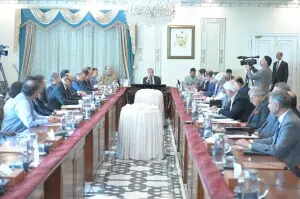
Senior representatives from Pakistan’s federal and provincial governments, Gilgit-Baltistan, industry, regulators and development partners convened at the GSMA Digital Nation Pakistan Ministerial Roundtable to identify practical actions that build on Pakistan’s growing digital momentum and accelerate the delivery of Digital Pakistan 2030.
The roundtable was one of the few forums to bring together federal ministries, all four provincial governments including representation from Gilgit-Baltistan, the national regulator, mobile industry leaders and international development partners around a shared agenda for Pakistan’s digital future.
This breadth of participation reflected the growing recognition that delivering Digital Pakistan 2030 requires coordinated action across the federal government, provinces, industry and development partners.
To inform these discussions, the GSMA published a new discussion paper, Digital Pakistan 2030: Building Momentum for Sustainable Investment, Trust and Inclusive Growth, which provided a framework for discussion by highlighting Pakistan’s recent progress and identifying five priorities to help translate today’s momentum into long-term economic and social outcomes.
The discussion paper highlighted the significant progress Pakistan has made across the spectrum policy, mobile internet and smartphone adoption, women’s digital inclusion, digital trust, cybersecurity and stronger collaboration between government and industry.
It argued that these advances have established stronger foundations for future growth, while emphasising that continued collaboration between government, industry and development partners will be essential to sustain momentum, create investment certainty, strengthen trusted digital infrastructure and deliver coordinated implementation across the digital ecosystem.
“Pakistan has established important foundations for digital growth, and the momentum of the past year is clear,” said Julian Gorman, Head of Asia Pacific, GSMA.
“What makes today’s roundtable particularly significant is the opportunity to bring together leaders from across government, industry and development organisations to discuss the practical actions needed to sustain that momentum. Delivering Digital Pakistan 2030 will depend on continued collaboration, shared priorities and coordinated implementation across the digital ecosystem.”
“Our discussion paper is intended to support those conversations by providing a framework for discussion and identifying where collective action can have the greatest impact.”
The GSMA discussion paper identified five strategic priorities to build on Pakistan’s digital momentum and support the delivery of Digital Pakistan 2030, including strengthening investment certainty by building on recent spectrum reforms and creating an environment that supports long-term infrastructure investment, accelerating digital inclusion by reducing the remaining usage gap through greater affordability, digital skills, rural connectivity, and continued progress on women’s digital inclusion.
It also emphasised preparing infrastructure for the AI economy through investment in 5G readiness, fibre, data centres, energy resilience, and future spectrum planning, and building trusted digital infrastructure by strengthening cybersecurity, digital identity, child online safety, anti-scam collaboration, and broader digital trust frameworks.
The paper also noted that the success of these points relied on strengthening national coordination across government, industry and development partners to improve implementation and accelerate delivery of shared priorities.
The paper also outlined a Digital Pakistan 2030 Action Agenda centred on five shared actions: creating investment certainty, accelerating digital inclusion, building trusted digital infrastructure, preparing Pakistan for the AI economy and strengthening national coordination.





















Comments