



ISLAMABAD: A leading power sector analyst and industrialist has formally urged the National Electric Power Regulatory Authority (Nepra) to direct the Power Division and the Independent System and Market Operator (ISMO) to immediately revise the Indicative Generation Capacity Expansion Plan (IGCEP) 2025-35 and the Transmission System Expansion Plan (TSEP) 2025-35, citing newly disclosed cost overruns in major hydropower projects.
In a letter addressed to the Nepra Chairman on July 27, 2026, Rehan Javed argued that the existing IGCEP has become outdated and no longer reflects the actual cost base of key pre-committed projects, undermining its status as a “least cost” expansion plan.
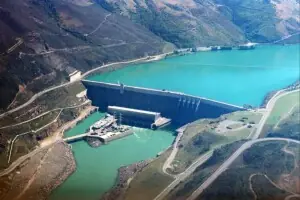
The request follows recent disclosures by the Ministry of Water Resources, reported the same day, indicating substantial cost escalations across major hydropower schemes. According to the data cited, the Diamer Bhasha Dam’s cost has surged by 134 percent to over Rs 1.121 trillion, compared with its original PC-I estimate of Rs479.686 billion.
READ MORE: Nepra raises questions on proposed IGCEP 2025-35
The letter further highlighted that other flagship projects—including Mohmand Dam, Tarbela 5th Extension, Dasu Hydropower Project, and K-IV—have also experienced significant cost increases. These escalations are largely attributed to currency depreciation, with the exchange rate rising from around Rs105–112 per US dollar at the time of approval to over Rs280–290 currently, alongside price inflation and financing costs.
Javed noted that the Ministry itself has termed a substantial portion of these overruns—up to 90 percent in the case of Dasu—as resulting from “uncontrollable factors” such as foreign exchange losses, price escalation, and interest during construction.
He contended that such drastic revisions fundamentally alter the cost assumptions underpinning IGCEP 2025-35, rendering the plan obsolete. “A plan whose foundational cost inputs have been revised upward by over 100 percent cannot continue to be presented as a valid least-cost framework,” the letter stated, adding that continued reliance on outdated figures is neither transparent nor defensible.
The analyst warned that unaccounted cost increases would ultimately be passed on to consumers through tariffs under the prevailing cost-plus, weighted average cost of capital (WACC)-based regime, further burdening already stressed industries.
He emphasised that industrial consumers, already struggling with high electricity tariffs, cannot make informed investment and expansion decisions based on outdated planning assumptions. “Pakistani industry is entitled to a power sector plan that reflects current realities, not one overtaken by subsequent cost disclosures,” he added.
In his request, Javed called on Nepra to issue formal directives to the Power Division and ISMO to revise IGCEP and TSEP within a specified timeframe, incorporating updated cost data for all affected projects. He also urged the regulator to subject the revised plans to fresh least-cost optimisation and consumer affordability tests.
Additionally, the letter called for greater transparency, including public disclosure of consumer cost impacts for each project and corrective measures where projects fail affordability benchmarks. Suggested actions include cost capping, government absorption of excess costs under the Least Cost Violation mechanism, or reconsideration of project scope.
Javed also sought clarity on timelines for completing the revision process, stressing the urgency of the issue in light of its implications for consumers, exporters, and the broader economy.
Copyright Business Recorder, 2026














Comments