




Relief can be remarkably expensive. Only a few weeks ago, financial markets were celebrating what appeared to be the beginning of the end of the Iran crisis. Oil prices were retreating, inflation fears were easing and investors were rebuilding exposure to equities.
The assumption seemed straightforward enough. The worst had passed. Yet how often have markets mistaken a pause in hostilities for a lasting peace?
That question has returned with uncomfortable speed.
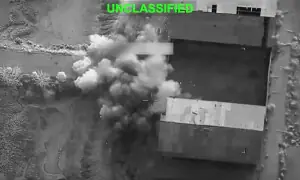
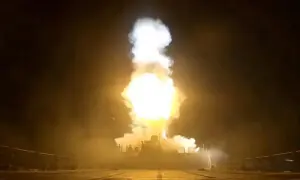
Washington and Tehran are once again exchanging strikes, while the prospect of a durable settlement appears as distant as ever. Even the status of the Strait of Hormuz has become increasingly difficult to define. Tehran insists it is closed.
Some commercial traffic continues, albeit at sharply reduced levels, while many shipping companies remain reluctant to transit one of the world’s most strategic waterways. Yet it is precisely that uncertainty, rather than a complete interruption of oil flows, that is driving prices.
Markets no longer seem to require an actual supply shock. The mere possibility of one increasingly appears sufficient.
Could that be the defining feature of this phase of the conflict?
The first round of fighting reminded investors that oil remains the world’s most politically sensitive commodity. The second is beginning to remind them that geopolitics rarely stays confined to the energy market.
Brent crude has climbed sharply in recent days, rebuilding much of the geopolitical risk premium that disappeared after the interim US-Iran understanding. Oil inventories are lower than they were when the conflict first erupted, while refining capacity has become increasingly constrained. The result is a market that appears considerably more vulnerable to fresh supply disruptions than it did only a few months ago.
That should matter far beyond commodity traders.
Oil rarely remains an oil story for very long. It eventually finds its way into transport costs, manufacturing, fertiliser, aviation and food prices. Inflation expectations begin shifting before official inflation data catches up. Bond markets respond. Central banks reassess their policy path. Equity investors eventually find themselves confronting a higher cost of capital.
Has the market started pricing that sequence already?
The early signs are difficult to ignore.
Treasury yields have begun climbing once again. The compensation investors demand for holding longer-term government debt has risen noticeably in recent weeks. The dollar has found renewed support. Even as equity markets remain remarkably resilient, bond markets appear increasingly reluctant to assume that inflation will simply continue drifting lower.
Perhaps the bond market is asking a different question from the equity market.
Wall Street continues drawing comfort from strong corporate earnings and relentless enthusiasm surrounding artificial intelligence. Credit markets remain unusually calm. Yet the very markets that normally respond first to inflation risk – oil, bonds and currencies – are beginning to send a rather different message.
Who is getting it right?
Perhaps both are.
Markets have repeatedly demonstrated an extraordinary ability to look through geopolitical shocks. Investors have grown accustomed to buying every decline, convinced that diplomacy eventually prevails and economic damage remains contained. That strategy has worked remarkably well for much of the past decade.
But every strategy eventually encounters conditions it was never designed for.
The risk today is not simply another spike in oil prices. It is the gradual re-emergence of something policymakers hoped had been left behind: stagflation.
Few words make investors more uncomfortable.
Higher inflation accompanied by weaker growth presents central banks with one of the most difficult policy environments imaginable. Raise interest rates to control prices and economic activity weakens further. Cut rates to support growth and inflation risks becoming embedded. Monetary policy begins pulling in opposite directions at the same time.
Could markets once again be approaching that uncomfortable crossroads?
Perhaps the greatest irony is that the world appears to have become remarkably efficient at pricing technological revolutions while remaining remarkably poor at pricing geopolitical persistence. Every fresh ceasefire is treated as the beginning of normality. Every renewed exchange of fire comes as a surprise. Yet the underlying disputes remain largely unresolved.
Should markets really be so surprised each time risk returns?
For Pakistan, these questions extend well beyond investment portfolios.
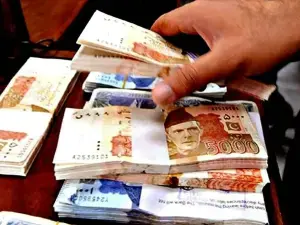
Every sustained increase in oil prices eventually feeds into the country’s import bill, inflation outlook, exchange rate and fiscal arithmetic. Higher global bond yields influence external financing costs. A stronger dollar places additional pressure on emerging-market currencies. The chain reaction begins thousands of miles away but rarely stops at the Strait of Hormuz.
That is precisely why events in the Gulf deserve special attention in Islamabad.
Pakistan cannot determine the outcome of the conflict. It can, however, prepare for the financial consequences that accompany it. Energy security, inflation management and external financing become considerably more difficult when geopolitical risk begins embedding itself into commodity prices for months rather than days.
That may ultimately be the real lesson emerging from recent weeks.
Markets are remarkably good at pricing immediate events. They are often less successful at pricing prolonged uncertainty. Investors continue debating whether this latest escalation represents another temporary interruption or the beginning of a more persistent geopolitical regime.
The answer remains unknowable.
What is becoming easier to observe, however, is that every renewed exchange around the Strait of Hormuz now reverberates through oil, inflation expectations, bond yields, currencies and eventually the wider global economy.
The missiles may be falling in the Gulf.
The financial aftershocks are already travelling much further.
Copyright Business Recorder, 2026
The writer can be reached at [email protected]








Comments