


Pakistan's trade deficit nears $40bn: a wake-up call for export-led growth
- Pakistan’s export sector has never suffered from a shortage of policies. Its real problem is inconsistent execution, writes former KCCI vice president
Pakistan's trade deficit reached a four-year high of $39.5 billion in FY2026, driven by declining exports and surging imports, exposing deep structural economic weaknesses.
- Pakistan's record trade deficit in FY2026.
- The collapse of agricultural exports.
- Deep structural weaknesses hindering export growth.
- Proposed reforms for economic competitiveness.
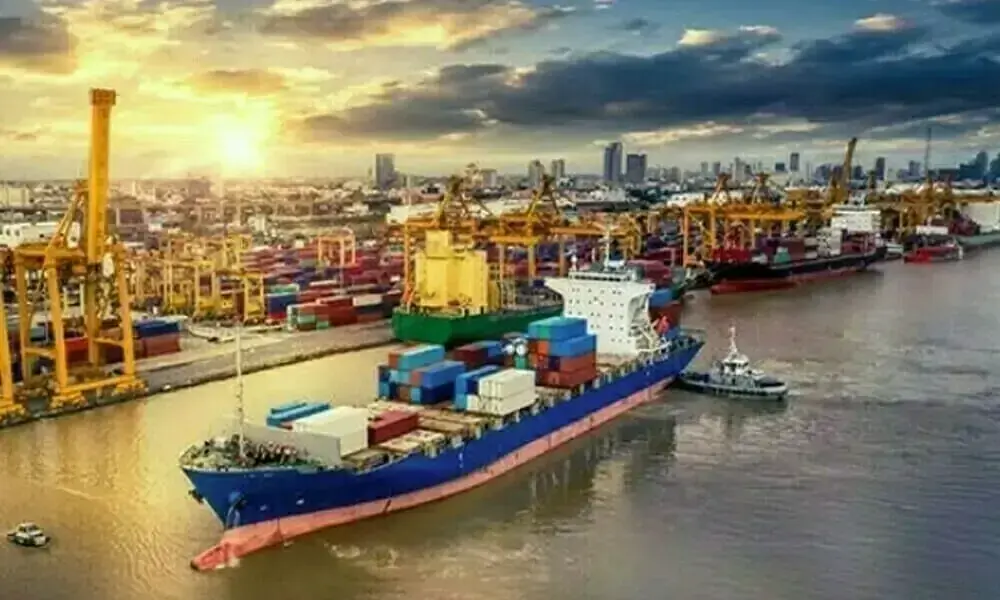
Pakistan’s external sector has once again entered a dangerous cycle. Merchandise trade statistics for FY2026 released by the Pakistan Bureau of Statistics (PBS) show exports losing momentum while imports continue to surge, pushing the annual trade deficit close to $40 billion.
The current account has also slipped back into deficit, recording a shortfall of $649 million in June after posting a surplus of $500 million in May. These figures are not merely disappointing; they expose deep structural weaknesses that successive governments have failed to address.
Pakistan’s export sector has never suffered from a shortage of policies. Its real problem is inconsistent execution. Whenever an export strategy begins to produce results, political transitions or frequent transfers of key officials disrupt continuity. Commerce policy has too often been driven by short-term administrative thinking rather than a long-term national export strategy.
FY2026 reflects this failure. Exports declined nearly 6% to $30.13 billion, while imports increased almost 8% to $69.6 billion, widening the trade deficit by more than 21% to $39.5 billion—the highest level in four years. In June alone, exports fell to $2.24 billion while imports surged to $6.77 billion, producing a monthly trade deficit exceeding $4.5 billion. No economy can sustainably import more than twice the value of its merchandise exports without eventually facing severe external financing pressures.
The deterioration cannot be attributed solely to recent geopolitical tensions. Export performance had already weakened from the beginning of FY2026. High energy tariffs, rising taxation, expensive financing, policy uncertainty and declining competitiveness steadily eroded Pakistan’s position in international markets despite significant reductions in policy interest rates.
The most alarming setback has occurred in agriculture, historically one of Pakistan’s strongest export sectors. Only two years ago, the country achieved record agro-food exports of over $8 billion, driven by rice, sesame, maize, fruits and vegetables. Instead of consolidating those gains, exports have collapsed despite bumper harvests.
During FY2026, agro-food exports declined to just over $5 billion from more than $7.1 billion a year earlier. Rice, Pakistan’s largest agricultural export, suffered a sharp decline as artificial increases in domestic prices made Pakistani supplies uncompetitive. Rice export earnings fell by almost 32% to $2.29 billion despite ample production. Sesame seed exports also dropped by more than 32%.
Ironically, growers received little benefit. Farmers producing potatoes, cauliflower, carrots, radish and other vegetables were forced to dump or feed produce to livestock because border closures and weak export management left domestic markets oversupplied while export opportunities were lost.
Meanwhile, India continued strengthening its agricultural exports. In FY2025-26, India’s agricultural exports reached a record $52.55 billion. Rice exports alone exceeded $11.5 billion, with export volumes reaching over 21 million tonnes. Pakistan’s coarse rice exports, by contrast, fell by over 42% in value, reflecting declining competitiveness rather than declining production.
Several domestic policy distortions have contributed to this outcome. High electricity and gas tariffs, increasing taxation, costly logistics and higher withholding taxes have raised production costs. Incentive schemes such as the Drawback of Local Taxes and Levies (DLTL), instead of encouraging genuine exports, have reportedly encouraged misuse, over-invoicing and market distortions while inflating domestic prices.
Imports present an equally troubling picture. While machinery, industrial raw materials and petroleum remain essential for economic activity, Pakistan continues importing billions of dollars’ worth of edible oil, pulses and numerous manufactured consumer goods that could increasingly be produced domestically with appropriate incentives. Excessive dependence on imported consumption goods continues to place unnecessary pressure on scarce foreign exchange reserves.
Every additional dollar of imports without matching export earnings ultimately requires financing through remittances or external borrowing. Although overseas Pakistanis continue to provide record remittances, these flows cannot permanently compensate for structural weaknesses in trade. Sustainable external stability can only be achieved through higher exports and stronger domestic production.
Successive governments continue announcing ambitious export targets, yet exporters still struggle with unreliable energy supplies, inconsistent tax policies, cumbersome regulations and high production costs. Export growth cannot be achieved through committees, speeches or temporary subsidies. It requires internationally competitive industries, efficient logistics, technological upgrading and policy consistency over many years.
Pakistan’s challenge extends beyond the trade deficit itself. The country simply produces too few internationally competitive goods while consuming increasing quantities of imported products. Until productivity improves across agriculture, manufacturing and services, recurring trade deficits will remain inevitable regardless of exchange-rate adjustments or temporary import restrictions.
The solution requires a coherent long-term national strategy rather than piecemeal interventions. Agricultural competitiveness must be restored by reducing farm input costs, ensuring affordable energy and expanding investment in modern irrigation, mechanisation, climate-resilient seeds, storage, cold-chain infrastructure and food processing. Export policy should gradually shift towards engineering products, pharmaceuticals, information technology, medical devices, chemicals and other higher value-added industries while strengthening value addition in agriculture.
Import substitution should focus on products where Pakistan possesses genuine production potential, including edible oils, pulses, chemicals, machinery components and consumer goods through technology transfer, investment incentives and industrial expansion instead of protectionism.
Energy sector reforms remain equally critical. Lowering circular debt, rationalising capacity payments, renegotiating expensive power contracts and introducing competitive industrial electricity tariffs would significantly improve export competitiveness. Tax simplification, customs modernisation and digitalisation should further reduce the cost of doing business.
Export financing should increasingly support automation, artificial intelligence, robotics and advanced manufacturing instead of merely financing traditional commodity exports. Simultaneously, Pakistan must diversify export destinations by expanding market access across Africa, Central Asia, ASEAN and Latin America while renegotiating underperforming trade agreements.
Trade deficits are symptoms rather than the disease itself. The underlying problem is Pakistan’s persistent inability to produce sufficient internationally competitive goods and services. Unless productivity rises, exports diversify and industrial competitiveness improves, the country will remain trapped in recurring balance-of-payments crises, currency instability and repeated dependence on external lenders.
The FY2026 trade figures should, therefore, be viewed not simply as another disappointing statistical release but as a national warning. Pakistan cannot consume its way to prosperity. Sustainable growth will only come when production, productivity and exports become the central pillars of economic policy.
The writer is a former Vice President of KCCI, former Board Member of REAP, and commodities and international trade expert








Comments