


‘National Gemstone Policy’ okayed by govt
The federal government approved the National Gemstone Policy 2026–2030 to formalize Pakistan's $450 billion gemstone sector, aiming to boost exports to $500 million annually by 2030 through new authorities and reforms.
- Unlocking Pakistan's $450 billion gemstone potential.
- Addressing challenges in the informal gemstone trade.
- Key initiatives of the new National Gemstone Policy.
- Targets for boosting gemstone exports by 2030.
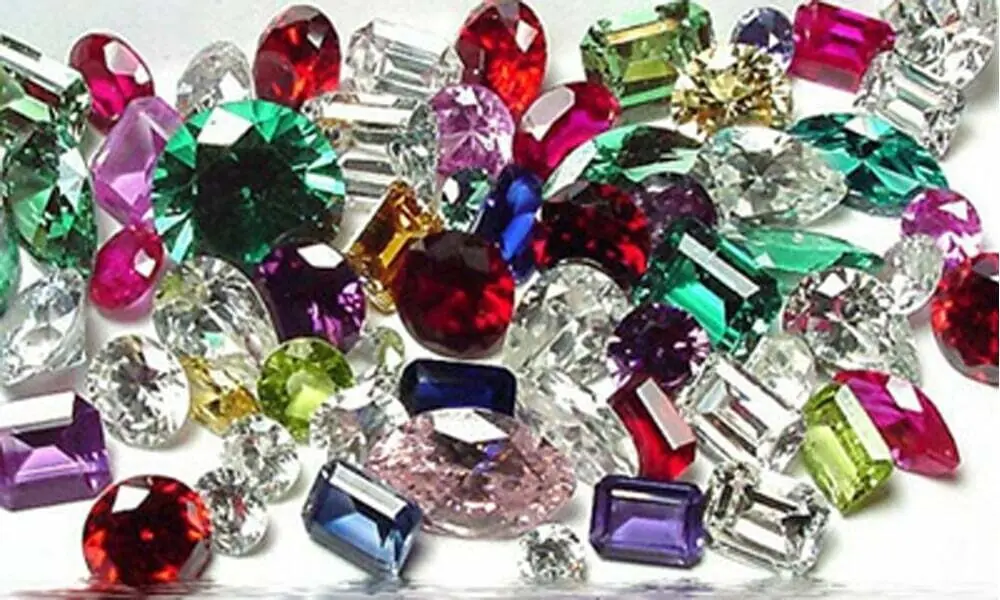
ISLAMABAD: The federal government has approved the National Gemstone Policy 2026–2030 to unlock Pakistan’s vast gemstone potential, with initial federal funding required for the establishment of a statutory authority and implementation of key initiatives, sources told Business Recorder.
The Ministry of Industries and Production (MoI&P) briefed the Economic Coordination Committee (ECC) that Pakistan possesses some of the world’s richest deposits of precious and semi-precious gemstones with estimated reserves exceeding USD 450 billion.
Despite this natural advantage, official exports remain limited to around USD 5–7 million annually—approximately 0.3 percent of global trade.
READ MORE: PM approves national policy framework to unlock $450 billion gemstone potential
The sector largely operates outside formal channels, with over 95 percent of trade estimated to be informal. This informality, along with fragmented governance, lack of credible certification and valuation systems, high wastage in artisanal mining, limited access to finance and international markets, and significant foreign exchange leakage, has prevented the country from realising the true economic value of its resources.
To address these challenges, the Prime Minister constituted a high-level committee in September 2025 to recommend reforms. The resulting policy has been formulated through extensive consultations with federal and provincial governments, regulators, financial institutions, trade bodies, industry stakeholders, and international experts. It also draws on best practices from countries such as India, Thailand, Sri Lanka, and Myanmar, which have successfully enhanced exports through formalisation, certification, and value addition.
According to MoI&P, the policy aims to establish a transparent and credible ecosystem to formalise the gemstone value chain, promote domestic value addition, and position Pakistan as a reliable global source of ethically mined and certified gemstones. The strategy rests on three key pillars: formalisation through registration, traceability and certification; growth and value addition through modern mining and improved financing; and global competitiveness through compliance with international standards.
A central feature of the policy is the creation of a statutory National Gemstone Authority through the merger of the Pakistan Gems and Jewellery Development Company, along with its staff and assets. The authority will regulate and coordinate the sector, maintain a national business registry, implement certification and traceability systems, facilitate trade, and act as custodian of the policy.
To strengthen export credibility, the policy also proposes establishing a National Warranty Office to provide standardised inspection, valuation, certification, and sealing of export consignments.
The office will operate in coordination with Pakistan Customs, Pakistan Single Window, banks, and courier services to reduce disputes, ensure secure logistics, and support formal exports.
To curb under-invoicing and improve data integrity, the policy introduces minimum export price benchmarks and Pakistan-specific HS codes. A National Gemstone Business Registry will assign unique identifiers linked with customs, banking, and certification systems.
On trade facilitation, the policy outlines a framework for temporary exports, returns and refunds, inclusion of gemstones in the B2C e-commerce export regime, and facilitation of digital payment systems in coordination with the State Bank of Pakistan.
The policy also emphasises improving mining productivity and domestic value addition through machinery rental pools, demonstration mines, controlled access to explosives, expansion of cutting and polishing facilities, skills development programmes, and facilitation of imports of rough stones and modern equipment. These measures aim to reduce wastage and improve recovery rates.
For long-term competitiveness, the policy focuses on branding and global positioning through internationally recognised certification systems and the development of a unified “Pakistani Gemstone” brand, supported by marketing campaigns and participation in international exhibitions.
Implementation will be guided by a National Action Plan and overseen by a Steering Committee led by the Minister for Industries and Production, while the proposed authority will serve as the central coordinating body.
The MoI&P noted that while initial federal funding would be required, the authority is expected to become largely self-sustaining through service charges and fees over time. Implementation will require enabling legislation and amendments to relevant rules, SROs, and State Bank regulations.
The policy targets increasing gemstone exports to around USD 500 million annually by 2030, reducing informal and illicit trade, improving foreign exchange earnings, creating skilled jobs, and promoting regional development, particularly in Gilgit-Baltistan, Khyber Pakhtunkhwa, and Azad Jammu and Kashmir.
The policy was approved in principle by the Prime Minister on January 9, 2026, subject to stakeholder consultations. Subsequently, multiple meetings were held to build consensus, and feedback from key stakeholders—including the Ministries of Commerce and Energy, State Bank of Pakistan, Federal Board of Revenue, Pakistan Post, Pakistan Mineral Development Corporation, and industry representatives—has been incorporated. All stakeholders have supported the policy in principle.
Copyright Business Recorder, 2026














Comments