


Weekly Cotton Review: Production surges 77pc despite textile sector woes
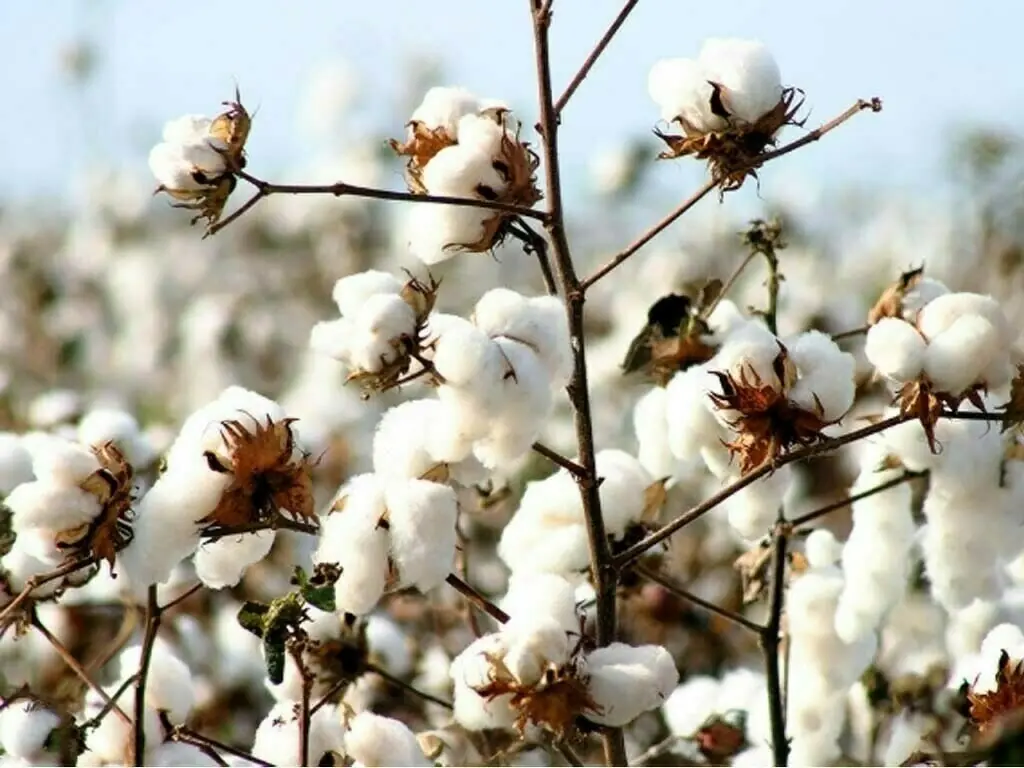
KARACHI: Pakistan’s cotton production has surged by 77 percent, reaching five hundred and twenty-eight thousand bales so far, even as the textile industry grapples with rising input costs, falling seed cotton supplies, and mounting closures of local mills that industry leaders warn could deepen unemployment across the sector.
According to market sources, the decline in seed cotton supply has pushed cotton prices up by five hundred to eight hundred rupees, while the spot rate has also risen by five hundred rupees per maund. The price surge comes even as overall cotton output continues to climb, reflecting a supply squeeze at the ginning stage despite the broader rise in production.
Industry experts caution that a growing volume of imported cloth and yarn is undermining local manufacturers, forcing power looms and sizing units to shut down. According to Sajid Mahmood, rising energy prices and heavy taxation are compounding the pressure, driving more textile mills toward closure and pushing unemployment steadily higher. He warned that continued neglect of these issues could inflict lasting damage on the industry.
Compounding the concerns, Amir Naseem said this year’s cotton crop in Sindh faces potential damage from erratic rainfall and water shortages, raising fears of a production shortfall in the coming season. Against this backdrop, the Pakistan Textile Council has called on the government to take urgent and effective steps to revive stagnant exports and restore stability to the sector.
Separately, a legal dispute involving the Karachi Cotton Association remains unresolved. Although the Sindh High Court granted the association temporary relief, permitting it to continue business operations within its building, officials say they have yet to be allowed back into the premises despite the court’s ruling, a situation the association has described as deeply concerning.
According to the Pakistan Cotton Ginners Association (PCGA) report released today, cumulative cotton arrivals at ginning factories across the country reached 527,900 bales as of July 18, 2026, compared with 297,751 bales during the corresponding period last year. This represents an increase of 230,149 bales, or 77.30 percent, marking a strong start to the current cotton season.
Cotton arrivals in Sindh reached 326,403 bales by July 15, representing an increase of 113.82 percent over the corresponding period last year.
An upward trend dominated the local cotton market over the past week, driven largely by a sharp shortage of seed cotton (phutti) in Sindh province. With textile mills stepping up purchases against this limited supply, cotton prices jumped suddenly by 500 to 800 rupees per maund. In Punjab, rains in cotton-growing regions similarly disrupted seed cotton supplies, pushing prices there up by a comparable 600 to 800 rupees per maund.
The rally in cotton prices fed directly into seed cotton rates as well. In Sindh, the price of 40 kilograms of seed cotton climbed to a range of 8,500 to 9,300 rupees, while in Punjab it reached an even higher band of 9,000 to 9,800 rupees.
Cotton broker Aamir Naseem, who recently toured Shahdadpur, Sanghar, Tando Adam and Mirpurkhas in Sindh, reported that the cotton crop is in urgent need of water and rainfall. Strong winds have been causing the flowers to shed prematurely, further reducing the arrival of seed cotton at markets. He noted that ginning factories are sitting largely idle, with mills struggling to produce even a single lot every two to three days, even as textile mills’ demand for cotton continues to rise, adding further upward pressure on prices.
Naseem added that the shortage of water and rainfall is preventing the seed cotton from developing properly, resulting in shorter staple length and lower micronaire values, while RD readings are coming in at 72 to 73. As a result, he said, mills are being compelled to buy cotton despite the unfavourable quality, simply out of necessity.
The Karachi Cotton Association’s Spot Rate Committee increased the spot rate by 500 rupees per maund and closed the spot rate at 18300 rupees per maund.
In Sindh province, the price of cotton remained between 18200 and 18500 rupees per maund, while the price of phutti remained between 8500 and 9300 rupees per 40 kg.
In Punjab province, the price of cotton remained between 18800 and 19000 rupees per maund, while the price of phutti remained between 9000 and 9800 rupees per 40 kg.
Karachi Cotton Brokers Forum Chairman Naseem Usman said that there is an upward trend in international cotton prices. The New York cotton futures rate remained stable between 77 and 89 American cents per pound. According to the USDA’s weekly export and sales report, 34,400 bales were sold for the year 2025-26.
Bangladesh topped the list by purchasing 10,600 bales. Vietnam ranked second by purchasing 5,800 bales. Pakistan ranked third by purchasing 5,300 bales.
For the year 2026-27, 14,100 bales were sold. Pakistan topped the list by purchasing 4,200 bales. Peru ranked second by purchasing 3,800 bales. Vietnam ranked third by purchasing 1,700 bales.
Exports amounted to 214,900 bales. Vietnam topped the list by importing 77,100 bales. Turkey ranked second by importing 36,100 bales. Pakistan ranked third by importing 21,500 bales.
During a telephone conversation with renowned cotton analyst Naseem Usman, cotton expert Sajid Mahmood said that according to the Pakistan Cotton Ginners Association (PCGA) report released on July 18, cumulative cotton arrivals at ginning factories across the country reached 527,900 bales as of July 15, 2026, compared with 297,751 bales during the corresponding period last year. This represents an increase of 230,149 bales, or 77.30 percent, marking a strong start to the current cotton season.
Sajid Mahmood stated that Punjab recorded total cotton arrivals of 201,497 bales, compared with the same period last year, reflecting an increase of 38.87 percent. He noted that Vehari, Dera Ghazi Khan, Khanewal, Bahawalpur, Sahiwal and Layyah emerged as the leading cotton producing districts in terms of arrivals, while Lodhran, Bahawalnagar and Rahim Yar Khan also registered significant year on year improvement. However, cotton arrivals declined in Rajanpur and Toba Tek Singh.
He observed that although early season arrivals from Punjab are encouraging, recent rainfall has significantly affected crop growth, particularly across southern Punjab. According to him, crop development was initially more vigorous than last year, but over the past one and a half weeks vegetative growth has virtually stalled, raising concerns about the crop’s production potential. He further pointed out that the high price of DAP fertilizer has become a major challenge for growers, limiting its timely and balanced application. At the same time, the recent spell of extreme heat has triggered fruit shedding in several cotton growing areas, increasing the risk of lower yields.
Sajid Mahmood further said that cotton arrivals in Sindh reached 326,403 bales by July 15, representing an increase of 113.82 percent over the corresponding period last year. He noted that Sanghar remained Pakistan’s largest cotton producing district, with 280,393 bales reported. Significant increases in arrivals were also recorded in Hyderabad, Mirpurkhas, Jamshoro and Nawabshah. He added that relatively stronger winds in Sindh helped moderate the impact of extreme heat compared with Punjab, resulting in comparatively lower heat stress on the crop.
He also stated that Balochistan posted positive growth, with cotton arrivals increasing from 5,100 bales last year to 9,700 bales this season, representing an increase of 90.20 percent.
Commenting on the current crop condition during the telephone conversation, Sajid Mahmood said that only a few weeks ago there were strong expectations that boll size and weight would surpass last year’s levels because the crop had shown promising early growth. However, recent weather conditions have weakened those expectations. According to him, the average boll weight currently stands at approximately 2.75 grams. He explained that although the overall boll load on the crop remains satisfactory, high yields depend not only on the number of bolls but also on their size, weight and proper development. If weather conditions do not improve over the coming weeks, reduced boll weight may ultimately lead to lower than expected per acre yields.
He further said that according to the PCGA, 466,925 bales had been ginned by July 15, while 445,779 bales had already been sold. Despite this, ginning factories were holding an unsold stock of 82,121 bales, compared with 47,771 bales during the same period last year. According to him, the substantial increase in unsold inventories indicates that the pace of purchasing by the textile industry has remained relatively slow despite higher cotton arrivals.
Concluding the discussion, Sajid Mahmood said that while the PCGA figures clearly reflect a positive start to the cotton season, the ultimate outcome will depend on developments over the coming weeks. Weather conditions, crop growth, boll weight, pest pressure, fertilizer availability and the purchasing trend of the textile industry will collectively determine whether the encouraging early season momentum ultimately translates into higher national cotton production.
Said Mahmood also said Pakistan’s textile industry is no longer facing merely an economic crisis. It is witnessing the erosion of a once thriving industrial culture and the extinguishing of livelihoods for millions of families. This is not simply a story of factory closures. It is the story of a fractured economic backbone upon which much of Pakistan’s economy has long depended. The ongoing decline of the manufacturing sector, particularly the power loom industry, reflects the harsh reality of how flawed policies and an increasingly hostile business environment are dismantling a proud industrial legacy.
The real tragedy today is that soaring electricity and gas tariffs, coupled with an overwhelming tax burden, have made locally produced fabric so expensive that it is steadily moving beyond the purchasing power of ordinary consumers. The situation has been further aggravated by the unchecked influx of inexpensive Chinese and Bangladeshi fabrics, leaving domestic weavers unable to compete on equal terms. Consumers naturally gravitate toward cheaper imported products, while the goods produced by our own skilled craftsmen remain unsold in warehouses. Even when manufacturers succeed in selling their products, payments are often delayed for months.
The consequences are severe. Factories continue to shut down, industrialists with decades of credibility are being pushed toward bankruptcy, and workers whose craftsmanship once clothed people around the world now struggle to secure even the basic necessities of life. Cities such as Faisalabad, whose identity was shaped by the steady rhythm of thousands of looms symbolizing economic vitality, are now witnessing the gradual disappearance of those very factories and looms. The sound of the looms did far more than generate income. It sustained the dreams of millions of households and secured the future of their children. Their fading echo has become a lament for Pakistan’s economic future.
This crisis is sending an unmistakable message. Without economic strength, political independence and national sovereignty remain incomplete aspirations. Crippling energy costs, prohibitively high bank interest rates and growing uncertainty in international markets have steadily eroded the country’s productive capacity from within.
Nations that value long term prosperity nurture their industries as a mother nurtures her child and regard them as pillars of national security. In Pakistan, however, temporary measures and superficial assurances continue to substitute for meaningful structural reforms. It is akin to treating cancer with an aspirin. Time is rapidly running out, while the damage continues to deepen. Unless decisive and emergency measures are taken without delay, future generations will inherit not only economic dependence but also a level of social instability that may become increasingly difficult to contain.
This is not the death of a few factories. It is the burial of a national dream.
Listen to the silent cry of the looms, before it is too late.
The Pakistan Textile Council has called on Prime Minister Shehbaz Sharif to take immediate action to pull the country’s textile exports out of stagnation, writing to him to seek urgent corrective measures.
In its letter, the council demanded emergency steps to resolve the fundamental problems confronting Pakistan’s textile and garment industry, warning that without swift intervention, the country’s largest export sector risks remaining stuck rather than returning to a path of growth.
The appeal comes against the backdrop of a long-running dispute over Karachi’s historic Cotton Exchange building. Built of red brick on I.I. Chundrigar Road, the structure served for more than a century as the nerve centre of Pakistan’s cotton trade, hosting daily deals, price-setting sessions and gatherings of brokers and industry figures from across the country.
The building was sealed last year, however, bringing all trading activity there to a halt and forcing cotton merchants to relocate to scattered sites around the city. The Sindh High Court has since granted the Karachi Cotton Association temporary relief, permitting it to resume business operations inside the premises. Despite that ruling, the association says its members have still not been allowed back into the building.
Copyright Business Recorder, 2026


























Comments