


Time limitation in tax statutes: SC sets aside SHC verdict in customs-PSO case
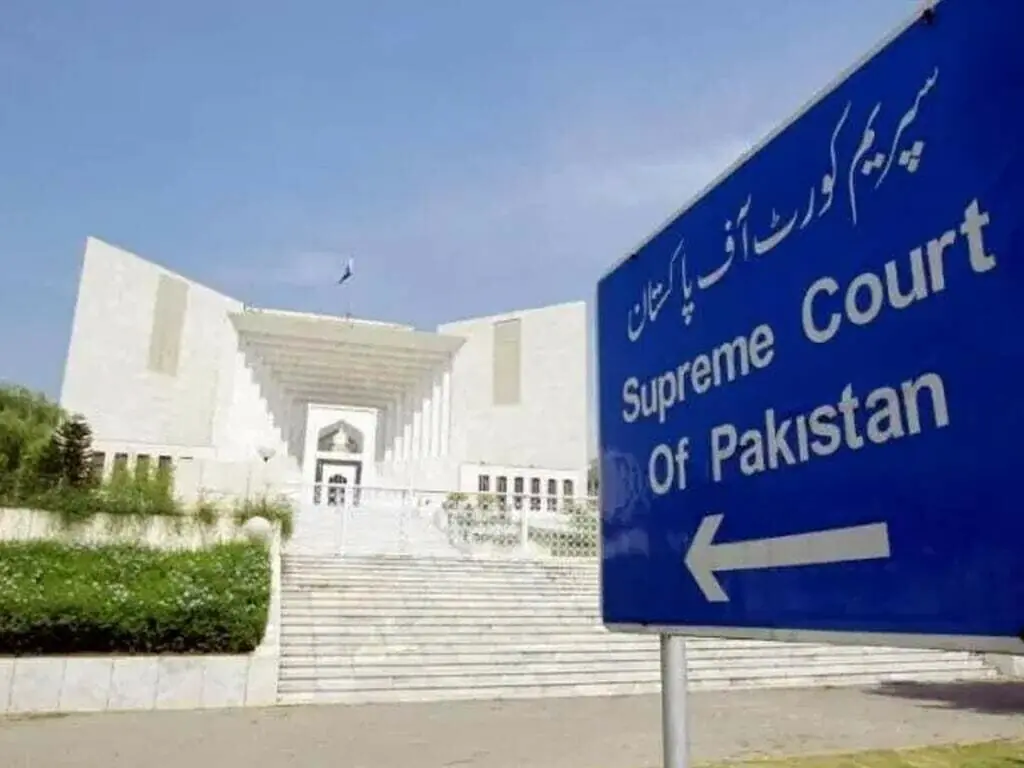

ISLAMABAD: The Supreme Court declared that where a statute prescribes a specific period within which fiscal proceedings may be initiated, the revenue authorities are bound by such limitation.
“The limitation provisions contained in taxing statutes are not mere matters of procedure; they confer substantive protection against reopening concluded transactions after expiry of the prescribed period,” said the SC three-member bench’s judgment, and added; “Where the legislature has distinguished between cases involving fraud and those involving mere misconstruction of law, the revenue authorities cannot circumvent limitation by labelling a case of legal interpretation as one attracting the more stringent provisions reserved for fraudulent conduct,” said the judgment authored by Justice Shafi Siddiqui.
The bench set aside the Sindh High Court (SHC) verdict dated February 13, 2023 in Special Customs Reference Application, the order of the Customs Appellate Tribunal dated January 1, 2004, and the Order-in-Original dated September 30, 2002. It declared the Show Cause Notice dated June 26, 2002 barred by limitation and of no legal effect.
The petitioner (Pakistan State Oil Company Limited) i.e. PSO had supplied High Speed Diesel Oil to Pakistan Naval Ships against shipping bills without payment of customs duty and other levies on the understanding that such supplies were exempt under section 106 of the Customs Act, 1969. The Customs authorities issued a Show Cause Notice on June 26, 2002 alleging that the petitioner had supplied bonded warehoused POL products to Pakistan Navy without payment of customs duty, development surcharge, and other taxes and thereby rendered itself liable to payment of duties and taxes amounting to Rs257,000/-. The adjudicating authority confirmed the demand through Order-in-Original dated September 30, 2002. The appeal before the Customs Appellate Tribunal was dismissed. The petitioner thereafter invoked the reference jurisdiction of the High Court.
The High Court framed four questions, including question (a): “Whether the Show Cause Notice is time-barred as being issued beyond the prescribed period of six months (relevant time) under Section 32(3) of the Customs Act, 1969.” The High Court passed an order on other questions, but did not examine “question (a)” independently and held that the matter already stood concluded by earlier judgments of the Supreme Court in the cases of Collector of Customs E & S.T. and Sales Tax and Pakistan State Oil Company Ltd. Consequently, the reference application was dismissed.
The SC judgment said that the SHC misconstrued the real controversy by relying upon the said cases, while the said cases had only dealt with the merits of the case, and the present case was restricted to the limitation period of the show cause notice.
It noted that in the present case, the petitioner had raised the issue of limitation before the forums below, but the same had neither been adverted to by the Collectorate of Customs, Sales Tax & Central Excise (Adjudication-II), Karachi, in the order-in-original dated September 30, 2002 nor by the Customs Central Excise and Sales Tax Appellate Tribunal, Karachi, in the order dated January 09, 2004. However, the High Court framed the question of limitation, but misconstrued it by applying the principle laid down in the said cases.
Copyright Business Recorder, 2026






















Comments