


Culture of privilege in an Islamic republic
A bill extending blue passports to children of former legislators is criticized for expanding privileges, undermining public trust, and diverting focus from Pakistan's economic challenges, calling for its withdrawal.
- Proposed extension of blue passports to legislators' dependent children.
- Conflicting government statements and widespread criticism of the bill.
- Erosion of public trust due to a culture of special entitlements.
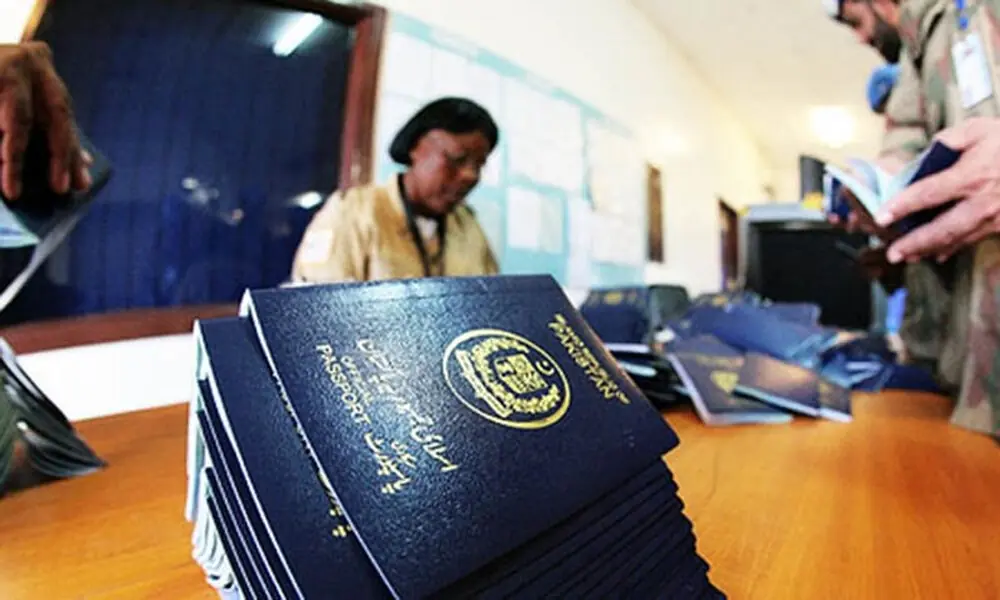
EDITORIAL:The Senate committee’s approval of a bill seeking to extend blue passports to the dependent children of former legislators has triggered a wave of justified criticism. At a time when Pakistan faces severe economic challenges and institutional credibility is under strain, the proposal sends precisely the wrong message.
Rather than focusing on pressing issues of governance, lawmakers appear preoccupied with expanding privileges for themselves and their families. Blue passports are intended to facilitate official state business, not to serve as lifelong badges of status or hereditary entitlements. Their purpose is functional, not symbolic. Extending this facility to the dependent children of current and former parliamentarians stretches the very rationale behind official passports and reinforces the perception that public office is increasingly viewed as a gateway to privilege rather than an opportunity for public service.
The controversy has been compounded by conflicting accounts of the government’s position. State Minister Talal Chaudhry has claimed that he opposed the bill and called for wider consultation before any decision was taken, yet the Senate Secretariat’s official statement indicated that he had agreed to its passage. Such contradictions only deepen public scepticism about transparency and accountability in parliamentary decision-making. More significantly, criticism has not been confined to the opposition or civil society. Senior PML-N leader Khawaja Saad Rafique has openly questioned the proposal, comparing it with the Khyber Pakhtunkhwa Assembly’s recent move to expand similar privileges for lawmakers and warning against the growing tendency to treat elected office as a source of special entitlement.
The larger issue extends far beyond passports. Pakistan has long struggled with a governance culture that creates distinct classes of citizens through special entitlements, exclusive benefits and preferential treatment. Whether these privileges are claimed by politicians, senior bureaucrats, members of the higher judiciary or military officers, they reinforce the impression that access to state power is rewarded with a separate system of rights and privileges unavailable to ordinary citizens. Such a culture corrodes trust in public institutions, weakens democratic legitimacy and widens the gulf between citizens and those elected to represent them. In a genuine democracy, public office carries responsibility, not inherited privilege. The children of current or former legislators neither discharge official duties nor represent the state in any formal capacity. Granting them official passports, therefore, lacks both administrative justification and moral credibility.
Therefore, the proposed legislation must be withdrawn before it proceeds any further. Parliament should be setting an example by demonstrating restraint and commitment to the principle of equality before the law, not by devising new privileges for those who already enjoy the advantages of public office. Elected office is a public trust, not a source of personal or familial entitlement or self-aggrandizement. Federal and provincial legislatures will establish their own credibility when they demonstrate that those who make the law are willing to live by the same standards they expect of other citizen.
Copyright Business Recorder, 2026

























Comments