


Equal distribution of resources: Punjab’s development formula
The Punjab government under CM Maryam Nawaz is driving equitable development, stabilizing prices, and rapidly transforming infrastructure across the province, contrasting with past administrations' neglect and regional favoritism.
- Rapid infrastructure development and urban beautification across Punjab.
- Equitable distribution of development projects beyond Lahore.
- Maryam Nawaz's governance model prioritizing public relief and living standards.
- Other provinces' admiration for Punjab's effective governance model.
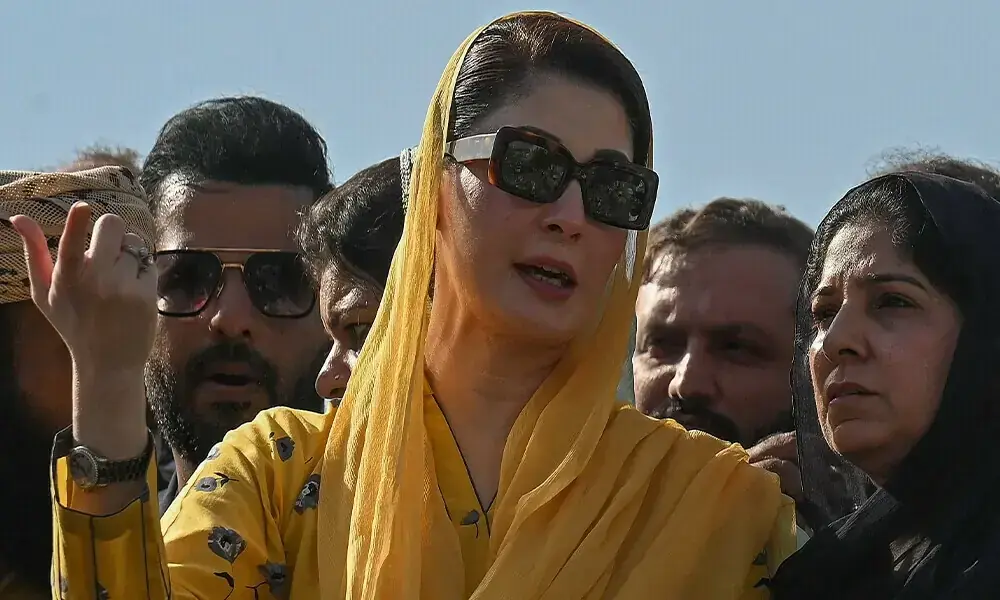

For the public, roads, well-planned streets, attractive neighbourhoods, and modern marketplaces are just as vital—if not more so—than the prices of everyday essentials such as potatoes, onions, and tomatoes. It is worth recalling that the head of a political party once openly declared that he had not come into office to control the prices of these commodities. During his tenure, not only did prices remain beyond control, but infrastructure development also stagnated. Roads were not built, and public development projects saw little progress. It appeared that development was never a governing priority, as the administration remained focused on political rhetoric rather than delivering tangible public services.
In contrast, the Punjab government under Chief Minister Maryam Nawaz has, over the past two years, sought to stabilize the prices of essential commodities while simultaneously accelerating infrastructure development and urban beautification. The pace of governance and project execution has continued to improve. The Punjab Development Plan is currently being implemented across 52 cities, with road construction and urban beautification projects progressing rapidly.
The speed at which new roads are being built and cities are being transformed has few precedents in Punjab’s history. Today, visitors entering cities across the province are welcomed by aesthetically designed entrances and improved urban landscapes. Areas once associated with neglect are now becoming symbols of development and modernization. From Rahim Yar Khan in the south to Attock in the north, development projects are reaching regions that had long remained outside the government’s focus.
Chief Minister Maryam Nawaz has adopted a governance model aimed at ensuring that every city in Punjab enjoys equal access to modern public facilities. The objective is to eliminate the need for citizens to migrate to major urban centres in search of quality education, healthcare, or other essential services. Governance, the argument goes, should be measured not by speeches but by visible public relief and improved living standards.
Her administration has also challenged the longstanding perception that Punjab’s development was concentrated solely in Lahore. For years, critics argued that the province’s resources disproportionately benefited the provincial capital. The current government seeks to counter that narrative by extending development initiatives across the province. Today, infrastructure, education, healthcare, and transport projects are underway on a comparable scale from Attock to Rahim Yar Khan, Rawalpindi to Rojhan, and Vehari to Sadiqabad.
The same electric buses operating in Lahore are now serving cities such as Mianwali and Multan. Likewise, housing projects under the “Apni Chhat Apna Ghar” programme are not confined to Lahore but are also being developed in Sargodha, Sahiwal, Attock, and Multan. This approach reflects a governance philosophy centred on equitable development rather than regional preference.
According to the author, this commitment to equal treatment distinguishes Maryam Nawaz’s leadership from that of other political leaders. The distribution of resources in Punjab is no longer determined by the prominence of a city’s name but by a policy aimed at providing uniform facilities and opportunities to all districts. This formula of equitable resource allocation, the author argues, has proven beneficial by reducing regional disparities and weakening narratives based on claims of neglect.
The article further contends that Punjab is currently the only province demonstrating effective governance and service delivery on a consistent basis. As a result, people in cities such as Karachi, Peshawar, and Quetta are increasingly expressing admiration for Punjab’s governance model and a desire for similar leadership in their own provinces.
The author concludes that when governments utilize their authority and public resources efficiently, citizens naturally develop greater confidence in public institutions. He likens Maryam Nawaz’s leadership to that of a compassionate mother who treats all her children equally, arguing that her administration has addressed many of the developmental shortcomings inherited from the 2018–2022 period within just two years.
Looking ahead, the author believes that the next two years could further elevate Punjab’s standard of living, potentially placing it alongside some of the world’s better-performing regions. Providing equal public services to a province of more than 110 million people is undoubtedly a formidable challenge. Nevertheless, the author maintains that Maryam Nawaz has succeeded in extending relief and development opportunities across all segments of society, describing this as her most significant achievement as Chief Minister.
Copyright Business Recorder, 2026
The writer is PRO of Information Minister Punjab

























Comments