


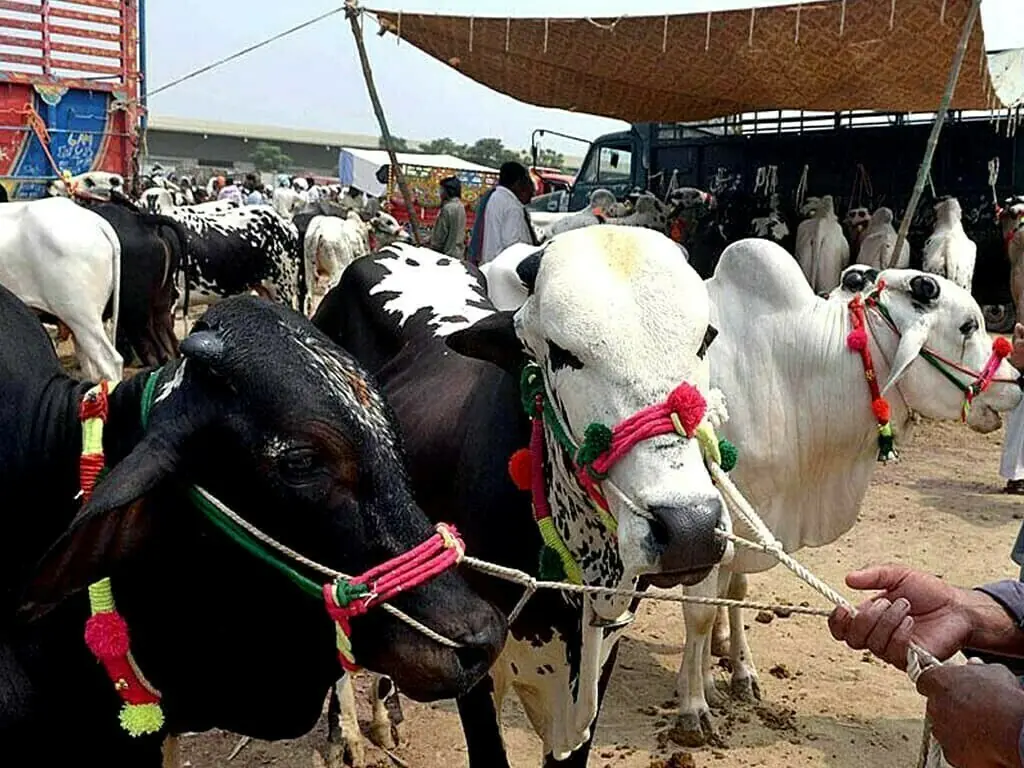
EDITORIAL: Punjab’s decision to permit the export of live animals has reopened an important debate about the direction of Pakistan’s export strategy. Generating foreign exchange is unquestionably a national priority, particularly at a time when external financing remains fragile and export earnings continue to disappoint. The question is whether exporting live livestock serves that objective as effectively as processing those animals domestically and exporting products with far greater value addition.
The concern expressed by meat exporters and business leaders deserves careful consideration because it goes well beyond the interests of a single industry Pakistan possesses one of the largest livestock populations in the region and has developed a domestic meat-processing industry that now argues live animal exports could undermine investments already made in export-oriented processing facilities.
That distinction matters economically. A live animal generates foreign exchange only once. A processed animal supports an entire domestic value chain before it reaches international markets. Meat processing creates employment in slaughterhouses, packaging, transport, cold storage, veterinary services, laboratory testing and logistics. Hides and skins support the leather industry, while offal, bones and other by-products generate additional commercial activity across several sectors. Every stage of domestic processing creates income, employment and tax revenues that disappear once the animal is exported alive.
This is precisely why countries seeking to strengthen exports generally encourage value addition rather than the shipment of raw products. Pakistan has spent years discussing the need to move beyond exporting raw minerals towards processed materials and beyond agricultural commodities towards branded food products. The same principle applies with equal force to the livestock sector.
There are other practical considerations as well. Industry representatives have warned that unrestricted live animal exports could reduce the availability of quality livestock for domestic processors, leaving expensive processing facilities operating below capacity despite years of investment. A shrinking supply of animals could also place upward pressure on domestic meat prices, adding another burden for consumers already struggling with the cost of living.
None of this suggests that live animal exports should necessarily be prohibited altogether. Livestock farmers also deserve access to export markets, and regional demand can provide valuable income opportunities. The challenge is to design a policy that recognises both realities instead of allowing one to undermine the other.
That requires a more sophisticated export strategy than simply permitting or prohibiting exports. Domestic processing capacity should receive clear policy support. Incentives for processed halal meat exports, investment in modern processing facilities and safeguards to ensure adequate domestic livestock supply would all help maximise the economic value generated by the sector.
Pakistan’s comparative advantage lies not merely in raising livestock but in developing an internationally competitive halal meat industry. Global demand for certified halal food continues to expand, offering opportunities that extend well beyond the one-time sale of live animals. Countries that dominate these markets do so through branding, quality assurance, processing standards and integrated supply chains rather than reliance on raw exports alone.
Punjab’s policy therefore deserves reconsideration before it evolves into a long-term precedent. The objective should not simply be earning foreign exchange today. It should be earning as much foreign exchange as possible while creating employment, supporting domestic industry and strengthening export competitiveness over the long term.
Pakistan has repeatedly acknowledged that sustainable export growth depends upon moving up the value chain. The livestock sector offers an opportunity to put that principle into practice. Selling a live animal may generate immediate revenue. Processing that same animal at home generates an industry.
Copyright Business Recorder, 2026












Comments