


Nepra raises hydel generation tariff by 55pc
Nepra has increased the average hydel generation tariff by 55% for 2025-26, clarifying the calculation method and addressing concerns about the increase's justification and components.
- Nepra's 55% increase in average hydel generation tariff.
- Clarification on hydel tariff calculation and components.
- WAPDA's two-part tariff mechanism for hydropower projects.
- Nepra's directives for WAPDA on assessments and asset transfer.
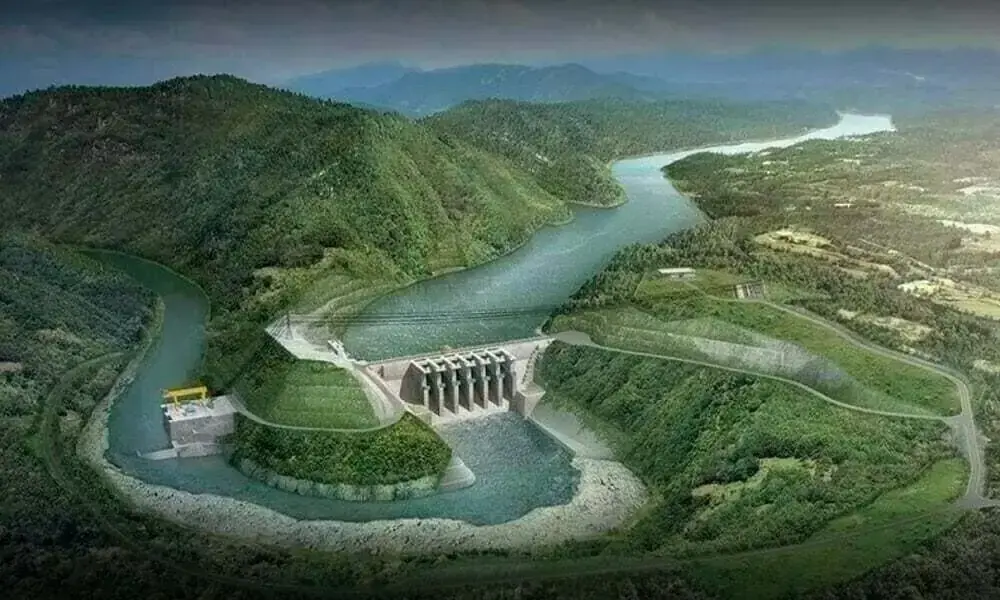

ISLAMABAD: The National Electric Power Regulatory Authority (Nepra) has increased the average tariff of hydel generation by 55 percent (Rs1.70/kWh) to Rs4.81/kWh for 2025-26 from Rs3.11/kWh effective from fiscal year 2023-24.
In its determination, the authority noted that intervenors have raised concerns regarding the apparently high claimed tariff of Rs11.56/kwh for FY 2025-26 as compared to the effective average tariff of Rs3.11/kwh — not Rs6.11/kwh, as has been cited in some submissions.
The reduction of Rs6.11 to Rs3.11/kwh is because of the exclusion of hydel levies and prior years’ Revenue Gap, which do not form part of WAPDA’s hydel operations as levies collected purely as a pass-through.
READ ALSO: System greatly relieved: PD says hydel power generation surges to 5,000MW
Before proceeding with this clarification, Nepra has highlighted that it determines individual, plant-wise tariffs for each of WAPDA’s 21 operational hydel power plants on a take-or-pay basis, with separate components for variable charges, fixed O&M charges, and Hydel Levies specific to each plant.
No single bulk tariff is charged by WAPDA to CPPA-G for its entire fleet; rather, each of the 21 plants is billed against its own authority-determined tariff.
The comparison is undertaken solely for illustrative purposes, using a fleet-wide average, and does not represent an actual tariff charged or chargeable under the current regulatory framework.
Nepra has further noted that on the basis of the decisions taken in the preceding issues, the average tariff allowed for comparison purposes worked out to Rs10.76/kwh.
The authority has clarified that this figure is not representative of WAPDA’s actual, recurring revenue requirement. Of the Rs10.76/kwh, an amount of Rs4.24/kwh pertains solely to the one-off Revenue Gap (including Hydel Levies arrears) — representing the accumulated shortfall between WAPDA’s allowed revenue requirement and the actual payments received from CPPA-G during the period the previous tariff remained frozen pending a fresh determination.
A further Rs1.71/kwh represents regular Hydel Levies, and only the remaining Rs4.81/kwh reflects WAPDA’s genuine, recurring revenue requirement.
Comparing the average tariff of Rs3.11/kwh, effective from FY 2023-24, with the recurring tariff of Rs4.81/kwh, projected to take effect in FY 2026-27, the increase over this three-year period works out to approximately 55 percent, which translates to a compound annual growth rate (CAGR) of only about 16 percent — a growth rate the authority does not consider unreasonable or excessive given the intervening cost escalation.
With regard to the issue of the take-or-pay regime, the authority has already examined the matter in detail and has upheld the continuation of the existing regulatory framework.
The detailed rationale has been set out in the authority’s review decision dated June 06, 2024, in the matter of the Motion for Leave for Review filed by WAPDA Hydroelectric against the authority’s tariff determination for FY 2022-23. Accordingly, the authority finds no reason to revisit the issue in the present proceedings.
As regards the contention of double recovery of Interest During Construction (IDC), the authority has considered it appropriate to clarify that IDC does not form part of WAPDA’s capitalised asset base for the purpose of tariff determination. Consequently, the commentator’s assertion that IDC is being recovered twice is without merit.
WAPDA, in response to the comments of commentators/intervenors, submitted that the tariff structure for hydropower projects is based on a two-part mechanism under the Power Generation Policy 2015, comprising Energy Purchase Price (EPP) and Capacity Purchase Price (CPP).
While EPP covers variable costs and is paid on actual generation, CPP represents largely fixed costs, including O&M, return on equity, and debt servicing, and is payable based on plant availability.
WAPDA emphasised that hydropower projects are capital-intensive with predominantly fixed cost recovery, justifying this structure. It further stated that it has consistently maintained required availability levels and, on average, generated 32,660 GWh annually over the last three years against Nepra’s benchmark of 31,286 GWh, without claiming additional benefits.
WAPDA also highlighted that hydrological risk lies with the power purchaser under the policy framework.
Accordingly, it argued that no undue burden is being passed on to consumers and requested that the existing two-part tariff mechanism be retained, as it ensures recovery of prudent costs and is more appropriate for hydropower projects compared to a purely generation-based tariff.
The authority noted the petitioner has not indexed the NHP rate since FY 2023, whereas the authority has decided the indexation matter vide its decision dated September 9, 2022, and December 29, 2022, wherein 5 percent indexation over Rs1.10/kwh was to be maintained subject to adjustment, if any, in the light of CCI’s decision.
The authority, in its determination has directed WAPDA that all projected, estimated, and provisional costs and revenue requirement components allowed by the authority for FY 2025-26 under this determination shall remain subject to adjustment based on the audited financial statements for FY 2025-26 and the outcome of the authority’s prudence review of the relevant supporting information and documentary evidence to be submitted by WAPDA along with its next tariff petition.
WAPDA shall engage an independent third-party consultant to undertake a plant-wise assessment of Repair and Maintenance (R&M) activities, including preventive maintenance, major overhauls, and replacement programmes, in accordance with the Terms of Reference (ToRs) to be issued by the authority.
The consultant’s report shall be submitted along with WAPDA’s next tariff petition for consideration by the authority.
WAPDA shall also engage an independent third-party consultant to undertake a comprehensive assessment of the cost, implementation timelines, and execution of all ongoing and future hydropower development and rehabilitation projects, in accordance with the Terms of Reference (ToRs) to be issued by the authority.
The assessment shall, inter alia, examine the prudence of project costs, implementation delays, cost overruns, and project execution. The consultant’s report shall be submitted along with WAPDA’s next tariff petition for consideration by the authority.
WAPDA shall continue to pursue the matter relating to the transfer and operation of transmission assets with the concerned entities and ensure that no duplication of transmission assets exists.
The provisional treatment allowed under this determination shall remain subject to the authority’s final decision upon resolution of the matter.
Copyright Business Recorder, 2026













Comments