


Growing the problem
Pakistan faces a severe population crisis, straining national resources and economic stability, despite decades of warnings. The state's policies contradict its stated goal of population control, hindering effective solutions.
- Pakistan's population growth and strain on national resources.
- Government policies inadvertently incentivizing population expansion.
- Population growth as a strategic national challenge.
- Leveraging the young population for a demographic dividend.
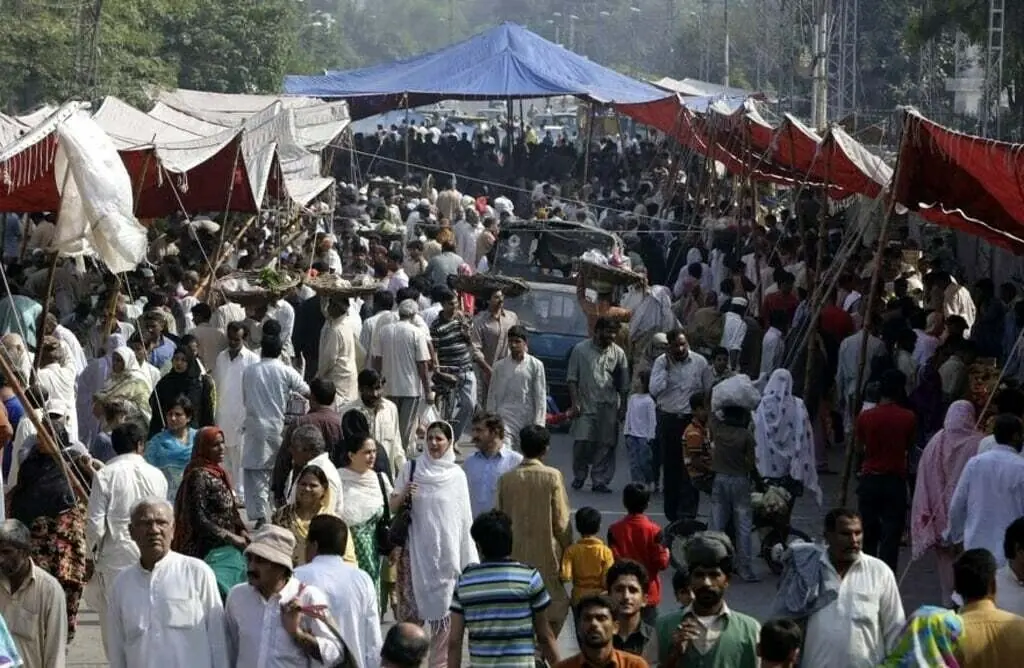
EDITORIAL: There is little left to say about Pakistan’s population crisis that has not already been said over the past several decades. Prime ministers, presidents, international organisations, economists and development experts have all warned that unchecked population growth would eventually overwhelm the country’s resources and undermine sustainable development.
Yet while the warnings multiplied, so did the population, until Pakistan quietly became the fifth most-populous country in the world.
Prime Minister Shehbaz Sharif is therefore entirely correct to warn that rapid population growth is placing increasing strain on national resources and threatening long-term economic stability. His decision to convene the National Population Council also reflects an overdue recognition that demographic pressures have become a strategic national challenge. The difficulty is that Pakistan has reached this point after decades of official acknowledgement but remarkably little meaningful action.
The consequences are visible across every major sector. Water availability has declined dramatically. Agricultural land per capita continues to shrink. Urban infrastructure struggles to accommodate expanding populations. Schools, hospitals, transport systems and housing remain under constant pressure. Employment generation consistently fails to keep pace with the number of young people entering the labour force each year. Economic growth, however important, is repeatedly diluted by relentless demographic expansion.
Yet perhaps the most perplexing aspect of the debate is that the state itself continues to encourage the very trend it now describes as a national threat.
The National Finance Commission Award remains the clearest example. Although the distribution formula incorporates several indicators, population continues to account for 82 percent of the horizontal distribution of resources among the provinces under the formula adopted through the Seventh NFC Award and retained thereafter. Successive governments have repeatedly warned that unchecked population growth is unsustainable while simultaneously maintaining a fiscal framework in which larger populations continue to carry overwhelming weight in resource allocation.
The contradiction does not end there. Public-sector employment quotas and various administrative arrangements continue to rely substantially on population-based criteria. These policies may have historical and constitutional origins, but they sit uneasily alongside repeated official appeals for population stabilisation. Public policy cannot credibly discourage one outcome while institutional incentives continue rewarding it. This inconsistency deserves far greater public discussion than it currently receives.
Population policy cannot succeed through awareness campaigns, official meetings and periodic expressions of concern alone. It requires every arm of government to pursue coherent objectives. Fiscal arrangements, development planning, education, healthcare, labour policy and social welfare should reinforce one another rather than operate at cross-purposes.
The prime minister’s emphasis on linking population planning with economic growth, human development and resource management is therefore entirely appropriate. The challenge is ensuring that this recognition translates into reforms capable of changing long-standing institutional behaviour. Pakistan has produced no shortage of strategies, committees and policy documents on population. Their common weakness has been implementation.
The issue has now reached a point where it extends well beyond social policy. Demographic pressures increasingly shape fiscal sustainability, food security, water management, environmental stress, employment generation and national security itself. The participation of the country’s senior military leadership in the latest meeting reflects the reality that population growth is no longer viewed simply as a development concern. It has become a strategic challenge, affecting the country’s future trajectory.
Pakistan still possesses one of the world’s youngest populations, offering the possibility of a demographic dividend if that human capital is properly educated, skilled and productively employed. Without those conditions, however, demographic expansion risks becoming an ever-growing burden on already stretched resources and institutions.
The warnings have been issued often enough. The statistics have been documented repeatedly. The problem has been understood for years. What remains absent is the willingness to confront the policy contradictions that helped create it. Pakistan’s population crisis is no longer a question of diagnosis. It is a test of whether the state is finally prepared to act on what it has known all along.
Copyright Business Recorder, 2026




















Comments