



This is the sixth article in a ten-part series on Pakistan’s SOE reform. The previous five articles examined the framework, the consequences gap, the case for privatisation, the transactions that worked, and those whose cost the country is still absorbing. This article and the next take two contemporary cases at length.
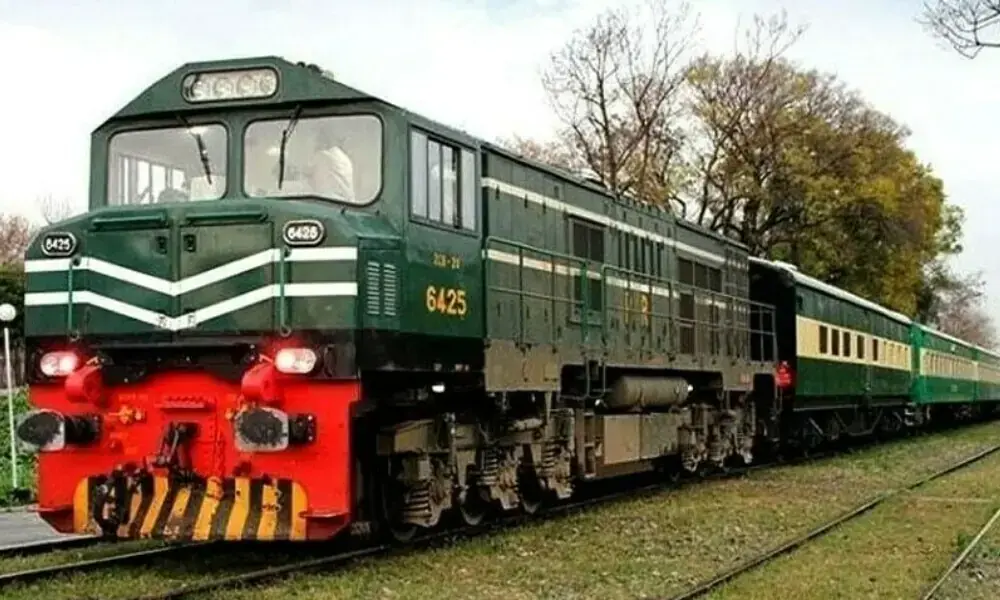
Pakistan Railways shows what three decades of deferred reform produce.
PIA, examined in the next article, shows what is possible when reform is finally executed. The remaining three articles will distil the lessons and set out the way forward.
In June 2026, the Auditor General of Pakistan released audit observations on Pakistan Railways for FY2024-25. The numbers were grim. But the audit does not reveal the full scale of the problem. It only shows what can be seen through a weak departmental accounting system.
The deeper problem is institutional. Nearly three decades after the World Bank first recommended corporatising Pakistan Railways, the basic decision on which all serious reform depends has still not been taken.
What the AGP report shows
Pakistan Railways suffered a net loss of Rs 61 billion in FY2024-25, up 19 percent in one year. Revenue stood at Rs 92.7 billion against operating expenses of Rs 153 billion. The federal exchequer absorbed Rs 64 billion in grant-in-aid. Over five years, operating expenses rose 60 percent and operational losses 29 percent.
There are no audited financial statements published by Pakistan Railways itself. Neither the Ministry of Railways nor the Controller General of Accounts publishes separate financial statements for Railways. The AGP observations are based on departmental accounting records, not IFRS or IPSAS-compliant financial statements. They capture annual cash flows and audit objections, but not the full economic cost.
Pakistan Railways is not a corporate entity. It is an attached department of the Ministry of Railways. It has no board of directors, no corporate CEO, no annual report, and no audited financial statements under credible standards. The State-Owned Enterprises Act 2023 does not apply. The Central Monitoring Unit does not monitor it as part of the commercial SOE portfolio.
In November 2023, the government brought four other entities — the National Highways Authority, Pakistan Post, Pakistan National Shipping Corporation and Pakistan Broadcasting Corporation — under the SOE Act as IMF structural benchmarks. Pakistan Railways was absent, despite being one of the largest operations draining public resources for decades.
Pakistan Railways has reported assets of around Rs 515 billion, more than 68,000 employees and over 121,000 pensioners. Yet it continues to be governed as a department.
The annual loss of Rs 61 billion understates the true cost. Across nearly three decades, the burden includes operating losses, federal grants, under-recognised depreciation, unfunded pension obligations, interest on overdrafts and foreign loans, and the opportunity cost of infrastructure earning sub-economic returns.
A conservative estimate suggests that the cumulative cost to taxpayers comfortably exceeds Rs 2 trillion. The broader economic cost is much larger. Pakistan did not merely finance this year’s deficit. It financed decades of institutional drift.
Railways versus Motorways
Pakistan did not start from scratch. Much of the physical backbone of Pakistan Railways was inherited at Partition: trunk lines, major stations, workshops, bridges and strategic corridors. The failure was not that Pakistan lacked a railway system. The failure was that it did not modernise, expand and commercially reposition it.
Instead, Pakistan chose a motorway-first development model. Motorways have their uses, but they are not a substitute for a modern freight railway. Road freight is more fuel-intensive, more expensive for bulk cargo, more damaging to road infrastructure, and less efficient for long-distance movement than rail.
The same public investment could have upgraded track, replaced locomotives, modernised signalling, expanded freight wagons, built container terminals and created dedicated freight corridors. A modern freight railway could have supported CPEC cargo, Afghan transit trade, port connectivity, industrial zones and regional logistics.
Pakistan’s geography is one of its most underused economic assets. A capable railway system should have been central to monetising it. Instead, the strategic backbone was allowed to deteriorate.
What India shows
Indian Railways is far from perfect. But it illustrates what happens when rail is kept central to national economic strategy.
Indian Railways is also state-owned and carries social obligations. Yet in 2024-25 it had 69,439 route kilometres, ran 13,940 passenger and 11,631 goods trains daily, carried about 7.29 billion passengers and more than 1.61 billion tonnes of revenue freight.
Its estimated turnover in FY2024-25 was about USD 31.3 billion. Freight accounted for nearly 65 percent of gross earnings. Net income was modest, at about USD 315 million, and the operating ratio was 98.22 percent — not comfortable, but still a functioning railway economy rather than a department surviving on grants and the absence of public accounts.
Indian Railways’ annual capital expenditure for FY2025-26 was budgeted at about USD 31.4 billion, showing that India still sees rail as economic infrastructure, not merely as a subsidy recipient.
The impact goes beyond railway accounts. Rail carries coal, iron ore, cement, steel, food grains, fertiliser, mineral oil and containers — the basic inputs of agriculture, industry, construction, and energy. It lowers logistics costs, supports industrial competitiveness, reduces fuel import pressure, and connects production centres with ports and markets. In 2025-26, Indian Railways reported a record 1.67 billion tonnes of freight and 7.4 billion passengers.
Pakistan does not need to copy India’s model. But it should learn from the priority India gives to rail as part of economic strategy. Pakistan has treated rail as a department to be subsidised. India has treated it as an economic artery.
The reform still waiting to happen
Pakistan Railways does not need another revival slogan. It needs an institutional reset.
Corporatisation is the first step. Railways should be brought under a proper governance framework with a professional board, audited financial statements, an annual report, transparent asset registers, performance contracts and clear separation between commercial operations and public service obligations.
Its functions should then be separated. Track infrastructure, freight operations, passenger services, workshops, stations, land, and logistics should not be managed as one department. Freight must become the commercial priority. Loss-making passenger services should be treated as public service obligations and funded through the budget. Railway land should be developed only through transparent valuation, competitive bidding and ring-fenced use of proceeds.
Private capital should be brought in where it can improve performance: freight corridors, terminals, logistics parks, station development, rolling stock, workshops and non-core services. The objective is not privatisation for its own sake. It is to introduce commercial discipline, investment, technology, and accountability.
For almost three decades, Pakistan postponed the basic institutional decision to corporatise Railways. The result is visible in annual losses, grants, pension liabilities, deteriorating assets, weak freight performance and lost regional logistics opportunities.
Pakistan Railways is not just a loss-making department. It is the price of refusing to reform a strategic national asset. Until it is corporatised and restructured, the same audit observations will return each year with familiar numbers, and the federal exchequer will continue to absorb the cost.
The next article examines Pakistan International Airlines — a state enterprise where reform was delayed for too long, but where the state has finally begun to act.
Copyright Business Recorder, 2026
The writer, a former managing partner of a leading professional services firm, is a public sector governance and public financial management specialist and has done extensive work on governance in the public and private sectors. He posts on X @Asad_Ashah








Comments