


How does the Iran crisis compare with the 1979 oil shock?
- The scale of the disruption from the U.S.-Israeli war on Iran has revived comparisons with the 1973 Arab oil embargo
The Iran war has caused the largest daily oil supply shock, disrupting crude, gas, and fuels, though the 1979 Iranian Revolution remains the biggest cumulative loss.
- The unprecedented simultaneous disruption of crude, gas, and refined fuels.
- Peak daily oil supply losses compared to past major crises.
- Cumulative oil supply losses from the 1979 Iranian Revolution.
- The impact on global LNG and refined fuel markets.
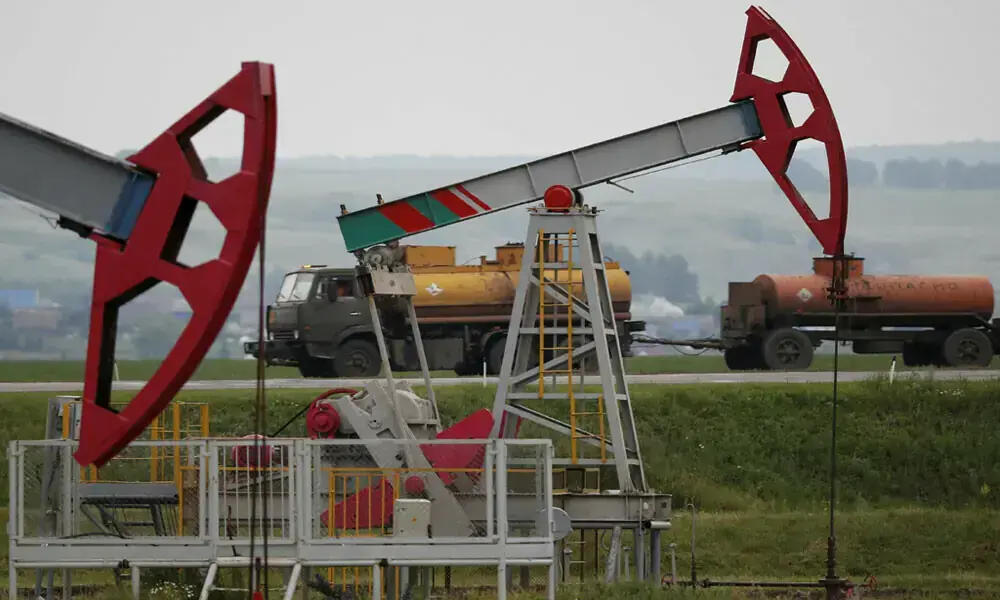

LONDON: The Iran war has created the largest oil supply shock ever in terms of daily production losses but the 1979 Iranian Revolution remains the biggest oil crisis by cumulative supply loss, according to Reuters calculations based on International Energy Agency, OPEC and U.S. Department of Energy data.
The scale of the disruption from the U.S.-Israeli war on Iran has revived comparisons with the 1973 Arab oil embargo, the Iranian Revolution and the 1991 Gulf War, while highlighting how global energy markets have evolved.
A different kind of energy shock
Unlike previous crises, the Iran war has simultaneously disrupted crude oil, natural gas, refined fuels and fertiliser supplies, exposing vulnerabilities created by decades of rising energy demand, globalised trade and the Middle East’s growing role as a supplier of finished fuels.
The oil shocks of the 1970s left lasting economic scars and reshaped energy policy in major importing countries. In response to those crises, the IEA was established to advise industrialised nations on energy security and coordinate emergency stockpiles.
The agency has responded to the current crisis by releasing a record 400 million barrels from strategic reserves to help stabilise markets and offset lost Middle Eastern supply.
Iran exploring oil sales to Japan, buyers seek longer sanctions waiver, sources
How does the current disruption compare by scale?
The IEA said peak supply losses exceeded 14 million barrels per day (bpd), equivalent to about 13.6% of expected global oil demand of 103.3 million bpd this year.
That dwarfs the peak losses of 4.5 million bpd during the 1973-74 Arab oil embargo, 5.6 million bpd during the Iranian Revolution and 4.3 million bpd during the 1991 Gulf War, according to IEA figures.
The conflict has also shut in roughly one-fifth of global liquefied natural gas production in Qatar. During the oil shocks of the 1970s, LNG trade was negligible; Qatar did not begin exports until 1996.
The disruption extended beyond crude and gas into fuel markets after Gulf refinery outages contributed to shortages of diesel and jet fuel. Large refineries built across the Gulf over recent decades have become major suppliers to markets in Africa, Europe and Asia.
Argus Media estimates the conflict removed around 24 million metric tons of LNG supply from Qatar and the United Arab Emirates. Based on IEA data showing global LNG trade of 428 million tons in 2025, that equates to about 5.6% of annual global LNG supply.
How do duration and losses compare with past shocks?
According to an IEA report published on May 13, cumulative supply losses from Gulf producers had already exceeded 1 billion barrels. Adding a further 14 million bpd lost over the 35 days between May 14 and the June 17 U.S.-Iran interim deal that halted the war suggests the conflict removed around 1.5 billion barrels from the market, according to Reuters calculations.
Despite the deal, disruptions are expected to continue for months and, in the case of gas, potentially years.
The Iranian Revolution produced smaller daily losses than the current crisis but a larger cumulative impact.
The U.S. Department of Energy estimates Iran’s crude production fell by an average of 3.9 million bpd between 1978 and 1981. That implies roughly 4.3 billion barrels of lost output over three years, according to Reuters calculations, although some of the lost supply was offset by increased output elsewhere in the Gulf.
Oil journalist and author Ian Seymour estimated in his book published in 1980 that Iran produced an average of 3.1 million bpd in 1979 compared with around 6 million bpd before the revolution, implying losses of more than 1 billion barrels that year alone.
Production fell further to an average of 1.47 million bpd in 1980, according to OPEC data. Compared with 1978 production levels, cumulative losses in 1979 and 1980 exceeded 2.7 billion barrels, according to Reuters calculations, still greater than the losses recorded so far in the current crisis.
During the 1973-74 Arab oil embargo, producers gradually increased cuts to 4.5 million bpd over three months. Reuters calculations suggest the embargo removed roughly 530-650 million barrels from the market, substantially less than the current disruption.
The 1991 Gulf War disrupted oil output for around four months, according to a government document from IEA member Australia. Assuming losses averaged 4.3 million bpd, cumulative losses totalled roughly 516 million barrels, according to Reuters calculations, also less than the current crisis.




















Comments