


Pakistan’s export trap—II
Pakistan's export economy is failing due to over-reliance on cotton, limited capital, weak innovation, and poor policy. Structural reforms, including tax incentives for listing and diversified production, are crucial for growth.
- Tax incentives for export companies to list on the stock exchange.
- Addressing weak productivity, quality, and innovation in exports.
- Policy reforms to enable, rather than tax, export growth.
- Diversifying exports beyond cotton to man-made and recycled fibers.
- Structural changes needed for Pakistan's export model to succeed.
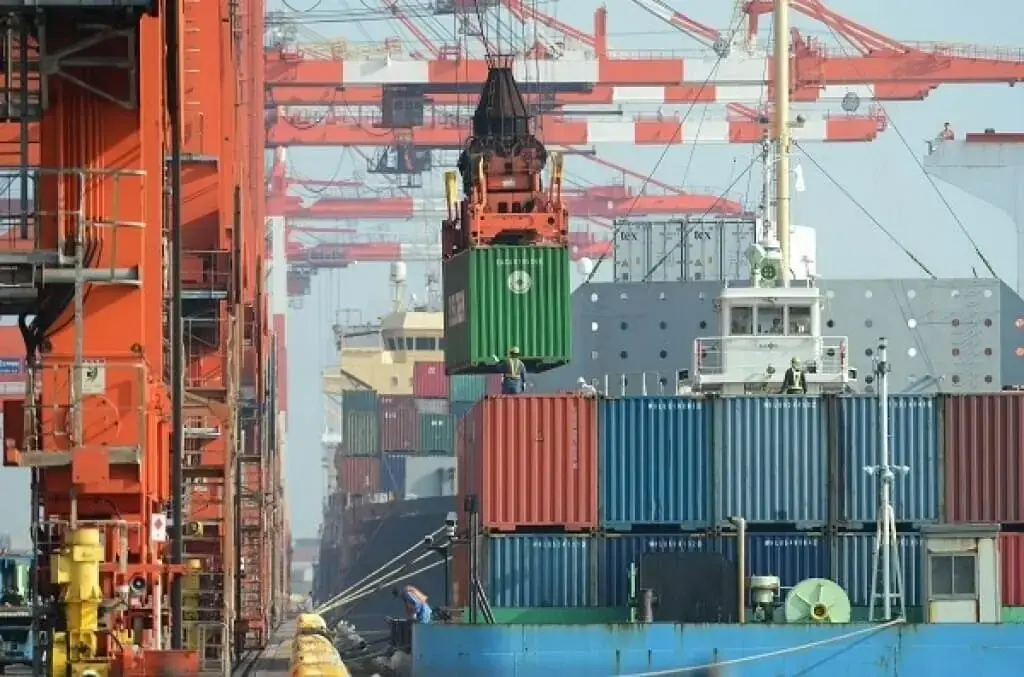

Why a narrow, low-value and cotton-locked export base can no longer carry the economy
India offers an important contrast. Many Indian exporters and textile companies used stock-market listing to raise equity, build scale, professionalise operations and reduce the damaging impact of interest-rate cycles. Equity capital allowed them to invest in machinery, branding, technology, distribution, compliance and product development without relying entirely on bank debt. Pakistan’s exporters, by contrast, have remained too dependent on credit lines and family capital.
When interest rates rise, debt-funded exporters are squeezed immediately. Working capital becomes expensive, expansion is postponed, inventory becomes harder to carry, and risk appetite collapses. A listed company with access to equity capital has more options. It can raise funds, attract institutional investors, improve transparency and pursue growth even when credit is tight. Pakistan has too few export firms in that category.
Also read: Pakistan’s export trap-I
The seth culture is not just a cultural issue. It is a capital-structure issue. Closed ownership means limited capital, limited governance, limited professionalisation and limited ambition. Family ownership itself is not the problem; family control without institutional discipline is. Pakistan cannot build global export champions with firms designed primarily to preserve control rather than build scale.
Use tax policy to force a shift toward listing and scale
If Pakistan wants exporters to list on the stock exchange, it should stop merely advising them and start rewarding them. A clear policy should be introduced: export companies that list on the stock exchange and meet minimum governance, disclosure and free-float requirements should be taxed at half the current applicable taxation rates for a defined period. This would create a strong incentive to broaden ownership and bring exporters into the formal capital market.
The objective would not be to hand out favours. The objective would be to change behaviour. Listed firms would face better disclosure standards, wider ownership, greater scrutiny, more professional governance and easier access to equity. The state would gain transparency, better documentation and stronger companies. The economy would gain larger exporters less dependent on bank debt. This is the kind of incentive that can actually change the structure of the sector.
Pakistan has repeatedly used tax concessions to protect weak behaviour. It should now use tax incentives to promote stronger behaviour: listing, scale, governance, innovation, productivity and exports. A reduced tax rate for listed exporters would be far more defensible than endless ad hoc subsidies that vanish into survival rather than transformation.
Productivity, quality and innovation remain weak
Pakistan’s exporters also face a productivity problem. Labour productivity remains weak, technology adoption is uneven, energy efficiency is poor in many firms, and management systems are often outdated. Too many companies still operate as extended family offices rather than modern industrial organisations. That may work in protected domestic markets, but it does not work in global value chains.
Quality is another persistent weakness. Pakistan has excellent firms in selected areas, but the average quality ecosystem remains underdeveloped. Testing, certification, grading, traceability, packaging, sanitary and phytosanitary compliance, environmental documentation and labour compliance all require institutional depth. Without that, Pakistan is pushed toward lower-margin markets where price matters more than reputation.
The absence of innovation compounds the problem. Exporters cannot keep selling the same product mix and expect different results. The world is moving toward sustainable materials, technical textiles, smart logistics, shorter lead times, digital design, traceability and branded channels. Pakistan remains too dependent on buyer specifications rather than its own product development. That keeps margins thin and dependence high.
The policy problem: exporters are taxed before they are enabled
Pakistan’s trade and tax policy often works against exports. Inputs are taxed, refunds are delayed, customs procedures are slow, classifications are outdated, energy pricing is unstable and exporters face shifting rules. The system often behaves as if every import is a luxury and every exporter is trying to evade something. That mind-set is fatal for an export economy.
Exporters need fast access to inputs at world prices. They need predictable taxation, efficient refunds, low-cost energy, functioning ports, simple customs, product testing, compliance support and stable rules. Instead, they often get a maze. The result is that many firms remain focused on familiar products because innovation requires too many approvals, too much paperwork and too much financial risk.
The state cannot keep asking exporters to diversify while making every new input difficult to import and every new product expensive to test. Diversification requires policy oxygen. Pakistan has too often given exporters a lecture instead.
What must change
Pakistan needs an export reset built around scale, materials, capital and markets. First, the country must restore textile competitiveness, but it must not pretend that old cotton textiles alone can save the economy. Energy pricing, taxation, refunds, customs and logistics must be aligned with export growth rather than fiscal panic.
Second, cotton must be treated as a strategic industrial input, not merely an agricultural crop. The textile industry must backward-integrate with farming through contract farming, seed partnerships, farmer support, mechanisation, quality premiums and ginning reform. The government should enable this, but the industry must lead it. Mills cannot outsource their raw-material future to chance.
Third, Pakistan must finally embrace man-made fibres, recycled materials and non-traditional fibres. Customs and taxation policies should allow duty-free, frictionless access to export inputs. Recycled materials must be properly classified and encouraged, not penalised. Non-traditional fibres should be supported through product-development grants, testing labs and buyer-linkage programmes.
Fourth, a digital platform should be created to allow customs-free imported intermediate goods to move transparently from company to company. This would build a real input market, reduce duplication, improve variety, support smaller exporters and accelerate product development. It would also reduce the suspicion-driven culture that currently suffocates legitimate export activity.
Fifth, exporters must be pushed toward capital-market listing. A half-rate tax regime for qualifying listed exporters would be a powerful incentive. It would broaden ownership, improve governance, reduce dependence on bank debt and help firms build scale. If Pakistan wants larger export companies, it must create a reason for firms to become larger, more transparent and more professional.
Sixth, quality infrastructure must be strengthened. Testing labs, certification facilities, traceability systems, sustainability documentation, packaging standards and compliance advisory services should be treated as export infrastructure. Roads and ports matter, but so do labs, standards and data systems.
Finally, Pakistan must stop confusing export survival with export success. Surviving firms are not enough. The country needs expanding firms, listed firms, innovative firms, branded firms, professionally managed firms and firms capable of entering new product categories. That is the only way exports will become a growth engine rather than a recurring excuse in every economic crisis.
Conclusion: the export model must be rebuilt
Pakistan’s export weakness is not a mystery. The country sells too little, in too few categories, through too few firms, at too low a value, with too little innovation and too much dependence on a failing cotton base. It missed the shift toward man-made fibres. It failed to build a proper market for imported intermediate goods. It did not classify and encourage recycled materials properly. It did not develop enough non-traditional fibre products. It allowed exporters to remain narrow, private, under-capitalised and dependent on bank debt.
This is not a problem that can be fixed by one subsidy, one devaluation, one budget speech or one export target. It requires structural change. Pakistan must rebuild the export model around productivity, product development, raw-material security, capital-market access, professional governance, input-market flexibility, quality systems and policy predictability.
The world does not owe Pakistan export growth. Buyers do not pay premiums for excuses. Markets do not reward nostalgia. If Pakistan wants dollars, jobs and industrial strength, it must build an export economy fit for the world as it is, not the world as it was when cotton was enough.
(Concluded)
Copyright Business Recorder, 2026

PUBLIC SECTOR EXPERIENCE: He has served as Member Energy of the Planning Commission of Pakistan & has also been an advisor at: Ministry of Finance Ministry of Petroleum Ministry of Water & Power
PRIVATE SECTOR EXPERIENCE: He has held senior management positions with various energy sector entities and has worked with the World Bank, USAID and DFID since 1988. Mr. Shahid Sattar joined All Pakistan Textile Mills Association in 2017 and holds the office of Executive Director and Secretary General of APTMA.
He has many international publications and has been regularly writing articles in Pakistani newspapers on the industry and economic issues which can be viewed in Articles & Blogs Section of this website.


















Comments