


Reflections on federal budget FY27—II
The government's budget continues procyclical policies, high indirect taxes, and stagnant development spending, hindering economic growth and increasing public hardship.
- Lack of enhanced IMF special drawing rights allocation.
- Continued heavy borrowing and reduced development spending.
- High interest payments and procyclical economic policies.
- Ineffective petroleum levy and regressive indirect taxes.

Here, it needs to be pointed out that it is highly strange to see that the government has apparently not pursued enhanced special drawing rights (SDR) allocation from International Monetary Fund (IMF) on the same lines it received in August 2022, as part of the overall enhanced SDR allocation received globally to countries.
Given the highly significant impact of commodity shock, especially in terms of oil prices during the conflict, especially to net oil importing countries like Pakistan, while it was expected that IMF will announce such an enhanced allocation at the global level, or at least for net oil importing countries, nevertheless it would have made sense that the country budgeted some amount to highlight to IMF its intent in this regard. If an effort has already been made with IMF to convince them to release such an amount, and the response has been in the negative, that should have been shared with the public at large so as to make clear that this otherwise important step that the government should take has in fact been taken.
READ MORE: Reflections on federal budget FY27—I
So, while it is important to make fiscal deficit sustainable, it is important to understand the positive consequences of sustainable primary deficit, especially in the context of high level of development needs of a developing country. This may be done through rationalizing non-development (current) expenditure, reducing interest payment-related expenditure, enhancing tax base, applying creative taxation – for instance, meaningful wealth tax, and taxing windfall profits of energy companies – lowering losses of SOEs through restructuring, meeting their financing needs through creative solution, and as earlier indicted, better rationalizing expenditure responsibilities of Centre and federating units as per the 18th Constitutional Amendment. In the absence of significant progress made on above aspects, for instance, among possible others, reaching primary surplus has meant a reduction in development expenditure.
Having said that, as per budget estimates for the upcoming fiscal year, primary surplus (fiscal austerity) is still being targeted at Rs.2.8 trillion (2 percent of GDP), which is slightly less than the revised estimates for the ongoing fiscal year at Rs 3.2 trillion (2.5 percent of GDP). Moreover, fiscal deficit still is budgeted at an increase of Rs 1.9 trillion for the next fiscal year, from the revised estimates of the ongoing fiscal year to stand at around Rs 7.0 trillion. Here, even after receiving a provincial surplus as per budgetary estimates for the upcoming fiscal year at Rs 1.8 trillion, stood at a higher level by Rs 1.5trillion over the revised estimates for FY2025-26 to stand at Rs 5.2 trillion for FY2026-27. It needs to be pointed out that receiving provincial surplus means lesser fiscal space to make overall spending, including development spending for the provinces.
Moreover, this means that the government does not appear to reverse its heavy borrowing trend, along with not rebalancing monetary austerity in favour of more balanced approach, which is playing a significant role in enhancing fiscal deficit, even when the government intends to target primary surplus. This, in turn, means less fiscal space overall, and less development spending; where federal public sector development programme (PSDP) was kept at the same Rs 1 trillion for the upcoming fiscal year, which is the same as budgeted for the ongoing fiscal year, while provincial PSDP being budgeted at Rs 2.2 trillion for FY2026-27, is lower than that budgeted for FY2025-26 by around Rs 645 billion!
Hence, with regard to interest payment on borrowing, the budget estimates for FY2026-27 stood at Rs 8.1 trillion, which is around half of the total current expenditure estimate for the upcoming fiscal year at Rs 17.1 trillion. Imagine the fiscal space if this were halved, under a much-more effective balanced aggregate demand- and supply-side policy emphasis with regard to reining in inflation – which means not employing over-board monetary- and fiscal austerity policies – and will allow significantly contributing towards an otherwise much-needed counter-cyclical boost to economic growth.
As expected, therefore, federal PSDP is far less than primary surplus being targeted as per budget estimates for FY2026-27, and the high level of interest payments budgeted for the upcoming fiscal year.
Overall, practice of procyclical policy, which has been going on over a number of years now, has been continued, instead of adopting counter-cyclical policy for reaching much-needed higher level of economic growth. Moreover, high level of interest payments related expenditure at the back of monetary austerity, and lack of enhancement of tax base, including no tax on windfall profits of energy companies, as much-needed creative tax measures to better share the burden of increase in oil prices, will likely to continue to keep borrowing for private sector at a low level. Hence, practice of monetary- and fiscal austerity, and higher level of interest payments, all indicate towards continuation of practice of pro-cyclical policy.
In terms of priorities, while water resource management is an exceedingly important budgetary objective, only Rs103.1 billion – composed of ‘Development expenditure of water resource division’ at Rs 55.3 billion, and ‘External development loans and advances of water resource division’ at Rs.47.8 billion – have been indicated as budgetary estimate for FY2026-27, and is only around one-tenth of the federal PSDP budgetary estimate for FY2026-27 at Rs1 trillion.
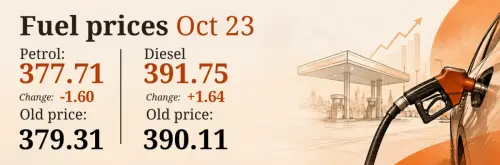
Also, while there is emphasis in the budget speech to reduce subsidies for removing distortion in prices – although subsidies being price distortionary, but hold the potential to positively impact growth and welfare – a similar approach of removing distortion from prices by significantly reducing indirect taxes has not been adopted, including continuation of application of petroleum levy (PL), which also distort prices. PL, in fact, saw an increase from revised estimate for FY2025-26 by Rs 178.5 billion to stand at budgetary estimate of Rs 1.7 trillion for FY2026-27; where it needs to be pointed out that the budgeted estimate for PL for the ongoing fiscal year was less than the revised estimate by Rs 29.6 billion.
Having said that, the budgetary estimate for FY2026-27 stood at Rs 1.1 trillion, which is less than budgetary estimate of price distorting, regressive, consumption (indirect) tax for the ongoing fiscal year by Rs.6.6 trillion to stand at Rs.7.7 trillion, which means a much-higher price distortionary impact coming from indirect taxes than from subsidies. It is strange that while nominal GDP budgetary estimate for the upcoming fiscal year stands at Rs 143.6 trillion, budgetary estimate for direct taxes for FY2026-27 only make up 5.3 percent of nominal GDP or Rs 7.6 trillion. Enhancement in direct taxes along with expenditure rationalization, and overall adopting counter-cyclical policy will lead to lesser need for indirect taxes, which are not only regressive, and also negatively impact domestic production, exports, poverty and inequality – not to mention similar negative consequence on political voice – but also likely negatively affect productive and allocative efficiencies.
Here, indirect taxation in electricity bills, and that too at a significantlyhigh rate, together with PL, increased energy prices significantly, which, in turn, enhances overall inflation through the channel of cost-push inflation; not to mention creating hardship for the people, where at least around one-third of the population is below the poverty line, as per official statistics, and around 45 percent of the population as per World Bank.
Moreover, it is quite shocking that government calls PL in ‘Table - 20’ of the ‘budget in brief’ documentas holding ‘climate relevance’ for all practical purposes is likely to produce little disincentivizing impact in terms of shifting people from fossil-fuel based transportation, given a serious lack of public transportation, especially in terms of EVs as public transport, and lack of incentives on solar energy also make it difficult for people to shift to EV bikes, for instance, given the affordability issue of solar energy and high prices of electricity from the grid being a significant hurdle in charging EVs.
Hence, putting PL to discourage use of fossil-fuel based transportation is an unproductive measure, and mostly brings hardship as people have little choice in terms of shifting to more environment-friendly modes of transportation in the shape of public or individual transport, especially electricity-based transportation.
(Concluded)
Copyright Business Recorder, 2026
The writer holds a PhD in Economics degree from the University of Barcelona, and has previously worked at the International Monetary Fund. His contact on ‘X’ (formerly ‘Twitter’) is @omerjaved7












Comments