


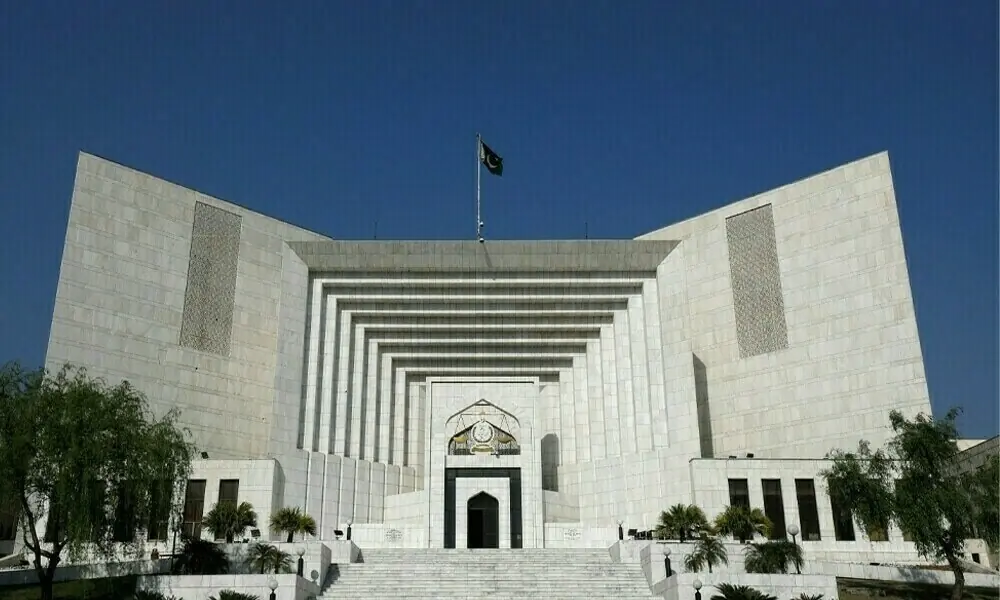

ISLAMABAD: The Supreme Court on Wednesday reserved its judgment on an appeal moved by the Pakistan Vanaspati Manufacturers Association (PVMA) against a Rs50 million penalty imposed on the association for increasing oil and ghee prices.
A two-member bench, headed by Justice Jamal Khan Mandokhail, heard the arguments on appeal against the verdict of the Competition Appellate Tribunal (CAT).
In April 2025, the CAT dismissed the PVMA’s appeal and upheld the Competition Commission of Pakistan’s (CCP) 2011 decision of imposing a Rs50 million penalty on the association for engaging in anti-competitive conduct and discriminatory practices.
The PVMA, an association representing nearly 100 ghee and cooking oil manufacturers across Pakistan, had challenged the CCP’s 2011 decision that found it in violation of Sections 3 and 4 of the Competition Act, 2010.
The case originated from an inquiry and subsequent show-cause proceedings initiated in April 2011 after CCP observed coordinated price hikes in the edible oil sector.
The Commission concluded that PVMA had used its platform to orchestrate price-fixing arrangements, whereby it negotiated prices with government authorities and advised its members to implement uniform pricing. Though PVMA claimed these were mere recommendations, the Commission found that such directives were in fact enforced, resulting in reduced price competition.
The CCP also established that the PVMA had entered into agreements with oil tanker associations and the National Logistics Cell (NLC) to fix transportation rates. These arrangements, in the Commission’s view, distorted fair competition in the logistics sector and disadvantaged non-member market players.
In addition to collusive pricing and logistics agreements, the PVMA was found to have abused its dominant position by charging discriminatory fees for the verification of import invoices—a responsibility delegated to it by customs authorities to address under-invoicing concerns.
PVMA charged its own members Rs. 4 per metric ton for this service, while charging commercial importers Rs. 10 per metric ton without offering a valid justification.
In its defense, the PVMA argued that its members paid a substantial membership fee and annual dues, and that the commercial importers ultimately sold their products to PVMA’s member manufacturers. Itfurther claimed that it lacked the statutory authority to enforce any pricing arrangements and had only acted on government pressure to stabilize prices in response to fluctuating international palm oil rates.
Copyright Business Recorder, 2026


















Comments