


NA budget debate: Lawmakers call for urgent economic reforms
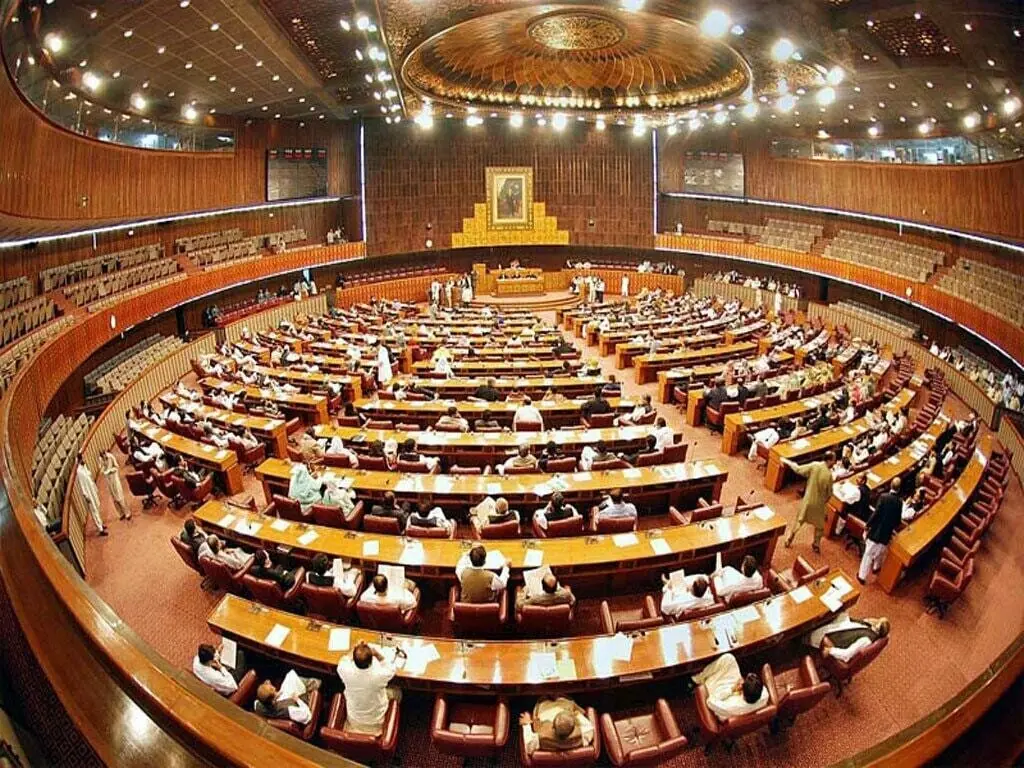

ISLAMABAD: Lawmakers across the political spectrum in National Assembly on Thursday pressed for urgent structural economic reforms, with opposition members mounting a pointed critique of the federal budget 2026-27, which they said lacked strategic direction and failed to offer meaningful relief to inflation-stricken citizens.
Participating in the ongoing budget debate, the opposition Pakistan Tehreek-e-Insaf (PTI) legislators argued that the fiscal plan was devoid of any credible reform blueprint, dismissing it as reliant on “verbal jugglery” rather than substantive measures to stabilise an increasingly fragile economy.
They cautioned that persistent inflation, rising unemployment and deepening poverty were compounding public distress – particularly for salaried workers, daily-wage earners and farmers – while urging a decisive pivot towards sustainable economic planning, export expansion and agriculture-led growth.
The debate, which cut across party lines, repeatedly returned to demands for relief for the public sector workforce, improved governance frameworks, and targeted interventions for agriculture, especially through reduced input costs.
Several lawmakers also advocated for a restructuring of subsidies, suggesting they be gradually replaced with direct support mechanisms for essential commodities and farm inputs.
Opening the discussion, PTI’s Raza Ali Gilani called for a reduction in energy tariffs and a workable solution to the mounting burden of capacity payments in the power sector.
He stressed that policy interventions must prioritise low-income groups, warning that farmers remained largely sidelined despite repeated budgetary assurances.
PTI legislator Sher Ali Afridi attributed the country’s economic strain to what he described as the constraints of an interest-based financial system, arguing it undermined long-term stability.
He said millions were living below the poverty line and contended that the budget appeared shaped more by external pressures than domestic priorities.
Afridi also called for stronger attention to provincial rights and equitable development in Khyber Pakhtunkhwa, Balochistan and Azad Jammu and Kashmir (AJK), alongside reforms in employment, security, health and education.
From the Pakistan People’s Party (PPP) benches, Asad Alam Niazi acknowledged the challenging fiscal environment but said the budget fell short in delivering meaningful public relief.
He called for tax rationalisation, institutional restructuring, deficit containment, and greater investment in population planning, health, education, food security and reductions in petroleum levies.
Another PPP lawmaker, Nazir Ahmed Bughio, said recent salary and pension increases were inadequate in the face of accelerating inflation, arguing that they should have been substantially higher.
He underscored agriculture’s central role in the economy but pointed to weak regional coordination and surging input costs – particularly fertilisers such as DAP and urea – calling for tax relief on agricultural inputs and more direct farmer support rather than indirect subsidies.
He also welcomed enhanced allocations for the Benazir Income Support Programme (BISP) and called for deeper regional trade and energy cooperation.
PTI’s Usama Ahmed Mehla raised concerns over alleged racial profiling of Pakistanis in South Africa and urged the Foreign Office to initiate an inquiry.
He also highlighted the importance of overseas Pakistanis as a key source of foreign exchange, calling for improved facilitation.
Domestically, he criticised rising federal expenditure despite devolution under the 18th Constitutional Amendment, arguing that fiscal pressures should not be disproportionately shifted onto provinces.
He further emphasised the need to improve export competitiveness through the removal of trade barriers.
PPP’s Natasha Doulatana said the budget failed expectations, as rising taxes and utility costs outpaced stagnant incomes, eroding purchasing power and investor confidence.
She cautioned against the rushed privatisation of strategic state-owned institutions, arguing that Pakistan’s economic challenges stemmed more from inconsistent governance than a lack of resources.
PTI’s Khawaja Sheraz Mehmood cited the Taunsa Sharif suicide attack in Dera Ghazi Khan that killed two security personnel and injured civilians, calling it proof of worsening security conditions.
On economic matters, he questioned prevailing poverty benchmarks and said chronic shortcomings in health, education and water management continued to undermine development despite sustained public spending.
From the Muttahida Qaumi Movement-Pakistan (MQM-P) bench, Sofia Saeed Shah said debt servicing consumed a disproportionate share of the budget, leaving limited space for development spending.
Rather than expanding cash transfer programmes, she advocated greater investment in education and skills development.
She also highlighted unresolved structural issues in taxation, pensions, independent power producers and the energy sector, while noting the absence of dedicated allocations for women’s development.
PPP’s Asma Arbab Alamgir stressed the need for peace and stability in Khyber Pakhtunkhwa, arguing that development prospects remain constrained without security.
She also called for greater focus on the mining and minerals sector, describing it as a largely untapped national asset requiring targeted incentives.
A large number of other lawmakers from both the treasury and opposition benches also took part in the budget debate.
Copyright Business Recorder, 2026

















Comments