


Weekly Cotton Review: Prices decline on surge in prices of raw cotton
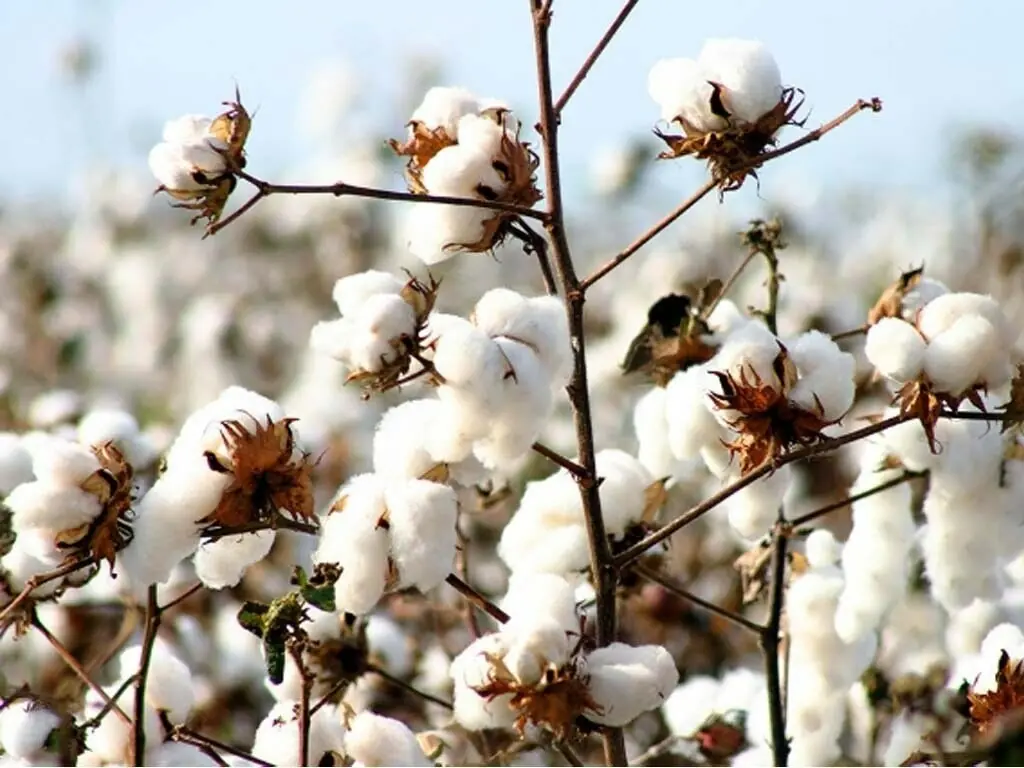

KARACHI: Pakistan’s cotton market has taken a significant hit as an increase in raw cotton supply has pushed prices down considerably. Cotton rates have dropped by 800 to 1,000 rupees per maund, while raw cotton, known locally as phutti, has also seen a decline of 300 to 400 rupees per maund. The fall in domestic prices mirrors a broader trend, as New York cotton futures have similarly recorded a downturn in international markets.
The ginning industry, already under financial pressure, had pinned its hopes on the current federal budget to deliver meaningful tax relief. The Pakistan Cotton Ginners Association had held meetings with the Finance Minister and ministers of relevant departments, from whom they received firm assurances that heavy taxes imposed on ginning factories would be reduced. Specifically, officials had promised to eliminate taxes on cottonseed, oil cake, and other animal feed by-products. However, when the budget recommendations were finally unveiled, these commitments were nowhere to be found, leaving the ginning community deeply frustrated. PCGA Chairman Sham Lal Manglani voiced strong disappointment, stating that the industry had been given clear assurances that were ultimately ignored without explanation.
Amid the gloom, one announcement has been received with cautious optimism. Prime Minister Mian Muhammad Shehbaz Sharif has announced the establishment of a Cotton Board, a move that industry stakeholder Sajid Mahmood has described as a welcome and positive development for the sector’s long-term governance and growth.
Meanwhile, tensions are also running high over water distribution, as Sindh faces a 25 percent cut in its water allocation. Farmers and agricultural stakeholders have launched strong protests against the reduction, warning that it will severely damage crop cultivation, including the cotton harvest, across the province.
The local cotton market witnessed a bearish trend during the past week as a relative increase in seed cotton supply coincided with a decline in New York cotton futures, putting combined downward pressure on domestic prices. Seed cotton prices dropped by Rs. 300 to Rs. 400 per 40 kilograms, pulling cotton lint rates down by Rs. 800 to Rs. 1,000 per maund. Market activity remained subdued as ginning factories continued to operate at partial capacity, with transactions being dictated by delivery timelines. Prices for immediate and forward deliveries are currently moving at different levels, reflecting the uncertainty gripping the trade.
Factories running partially in Punjab are largely dependent on seed cotton sourced from Sindh, in addition to those already operating within the province. Market analysts believe that if seed cotton supply within Punjab improves, lint prices from the province will come under further pressure. Meanwhile, the cotton crop in Sindh is currently holding up in relatively better condition. Picking activity was encouraging in the early part of the season, supported by adequate water availability and firm prices, but a sharp water shortage has since set in and the crop now urgently requires adequate rainfall to sustain its condition.
Market sources report that the ongoing intense heat is causing noticeable variation in cotton staple length, with the fibre quality being described as uneven. Timely rainfall is expected to help stabilise and improve fibre quality in the weeks ahead.
On the regulatory front, the ginning industry had entered the current budget season with strong expectations of meaningful tax relief. The Finance Minister and ministers of relevant departments had personally assured delegations of the Pakistan Cotton Ginners Association that taxes levied on cottonseed, cottonseed cake, and other animal feed by-products would be removed. However, the final budget recommendations made no mention of these concessions whatsoever, leaving ginners deeply disappointed and disillusioned with the government’s commitment to the sector.
Cotton prices across Pakistan have registered a notable decline, with the commodity trading at lower levels in both Sindh and Punjab amid subdued international market sentiment.
In Sindh, cotton is currently being traded at Rs 20,500 to Rs 20,800 per maund on a delivery basis, while seed cotton, locally known as phutti, is available at Rs 9,800 to Rs 10,500 per 40 kilograms.
In Punjab, cotton prices stand at Rs 22,000 to Rs 22,250 per maund, with phutti fetching Rs 10,500 to Rs 11,500 per 40 kilograms. Prices of cottonseed cake and cottonseed oil have also eased slightly.
The Spot Rate Committee of the Karachi Cotton Association has revised the official spot rate downward by Rs 500, setting it at Rs 21,000 per maund.
Karachi Cotton Brokers Forum Chairman Naseem Usman attributed the declining trend to bearish conditions in the international cotton market, noting that New York cotton futures are currently hovering between 72 and 78 US cents per pound.
According to the latest USDA weekly export and sales report, cotton sales for the 2025–26 marketing year totalled 207,000 bales, with Vietnam leading purchases at 83,300 bales, followed by Pakistan at 57,300 bales and India at 35,300 bales. For the 2026–27 marketing year, total forward sales reached 298,700 bales, with Vietnam again topping the list at 180,000 bales, Nicaragua in second place with 39,700 bales, and Turkey third with 28,600 bales.
Total export shipments amounted to 300,100 bales, with Vietnam receiving the largest share at 109,200 bales, followed by Pakistan at 49,400 bales and India at 35,800 bales.
The recent announcement by Prime Minister Mian Muhammad Shehbaz Sharif regarding the establishment of a Cotton Board is a welcome and encouraging development in view of the serious challenges confronting Pakistan’s cotton sector. This was stated by Sajid Mahmood, Head of the Technology Transfer Department at the Central Cotton Research Institute (CCRI), Multan, during a telephonic conversation with renowned cotton analyst Naseem Usman.
According to him, if the proposed Board is provided with a clear mandate, effective authority, and a strong scientific foundation, it has the potential to become a significant milestone in the revival and development of Pakistan’s cotton sector.
Sajid Mahmood noted that the persistent decline in cotton production, the limited availability of quality seed, the growing impact of climate change, and the challenges facing research and development necessitate that the Cotton Board should not remain merely a ceremonial body. Rather, it should be entrusted with an active role in national policymaking, research coordination, and the strengthening of the entire cotton value chain.
He further emphasized that the inclusion of distinguished scientists and experts with strong backgrounds in cotton research, biotechnology, and agricultural policy is essential for the Board’s effectiveness. In particular, eminent scientists such as Dr. Yusuf Zafar, former Chairman of PARC and Vice President of PCCC, Dr. Mahboob-ur-Rehman of NIBGE, and Dr. Idrees Ahmad Nasir, former Director of CEMB, possess the experience, expertise, and scientific insight necessary to provide the Cotton Board with a strong technical and scientific foundation. Their participation would greatly assist the Board in addressing future challenges and promoting evidence-based decision-making.
Sajid Mahmood also stressed the importance of balanced representation from cotton growers, the Pakistan Cotton Ginners Association (PCGA), the seed industry, the textile sector, agricultural research institutions, and provincial departments, ensuring that the entire cotton value chain is effectively represented on a single platform.
He expressed the hope that if the Cotton Board is constituted on professional, scientific, and non-partisan principles, it will not only contribute to improving cotton production and quality but will also play a pivotal role in strengthening Pakistan’s economy and textile industry.
The Sindh Abadgar Board (SAB) which met here on Monday under the chairmanship of its President Syed Mahmood Nawaz Shah resented the recent decision of Indus River System Authority (Irsa) to arbitrarily reduce water flows to Sindh by 25pc.
It deplored that such a decision was taken despite surplus water being available in the system, and that too at a time when water requirement would be reaching its peak in coming days.
The board urged Irsa to take a prudent step and release already available water to Sindh without further delay to prevent any major losses to the Kharif crops.
Copyright Business Recorder, 2026


























Comments