


Punjab to create unified tax collection authority: minister
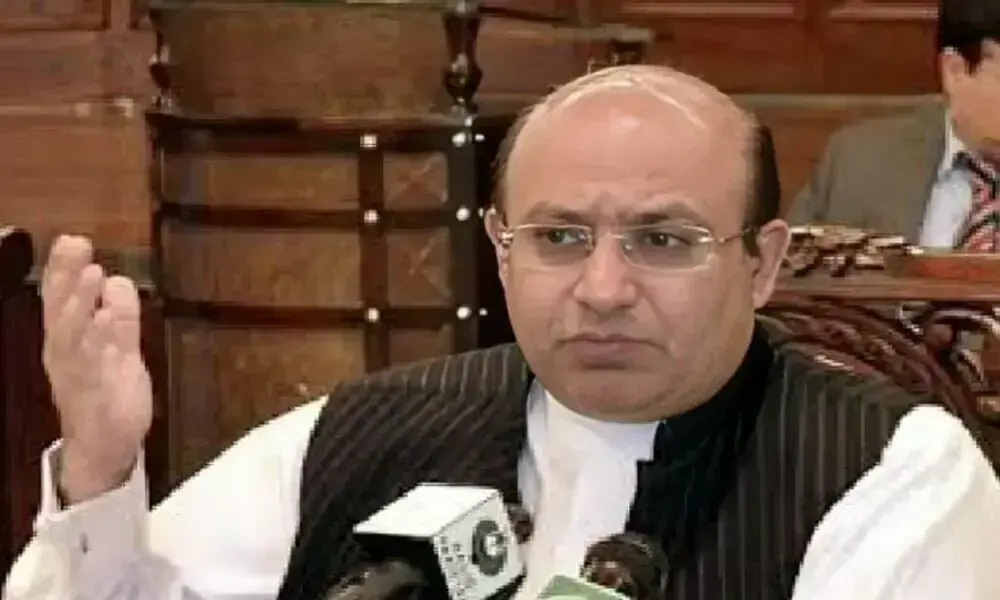

LAHORE: Punjab Finance Minister Mian Mujtaba Shuja-ur-Rehman has stated that to streamline the collection of provincial taxes, the Punjab government is working to consolidate it under one authority, similar to the Federal Bureau of Revenue.
He also announced that the provincial budget for the financial year 2026-27 will be presented on June 16, adding that the preparation of the provincial budget has been impacted by the delays in the federal budget.
“The Punjab government is establishing a new authority which will be implemented soon after the budget,” he said while speaking at the Pre-Budget Roundtable Conference for 2026-27, organised by the Punjab Finance Department on Monday.
The event was attended by Zaki Aijaz, Regional Chairman of the Federation of Pakistan Chambers of Commerce and Industry (FPCCI), as well as Faheem-ur-Rehman Saigol, the President of the Lahore Chamber of Commerce and Industries (LCCI). Other attendees included the presidents of the chambers of commerce and industries from Gujranwala, Gujrat, Kasur, and Sialkot, along with international donor organisations, agriculturalists, academics, representatives from farmers’ associations, and senior officials from various provincial departments.
In response to a question about the National Commission Award (NFC), he stated that Punjab will not compromise on its share as it is already operating with limited resources. He emphasised, “We need the resources to fund several initiatives that have been launched recently.” However, he mentioned that the situation will be re-evaluated when the NFC issue comes up.
Regarding the Provincial Finance Commission, he stated that it cannot be implemented without local government in Punjab. “Local body elections are expected to take place in September or October, and once the new local bodies are in place, the PFC will come into effect,” he added.
Talking about the coming Punjab budget, he said as with the previous two budgets, no new taxes will be imposed in this budget. Following the instructions of Punjab Chief Minister Maryam Nawaz Sharif, the budget is being prepared with a focus on public needs. “The government’s top priority is to provide employment, and investment will be made in industrial infrastructure for the upcoming financial year. The new budget would place special emphasis on the development of economic zones and industrial infrastructure, alongside introducing concrete measures to support the growth and competitiveness of all industrial sectors,” he added.
He noted that the available financial resources remain insufficient to meet the needs of Punjab’s 130 million population, yet the government remains committed to protecting the public from additional tax burdens. Instead, it is pursuing a strategy focused on broadening the tax base, promoting industrialisation, and improving the ease of doing business to strengthen provincial revenues, he added.
The Finance Minister briefed the attendees on the Punjab government’s performance over the past two years, noting that for the first time, significant progress has been made on announced projects, with several of them already completed. He highlighted the flagship programmes of the Punjab government, including Apna Ghar Apna Chhat, Sathra Punjab Kisan Card, and the Ramzan Nighaban Package. “To date, 133,990 housing loans have been issued under the Apna Ghar Apna Chhat programme. The Suthra Punjab initiative has been expanded from urban areas to villages at the district and tehsil levels. Last year, Rs106 billion was allocated for this program, whereas Rs99.41 billion has been released in the current financial year. The successful implementation was evident through effective arrangements made for cleanliness during Eid-ul-Azha,” he added.
He also discussed the current economic situation in the province, stating that the last financial year posed significant challenges for both federal and provincial governments, particularly due to the severe floods that impacted 27 districts. “Under the Chief Minister’s leadership, for the first time, a provincial government rehabilitated flood victims using its own resources without federal assistance, distributing approximately Rs50 billion in aid. To address financial difficulties resulting from tensions between the US and Iran, the government reduced fuel expenses by 50 percent. The Chief Minister, provincial ministers, and parliamentary secretaries did not receive salaries for two months, while 25 percent of the salaries of other assembly members were deducted. Additionally, 220,000 efficient bicycle owners received Rs200,000 per month to help reduce fuel expenses, and 226,000 farmers were granted Rs1,500 per acre. Rs750 million was allocated to provide free travel facilities to the public. Despite these challenges, the government ensured the implementation of over 100 measures.
The Minister stated that, for the first time in Punjab’s history, the government has formally invited stakeholders from all major sectors to present their concerns and recommendations prior to the formulation of the provincial budget. He said the initiative reflects the government’s commitment to preparing a truly participatory and people-oriented budget.
He said the Pre-Budget Round Table Conference was not a symbolic exercise but a meaningful consultative process. He assured stakeholders that every feasible recommendation presented during the conference would be given due consideration for inclusion in the forthcoming provincial budget. However, he stressed that the full implementation of development proposals requires enhanced tax compliance and broader revenue generation.
Welcoming the recommendations put forward by representatives of the chambers of commerce and industry, academia, media, and civil society, he announced that future such conferences would be convened in May each year, allowing stakeholders’ proposals to be incorporated into the budget formulation process in a more timely and effective manner.
Copyright Business Recorder, 2026




















Comments