


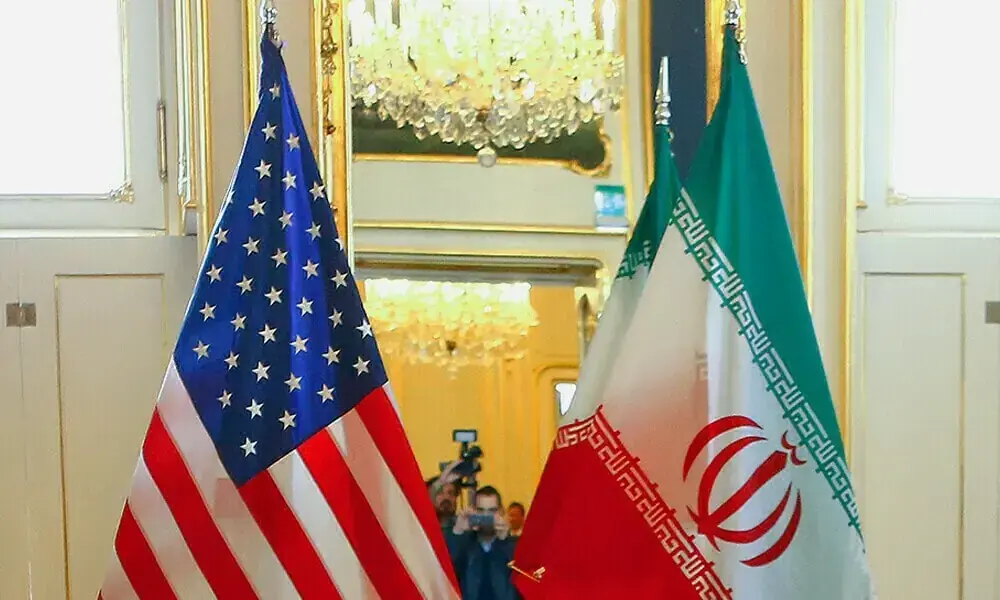
The US-Iran conflict requires the world to look at the bigger picture. According to latest reports, US President Donald Trump has toughened his set of proposals for Iran, adding to the confusion, anxiety and frustration among people across the world.
The Islamic republic, on the other hand, is showing no signs of panic in response to continuing US naval blockade of the Strait of Hormuz despite increasing pressures on its economy, given production and export of crude oil or naft are the mainstay of its economy.
But it essentially seeks the removal of the blockade prior to resumption of talks with the US in a meaningful manner.
Since Trump believes that the US blockade strangling the Iranian economy, he’s unlikely to lift it anytime soon. It may be important to note that the then Shah of Iran had famously told the US-led West that the Strait of Hormuz constitutes Iran’s “jugular vein” and that Iran could mobilise its armed forces towards “any direction” because his country is a dominating power of the Middle East.
The mention of Iran protests of January is equally, if not more, important in this regard. The protests did not constitute a revolution; in fact they were more dangerous than a revolution mainly because of the fact that they were leaderless against a regime that has successfully ensured, like what Chairman Mao bequeathed to China or Deng Xiaoping and his successors Jiang Zemin, Hu Jintao and Xi Jinping, universal health and education for the entire population in their nearly 50-year rule.
Iranian President Masoud Pezeshkian has recently said that the “enemy” wants to create “dissatisfaction” among people.
He was clearly alluding to the likely shortages of medicines, and food items, and people’s focus shifting away from educational activities due to growing human misery caused by imposition of a war on the Islamic republic.
Samina Hussain, Karachi
Copyright Business Recorder, 2026




















Comments