


Oil rises over 1% as Iran threat puts Red Sea route at risk
- Brent crude futures were up 93 cents, or 1.09%, to $85.88 a barrel
Oil prices rose for a fourth day amid escalating US-Iran hostilities, fueling fears of supply disruptions in the Strait of Hormuz and potential full-scale conflict in the Middle East.
- US strikes on Iranian military sites and naval blockade.
- Iran's threats to halt regional energy exports.
- Impact of Middle East tensions on global oil supply.
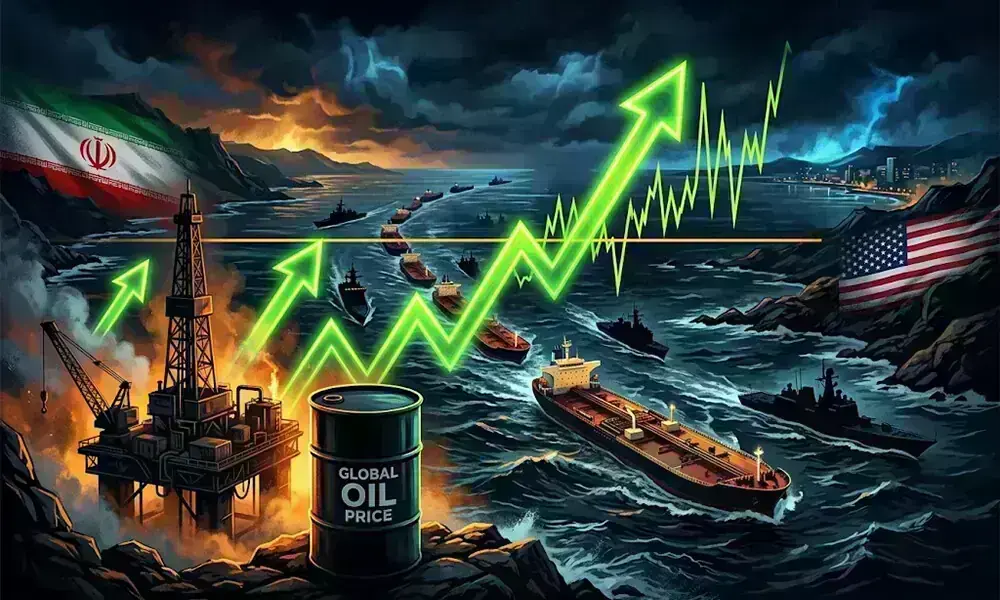
Oil prices rose more than 1% on Thursday as concerns over energy supplies increased after the Iran war escalated with intensifying strikes in the Middle East and as Tehran asked Yemen’s Houthis to stand ready to close the Red Sea oil route.
Brent crude futures were up 93 cents, or 1.09%, to $85.88 a barrel at 1420 GMT, while U.S. West Texas Intermediate futures were up 89 cents, or 1.12%, to $80.49 a barrel.
“Simultaneous disruptions affecting Hormuz and Bab el-Mandeb would significantly amplify supply chain stress, increase tanker availability constraints, and raise insurance premiums,” said Wael Makarem, financial markets strategist lead at Exness.
Iran has asked Yemen’s Houthi movement to stand ready to close the Red Sea oil route if the United States strikes Iranian power infrastructure, three sources told Reuters on Thursday, posing a potent new threat to global energy supplies.
Closure of the Bab el-Mandeb strait — gateway to the Red Sea — would open a new front in the energy crisis and Iran’s overarching conflict with the U.S.
Total volumes of petroleum transiting Bab el-Mandeb amounted to 7.4 million barrels per day in June, or about 7% of global oil output, according to Kpler data, up from 4.2 million bpd last year.
The U.S. struck Iran’s coastal defences and missile sites on Wednesday after reimposing a naval blockade of its ports, while Tehran threatened to shut off more regional energy exports, saying it was engaged in an “existential war” with America.
The escalation comes after a fragile truce reached in June collapsed, reviving fears of a return to full-scale conflict and disrupting energy flows through the Strait of Hormuz, which handled about a fifth of daily global oil and LNG trade before the war began.
Fewer vessels passed through the strait on Wednesday, the first day after the U.S. reimposed its naval blockade on Iran. Seven crossed on Wednesday, down from 13 the previous day.
“It seems reasonable that prices could continue to climb towards $90-$95 and maybe even touch the $100 mark again and that is because the Strait of Hormuz is repeatedly being disrupted, creating uncertainty over oil flows from the Gulf,” said Ole Hvalbye, market analyst at SEB Research.
On the supply side, Iraqi crude loadings more than doubled to average roughly 1.2 million barrels per day in the first half of July, according to Kpler data and a source with direct knowledge of the flows, as exports accelerated following months of restricted shipments.





















Comments