


PM directs FBR to hold monthly Karachi business outreach meetings
Prime Minister Shehbaz Sharif directed the FBR to improve taxpayer engagement and resolve grievances, addressing business community concerns over aggressive enforcement and aiming to rebuild investor confidence.
- Business community's criticism of FBR's aggressive enforcement.
- PM's directives for FBR engagement and tax system simplification.
- Revenue gains from technology-driven monitoring in key industries.

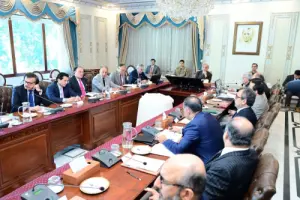
ISLAMABAD: Amid mounting criticism from the business community over the tax authority’s enforcement approach, Prime Minister Shehbaz Sharif on Wednesday intervened, directing the Federal Board of Revenue (FBR) to strengthen its engagement with taxpayers and ensure swift resolution of their grievances.
Chairing a high-level review meeting on FBR reforms, he acknowledged the concerns raised by the business community, many of whom have accused tax officials of relying heavily on their enforcement powers against existing taxpayers rather than focusing on broadening the country’s narrow tax base.
The prime minister’s intervention followed sustained protests by chambers of commerce and trade organisations over legal provisions that, according to business leaders, grant FBR officials extensive powers, including the authority to arrest business owners, carry out surprise raids and freeze bank accounts.
READ MORE: PM orders to digitise all industrial production processes
Business representatives have maintained that such measures have fuelled uncertainty, discouraged investment and weakened confidence in an economy already facing significant challenges.
To bridge the gap between the tax machinery and the business community, the prime minister directed senior FBR officials to visit Karachi during the first week of every month to hold direct consultations with business representatives and ensure that their complaints are addressed on a priority basis.
He further instructed the tax authority to publicly acknowledge and honour companies that demonstrate compliance with tax laws, indicating a move towards promoting voluntary compliance alongside enforcement.
He said the government’s foremost objective was to rebuild investor confidence and transform the tax system into one that is simpler, more transparent and more conducive to business activity.
He emphasised that improving the ease of doing business, attracting investment and boosting exports remained at the heart of the government’s economic strategy.
The PM expressed confidence that the economy had entered a period of stability and said the current year was expected to witness stronger economic growth and greater business activity.
Calling the business community a vital pillar of the national economy, Sharif said every possible facility should be extended to industries to help increase production and expand exports.
During the meeting, officials briefed the prime minister on revenue gains achieved through technology-driven monitoring systems introduced across key industrial sectors.
They informed the meeting that production monitoring systems had been installed in the sugar, cement, tobacco, tiles and fertiliser industries, while similar mechanisms were being rolled out in the textile and beverages sectors.
According to the briefing, production monitoring in the sugar sector generated an additional Rs42 billion in tax revenue over the past two years.
The cement sector contributed a further Rs38 billion through improved monitoring, while enhanced oversight in the beverages industry generated an additional Rs15 billion for the national exchequer.
The meeting was attended by Finance Minister Muhammad Aurangzeb, Information Minister Attaullah Tarar, Information Technology Minister Shaza Fatima, Law Minister Azam Nazeer Tarar, Economic Affairs Minister Ahad Cheema, Minister of State for Finance and Railways Bilal Kayani, Special Assistant to the Prime Minister on Industries and Production Haroon Akhtar, State Bank of Pakistan Governor Jameel Ahmad and other senior government officials.
Copyright Business Recorder, 2026




















Comments