


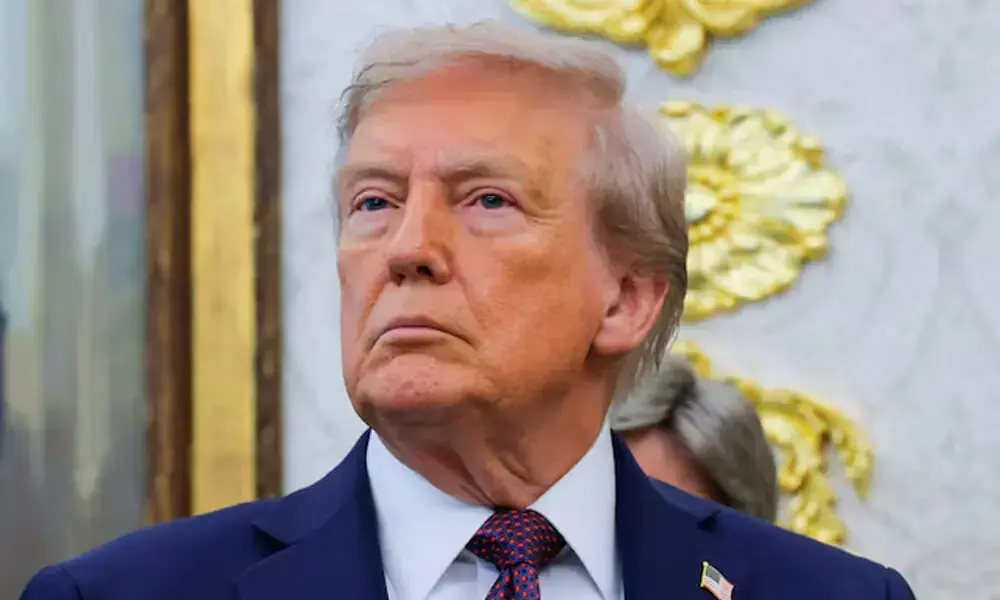
EDITORIAL: US President Donald Trump’s latest attempt to tie the normalisation of relations between Muslim-majority countries and Israel under the Abraham Accords to a prospective peace agreement with Iran is both unrealistic and unworkable.
By declaring that countries such as Saudi Arabia, Qatar, and even Pakistan should “immediately” sign on to the Abraham Accords as a condition for participating in a broader regional settlement, Trump has once again demonstrated a troubling disregard for the political realities and moral sensitivities of the Muslim world.
The proposal ignores the vastly altered regional environment since the signing of the Abraham Accords in 2020 during Trump’s first term. At the time, the UAE and Bahrain normalised relations with Israel under a framework heavily promoted by Washington as a breakthrough for Middle Eastern peace.
Even then, the agreements were controversial because they effectively side-lined the Palestinian question. Today, however, the regional situation has deteriorated dramatically.
Israel’s ongoing military campaign in Gaza, which has claimed tens of thousands of Palestinian lives, its relentless bombardment of civilian infrastructure, the expansion of illegal settlements in the occupied West Bank, its widening military campaign in Lebanon and increasingly belligerent stance towards Iran have intensified anger and resentment across the Muslim world.
Under such circumstances, expecting Muslim states to normalise relations with Israel is irrational. Public opinion in countries such as Pakistan and Saudi Arabia remains firmly aligned with the Palestinian cause.
No responsible government can ignore the widespread outrage generated by the humanitarian catastrophe unfolding in Gaza. Trump’s attempt to pressure these states into joining the Abraham Accords therefore is detached from regional realities.
More significantly, linking Arab-Israeli normalisation to negotiations with Iran makes little strategic - even common - sense. The two issues are fundamentally distinct and require separate diplomatic tracks. Iran’s regional role, its nuclear programme, and the broader security concerns of the Gulf States are complex matters that cannot be resolved through pressure tactics.
Trump’s remarks therefore appear aimed less at achieving genuine regional peace than at placating hard-line Republican constituencies and the highly influential Jewish lobby in the US while simultaneously pursuing a deal with Tehran.
Pakistan’s position on the issue has consistently been principled and clear. Islamabad has repeatedly stated that any consideration of normalisation with Israel depends upon the establishment of a viable and sovereign Palestinian state based on the pre-1967 borders, with Al-Quds Al-Sharif (Jerusalem) as its capital. This stance reflects not only Pakistan’s longstanding foreign policy but also international law and the broader consensus within the Muslim world.
Peace and stability in the Middle East cannot be built on coercion, political pressure, or transactional diplomacy that ignores Palestinian rights.
The Abraham Accords may have succeeded in creating formal diplomatic ties between Israel and a handful of Arab states, but they failed to address the root cause of regional instability: the unresolved Palestinian question.
Any sustainable regional order must therefore be grounded in justice, respect for international law, and recognition of the Palestinian people’s legitimate right to self-determination.
Copyright Business Recorder, 2026




















Comments