


Sovereign debt tokenisation, blockchain-based bonds, NPCs: Govt initiates high-level discussions
ISLAMABAD: The government on Monday initiated high-level discussions on sovereign debt tokenisation, exploring blockchain-based issuance of sovereign bonds and Naya Pakistan Certificates (NPCs) through regulated digital market infrastructure.
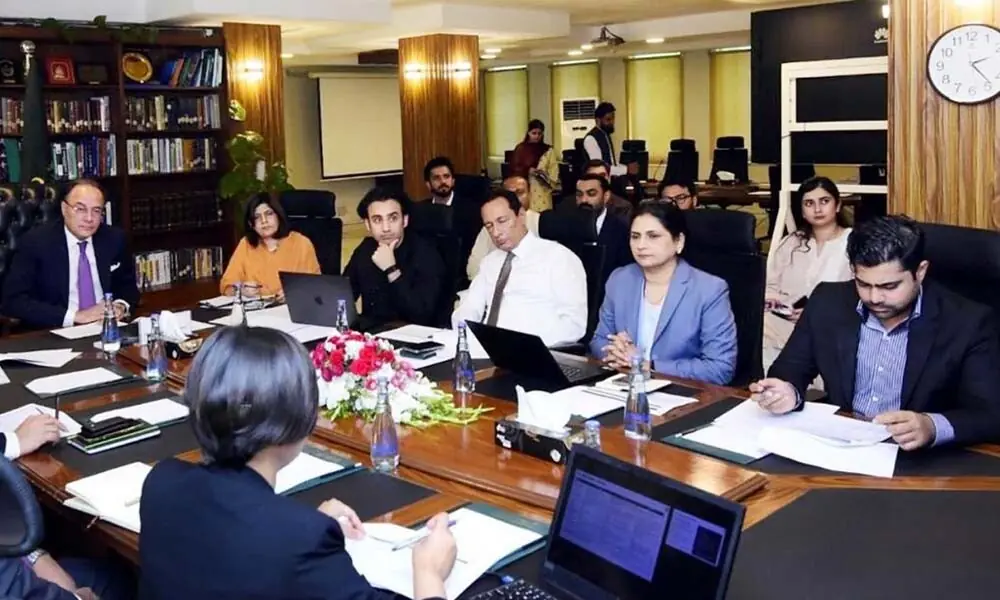
Federal Minister for Finance and Revenue Muhammad Aurangzeb on Monday held a meeting with Bilal Bin Saqib, Minister of State and Chairman of the Pakistan Virtual Assets Regulatory Authority (PVARA), and the Advisor on Debt Management to the Finance Minister, Omer Khan, to discuss the tokenization of sovereign debt instruments and Naya Pakistan Certificates.
The Pakistani authorities have committed to the International Monetary Fund (IMF) to addressing any remaining gaps relative to international standards through comprehensive secondary regulations. In general, efforts to integrate virtual assets should align with broader macro-financial policies.
READ MORE: Govt to allow Binance to explore ‘tokenisation’ of up to $2bn of assets
The meeting marked one of the first high-level governmental discussions in Pakistan focused specifically on sovereign asset tokenisation and the role blockchain infrastructure can play in modernising capital markets, expanding investor access, and enabling Pakistan to participate in the financial infrastructure of the new economy.
Discussions focused on potential structures, implementation pathways, regulatory considerations, and next steps required to explore tokenised sovereign instruments within Pakistan’s evolving financial ecosystem.
A central element of the discussion focused on international precedent for the tokenization of sovereign and quasi-sovereign debt and on how Pakistan can adopt a structure aligned with established global market infrastructure. The model under consideration, often referred to as a Digitally Native Note issued through a regulated financial market infrastructure, allows a sovereign bond to be created on a regulated blockchain platform at the moment of issuance, with same-day settlement, before integrating with the conventional international clearing and settlement systems that already serve Pakistan’s existing Eurobond programme. The bond’s coupon payments, secondary trading, and final repayment continue through the established global infrastructure, ensuring full interoperability with the institutional investor base that participates in Pakistan’s conventional sovereign issuances.
The tokenisation of Naya Pakistan Certificates to potentially enable broader retail participation, improve accessibility for overseas Pakistanis, and create more seamless digital investment rails connected to global markets was also discussed.
Furthermore, it was highlighted that the Roshan Digital Account has attracted close to USD 13 billion in cumulative inflows from overseas Pakistanis and international investors since its launch in 2020, with the majority of that capital deployed within Pakistan’s economy. It was further noted that the proposed digital distribution agenda is intended to extend this investment channel to a broader base of eligible global investors under full regulatory supervision.
Copyright Business Recorder, 2026
























Comments