


Pakistan’s population projected to rise to 389.9m by 2050
Pakistan's population is projected to reach nearly 390 million by 2050, presenting a critical demographic dividend opportunity but also immense challenges for resources, economy, and social services.
- Projected population growth to nearly 390 million by 2050.
- Opportunities and challenges of a growing working-age population.
- Impact of population growth on resources, economy, and social services.
- Proposed incentives for provinces to manage population growth.
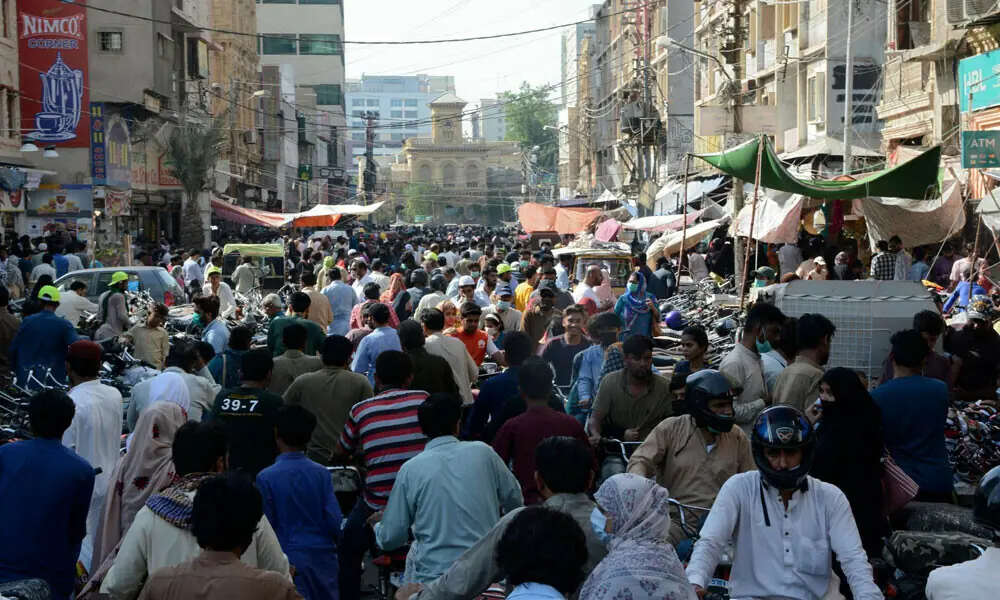

ISLAMABAD: Pakistan’s population is projected to rise from 241.5 million in 2023 to between 371.9 million and 389.9 million by 2050, depending on whether fertility rates decline rapidly or more gradually.
According to the Pakistan Population Projections Report 2023–2050, launched by the Ministry of Planning, Development and Special Initiatives, based on the 2023 Population and Housing Census, Pakistan’s total population stood at 241.86 million, which, under the “slow fertility decline scenario,” is projected to reach 389.78 million by 2050, an increase of approximately 147.92 million people.
This rapid growth reflects underlying demographic momentum driven by fertility patterns and population dynamics across provinces.
READ MORE: Ahsan Iqbal flags Pakistan’s ‘alarming’ population growth
Adding internal net-migration in the equation, the population of each province is projected to grow significantly, with varying levels of increase in both absolute numbers and in percentage terms.
A new national projection report on population trends from 2023 to 2050 highlights a dramatic transformation in Pakistan’s demographic structure, with significant implications for the economy, labour market, and social services.
The report projects a steady decline in the Crude Birth Rate, falling from 28.3 per 1,000 people in 2023 to around 16–16.8 by 2050. Meanwhile, the Crude Death Rate is expected to rise slightly, mainly due to population aging rather than worsening health conditions.
According to the report, one of the most significant findings is the sharp expansion of Pakistan’s working-age population (15–64 years), which is projected to grow from 135.2 million to 255.4 million by 2050.
The youth segment (15–29 years) is also set to rise substantially, increasing from 62.95 million to nearly 99.76 million, signaling both an opportunity and a challenge for job creation and economic absorption.
Experts note that this shift could create a demographic dividend, but only if matched with investments in education, healthcare, and employment generation.
The report further revealed that the population of children under 18 is expected to increase from 117.9 million to 139.7 million by mid-century. However, their proportion of the total population will gradually stabilize as the country transitions away from its historically high fertility levels.
In contrast, Pakistan’s elderly population (65 and above) is projected to nearly triple—from 8.6 million to 22.6 million—highlighting an emerging need for stronger pension systems, elder care services, and social protection frameworks.
In 2023, about 67 percent of Pakistan’s population was under the age of 30 (161.1 million people). By 2050, although this group will grow in absolute terms to 211.6 million, its share will decline to 54 percent of the population.
The report describes this as a clear sign of demographic transition: Pakistan is moving from a predominantly youthful population toward a more balanced age structure shaped by declining fertility and improving life expectancy.
The findings suggest Pakistan is entering a critical window where its large working-age population could drive economic growth. However, the report warns that without strategic planning in jobs, education, and healthcare, the potential benefits of this demographic shift may not be fully realized.
Earlier, addressing the launching ceremony of the National and Provincial Population Projections 2023–2050, Federal Minister for Planning Ahsan Iqbal proposed to introduce incentives for provinces that successfully control population growth under the NFC Award, emphasizing that encouraging balanced population growth is essential for Pakistan’s sustainable development and economic stability.
He said that uncontrolled population growth has become a major challenge for sustainable development, economic progress, and effective utilization of national resources.
He warned that if the current growth rate continues, Pakistan’s population could reach between 370 and 400 million by 2050, placing immense pressure on health, education, employment, water, food, and other basic services.
The Minister stressed that 82 percent of resource distribution under the NFC Award is linked to population share; therefore, reforms are needed in the system to encourage provinces to adopt responsible population management policies. He said that currently, there is no effective incentive for provinces to reduce population growth rates.
He remarked that population is not merely a statistical issue but a core national concern directly linked with economic growth, human development, education, healthcare, employment, and national security.
He warned that if population growth continues to outpace resources, the country’s available resources would become increasingly strained, directly affecting the quality of life of citizens.
Ahsan Iqbal emphasized that Pakistan must focus not merely on increasing population numbers but on developing an educated, skilled, healthy, and productive human capital base. He said that nearly 40 percent of children in Pakistan suffer from malnutrition and stunted growth because many parents lack the resources to provide adequate care.
He termed the situation a “national emergency” and stressed the urgent need to restore balance between population growth and available resources.
He further stated that by 2050, Pakistan’s population under the age of 18 could increase from 117 million to 140 million, while the working-age population may rise from 135 million to 255 million. He emphasized that if provided with quality education, skills, healthcare, and employment opportunities, this growing youth population could become a major demographic dividend for Pakistan.
He said that after the 18th Constitutional Amendment, the population sector was devolved to the provinces; therefore, provincial governments now carry the primary responsibility for implementing practical and effective population management measures. He reiterated his proposal that reforms in the NFC Award should incentivize provinces showing measurable improvements in population stabilization.
The Federal Minister also urged the media, researchers, experts, and civil society to play an active role in creating public awareness regarding population management, human development, and sustainable resource utilization. He warned that unchecked population growth could become a “social bomb” and a major obstacle in achieving Pakistan’s economic goals.
Concluding his address, Ahsan Iqbal reaffirmed the government’s commitment to working with provincial governments to ensure balanced population growth, human development, and sustainable use of resources in order to build a stronger, balanced, and prosperous Pakistan.
The ceremony was attended by Federal Minister for Health Mustafa Kamal, members of the Planning Commission, representatives of the United Nations Population Fund, including Dr. Gulnara Kadyrkulova, senior officials of the National Institute of Population Studies, government officers, experts, researchers, civil society representatives, and representatives of the media.
Copyright Business Recorder, 2026




















Comments