


War raises risks to macroeconomic outlook, warns SBP
The Middle East conflict poses significant risks to Pakistan's macroeconomic stability, threatening increased inflation, disrupted trade, and reduced economic growth, despite the State Bank's efforts to maintain stability.
- Impact of the Middle East conflict on Pakistan's economy.
- Risks to inflation, trade flows, and remittance inflows.
- State Bank of Pakistan's efforts to maintain macroeconomic stability.
- Projections for GDP growth, external account, and energy prices.
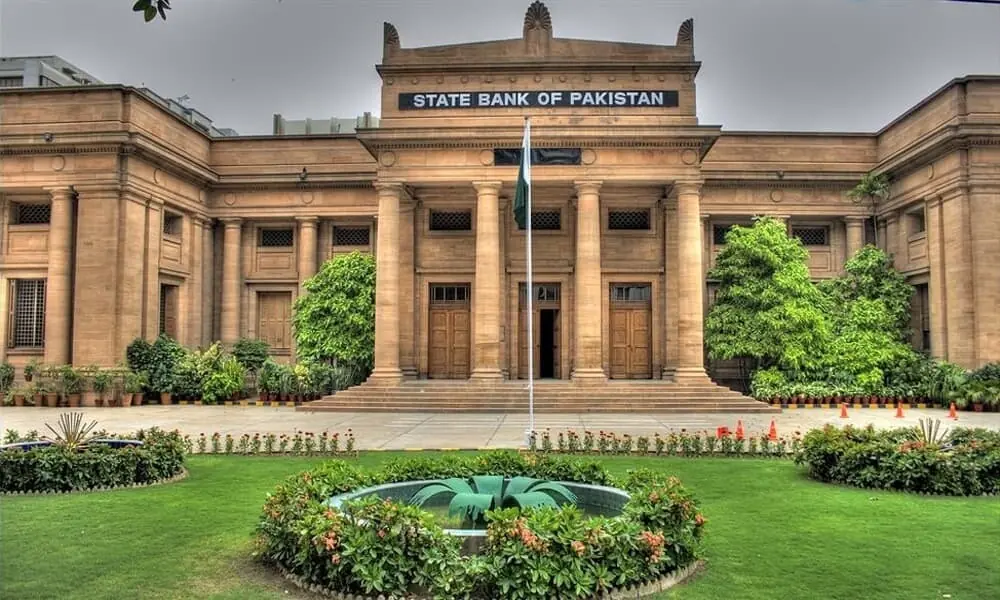

KARACHI: The war in the Middle East has intensified risks to Pakistan’s macroeconomic outlook, triggering fresh concerns over inflation, trade flows and economic growth amid rising global uncertainty.
The State Bank of Pakistan (SBP) in its “State of Pakistan’s Economy,” Half Year Report FY26, issued on Tuesday warned that prolonged supply chain disruptions caused by the conflict could further strain Pakistan’s external sector, remittance inflows and overall economic activity.
According to the SBP, macroeconomic stability strengthened further in second half of FY26, despite headwinds from global trade-related uncertainty and domestic floods. Since February 2026, however, the war in the Middle East has posed significant risks to macroeconomic outlook amid heightened uncertainty.
READ MORE: ME conflict: SBP says uncertainty may hurt financial stability prospects
The surge in international oil prices has prompted the government to implement austerity measures aimed at preserving macroeconomic stability. Going forward, the war-led supply chain disruptions may impact inflation trajectory, external trade and remittance flows, and economic activity in Pakistan, the report indicated.
The surge in international energy prices was immediately transmitted to domestic inflation despite government’s decision to initially absorb the major chunk of the increase.
However, its impact on overall economic activity is not expected to be significant in FY26, the report said.
Although the near-term outlook remains stable, prolonged war-related disruptions and weaker global economic activity could create medium-term risks for Pakistan’s economy.
According to the SBP, slower growth in Gulf countries may reduce remittance inflows, a key source of external stability, while supply chain disruptions could hurt industrial production, exports and agricultural output due to shortages of raw materials, machinery, and fertilizers. The economic slowdown may also weaken revenue collection and force the government to introduce additional revenue measures, potentially increasing inflationary pressures and affecting inflation expectations.
However, the SBP said it will continue to take appropriate actions to preserve macroeconomic stability, particularly to keep inflation in check and maintain external buffers to support economic activity.
Recent high-frequency indicators, including the Purchasing Managers’ Index (PMI), show that industrial activity, particularly in large-scale manufacturing (LSM) and construction, continued its growth momentum through February 2026. However, the ongoing war is expected to slow economic output in the latter part of FY26.
Meanwhile, the report said, wheat production is projected to surpass last year’s harvest despite remaining slightly below the official target, while lower-than-expected flood damage to key Kharif crops such as sugarcane and rice is likely to support relatively stronger agricultural growth during FY26.
“The performance of agriculture and industry will have positive spillovers on the services sector. Therefore, real GDP growth is now expected to remain close to the lower bound of the projected range of 3.75 to 4.75 percent,” the report projected.
Increase in production of food crops and limited export opportunities due to regional conflicts are expected to moderate food inflation. However, energy inflation is set to increase after the government passed on the surge in international oil prices following the outbreak of the war. Oil price shocks also pose significant upside risks to core inflation via increased cost pressures, second-round effects and inflation expectations.
The SBP said these developments suggest that the national CPI inflation (YoY) is likely to remain above the upper bound of the medium-term target range of 5 to 7 percent in the remaining months of FY26 and in FY27.
On external account, workers’ remittances may also be impacted in the last quarter of FY26, considering that remittances from the GCC countries contributed around 55 percent of total remittances. However, on a full-year basis, remittances are expected to remain strong in FY26, which would partially offset the widening in the trade deficit.
Consequently, the SBP projected that current account deficit in FY26 is likely to remain close to the lower bound of the range of 0 to 1.0 percent of GDP.
Higher energy prices along with rising insurance and freight costs are expected to increase Pakistan’s import bill, though the government’s decision to raise domestic energy prices and implement conservation measures may help reduce energy demand and imports. Lower LNG imports are also likely to ease overall energy import costs.
On the other hand, exports are expected to remain weak due to the possibility of slower global economic growth; multi-year low rice prices; closure of Pakistan’s western border; and realignment of global trade flows due to ongoing tariff adjustments.
The report said that the war and surge in energy prices have implications for tax and non-tax revenue, and government’s discretionary spending. In particular, the adjustment in domestic fuel prices vis-à-vis a surge in global oil prices is likely to increase energy subsidies.
In addition, Petroleum Development Levy (PDL) collections may decline due to lower petroleum sales following higher fuel prices and energy conservation measures. However, the government’s decision to cut development spending may partially offset the impact, with the State Bank expecting the fiscal deficit to remain within 3.5 percent to 4.5 percent of GDP.
Besides increases in energy prices, the supply chain disruptions, and increase in freight charges and insurance premium could significantly weigh on the country’s macroeconomic outlook.
Copyright Business Recorder, 2026




















Comments