


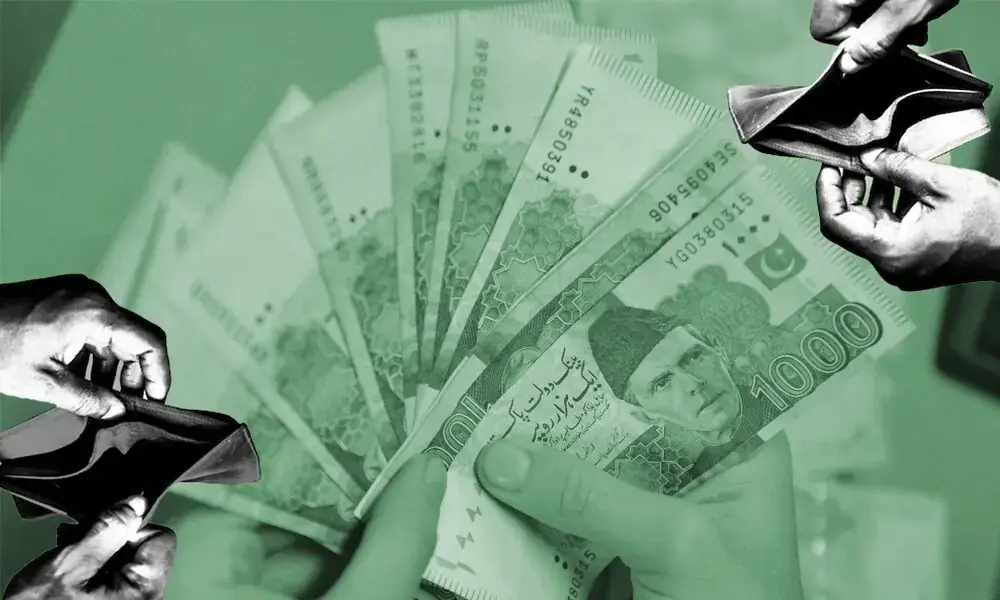
When the economy was about to deliver dividends in the form of growth after more than three years of stabilization, the recent oil price shock in the aftermath of the US-Iran war has pushed Pakistan back into stabilization mode. This is evident from the SBP’s increase in the policy rate, with inflation returning to double digits in the April-June quarter.
The IMF has also revised its FY27 growth forecast down to 3.5 percent from an earlier estimate of 4.1 percent. On the other hand, the current account deficit forecast for FY27 has been revised up from 0.4 percent of GDP to 0.9 percent of GDP. Inflation estimates for the same period have also been increased from 7.0 percent to 8.4 percent.
The Fund has not altered the primary fiscal deficit target for FY26 and is pushing for even stronger results in FY27, with the primary fiscal balance targeted at Rs2.8 trillion, or 2.0 percent of GDP, and the fiscal deficit at Rs4.9 trillion, or 3.5 percent of GDP.
The government wants to lower tax rates to create a feel-good factor for the economy and attract investment. However, given the growth slippage and the possibility of higher expenditure due to rising commodity prices, the government may have to rethink this strategy.
It is back to square one. The economy increasingly appears stuck in a low-growth trap and is somehow unable to break out of it. Structural reforms are missing. Without overheating, the economy’s equilibrium growth level appears to be falling. Meanwhile, the finance ministry is focused mainly on stabilization through the bottom line — meeting revenue, deficit, and surplus targets — without paying enough attention to how those targets are being achieved.
The government has failed to broaden the tax net. There is also no serious resolve to address lopsided fiscal federalism, despite the absence of strong political opposition and the fact that everyone is metaphorically on the same political page.
This is reflected in the continued reliance on the petroleum levy to boost net federal revenue, as this is one area where the federal government does not have to share revenues with the provinces. A better strategy would be to lower the levy during periods of exceptionally high oil and petroleum prices and replace the gap through other taxes or expenditure cuts.
However, almost 60 percent of any other revenue measures have to be shared with the provinces, while most expenditure-cutting options also lie with the provinces. Here, the federal government has little room to act, despite near-complete political harmony. As a result, it keeps taxing petroleum without fully considering how this increases the burden on lower-income groups.
This pushes inflation higher and slows the wider economy. That is the sad story of Pakistan’s fiscal operations. It further exposes the fragility of the economy, where every external shock reveals the absence of fiscal and external buffers. There is no fiscal harmony. More of the same is likely to continue, and the economy may remain stuck on a low-growth path.












Comments